
Our four standards
01
Traceability
We name the country and growing area, and the farm or cooperative when it’s known.
02
Altitude
Shown on every coffee. Coffee grown higher ripens more slowly and tends to taste brighter and more complex.
03
Process
Washed, natural or honey. Each one changes the cup, and we tell you which you’re getting.
04
Freshness
We work with roasters who roast to order, so coffee ships fresh instead of sitting in a warehouse.
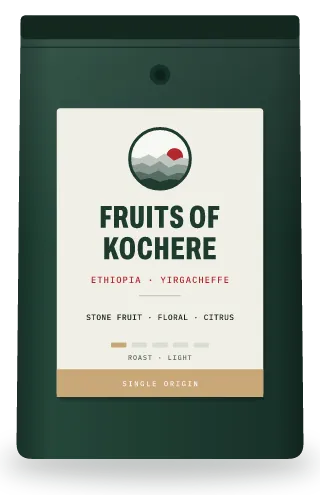
1Africa · Ethiopia · Kochere, YirgacheffeFruits of Kochere
5Stone fruitFloralCitrus
2Grown at1,800–2,100 m
3Roast Light
4ProcessShown when known
6Best forPour-over, Chemex, Iced pour-over
How to read a Regions coffee
Everything on the label, explained
- 1Region, country and growing areaWhere the coffee grew, down to the area when we know it.
- 2Altitude rangeHigher farms ripen cherries more slowly, for brighter, more complex cups.
- 3Roast scale, 1 to 5From 1 (light) to 5 (dark). Lighter keeps more origin character.
- 4Process and varietyWashed, natural or honey, and the coffee variety, when known.
- 5Tasting notesPlain-language flavors, so you know what’s in the cup.
- 6Best brew methodsThe brewers that suit it, with recipes on every coffee page.
From farm to your cup
Roasted to order, then shipped
We work with a specialty roasting partner in the United States that roasts to order, so your coffee leaves the roastery fresh.
01Grown and processed
On farms and cooperatives in the coffee belt, each named on its coffee page when known.
02Roasted to order
Your coffee is roasted after you order, so please allow a few business days to leave the roastery.
03Shipped to you
Anywhere in the United States, free on orders of $50 or more.
Say hello
We read every message.
Questions about a coffee, an order or a guide? Write to us.



