As an Amazon Associate, Regions Coffee Supply earns from qualifying purchases, at no extra cost to you.
Quick answer
A burr grinder is one of the best upgrades a home brewer can make, because it crushes beans to a consistent size instead of chopping them at random, and our pick for most people is the Baratza Encore. If you want to spend less, the Hario Skerton Pro and the Timemore Chestnut C3S are hand grinders with real burrs, and the Fellow Ode Gen 2 is the splurge for filter coffee. Skip blade grinders unless you only grind now and then.
Our picks at a glance
Best overall for most home brewers
Baratza Encore
40 mm conical steel burrs, 40 grind settings
Filter coffee now, espresso later
Baratza Encore ESP
Dual-range dial: micro-steps 1-20 for espresso, macro-steps 21-40 for filter
Repeatable doses without a scale
Baratza Virtuoso+
40-second digital timer (0.1 s steps), 40 grind settings
Filter-only splurge
Fellow Ode Brew Grinder Gen 2
64 mm flat burrs, 31 settings, 100 g single-dose hopper, not for espresso
Best hand grinder for the money
Timemore Chestnut C3S
Stainless steel conical burr, aluminum body, 25 g capacity
Cheapest way into burr grinding
Hario Skerton Pro
Ceramic conical burrs, detachable handle, about 100 g hopper
Price range is relative to other home coffee grinders. Use the Check price links for today’s price and stock.
Burr vs blade grinders
A blade grinder is a spinning propeller. It chops beans at random, so you get a mix of fine powder and large chunks, and the only control you have is how long you hold the button. A burr grinder crushes beans between two abrasive surfaces set a fixed distance apart, so the grounds come out far more even, and you can change that distance to go finer or coarser.
Even grounds matter because water pulls flavor out of fine and coarse particles at different rates. Mixed sizes tend to taste bitter and sour at the same time, and pour-over methods like the V60 and Chemex make that easy to taste. Blade grinders are fine for spices or an occasional pot of drip coffee, but for anything you care about, buy a burr grinder.
Hand or electric?
Hand grinders give you a lot of grinder for the money, they’re quiet, and they travel well, but you do the work. A grinder that holds about 25 g of beans means several rounds of cranking for a big Chemex. Electric grinders are faster and easier every morning, and the good ones cost more. Our guide to the best hand coffee grinders compares six of them.
The best coffee grinders for home
01Baratza Encore: best overall
The Encore is the grinder we’d point most people to first. It’s an electric conical burr grinder with 40 grind settings, which covers fine to coarse, so one grinder can handle an AeroPress, a V60, a Chemex or a flat-bottom drip machine like our Moccamaster. Baratza calls it its best-selling grinder, it has more than 16,000 ratings on Amazon at the time of writing, and Baratza designs its grinders to be serviced rather than thrown away.
The trade-offs: there’s no timer, so you grind by feel or weigh your beans first, and it isn’t built for espresso. If espresso is in your future, look at the Encore ESP below.
02Baratza Encore ESP: filter coffee now, espresso later
The ESP has a dual-range adjustment: micro-steps from 1 to 20 for fine, espresso-range grinding, and macro-steps from 21 to 40 for filter brewing. That makes it the better fit if you might buy an espresso machine someday. Amazon reviews are more mixed than for the standard Encore, so we’d choose it only if that espresso range matters to you.
03Baratza Virtuoso+: best for repeatable doses
The step up from the Encore adds a 40-second digital timer you can set to a tenth of a second, a backlit grounds bin and a metal top and base. A timer makes it easy to grind the same dose every morning, though some owners say it isn’t exact, so a scale is still the reliable way to dose (see our guide to the best coffee scales). It’s well reviewed, with a 4.5-star average on Amazon at the time of writing.
04Fellow Ode Brew Grinder Gen 2: the filter-coffee splurge
The Ode is a single-dose grinder with 64 mm flat burrs and 31 grind settings, built for brewed coffee. Fellow says it isn’t for espresso. You weigh in just the beans you’re about to brew (the hopper holds up to 100 g), and anti-static features and a built-in knocker are meant to cut down on mess.
It’s the priciest grinder here, and reviews are mixed: people praise the grind quality and the low noise, and some complain about static and mess. It’s worth a look if you brew filter coffee every day and care how the grinder looks on the counter.
05Timemore Chestnut C3S: best hand grinder for the money
A hand grinder with an all-aluminum body and a stainless steel conical burr, rated at about 25 g of beans per load, which is plenty for one or two mugs. It’s well reviewed on Amazon, with 4.6 stars from a few hundred ratings at the time of writing. Timemore sells several near-identical Chestnut C3 versions on Amazon, so check that the one you’re ordering is the one you meant.
06Hario Skerton Pro: the cheapest way into burr grinding
Ceramic conical burrs, a detachable crank handle and a hopper that holds about 100 g make this a good option for travel or a small kitchen. The Pro is a sturdier update to the original Skerton, and it has more than 2,000 ratings on Amazon. Be gentle with it, because the ceramic burr and glass jar can break if dropped, and one Amazon reviewer found changing the grind setting fiddly.
Where to start with grind size
Treat these as starting points. If the cup tastes sour or thin, go finer. If it tastes bitter or harsh, go coarser. We grind a little coarser for the Chemex than for the V60 because of its thicker filter. Our guide to brewing coffee at home has recipes for each method.
How we chose these grinders
We looked for burr grinders only (no blades), with enough adjustment to cover the filter brewing methods most people use. We weighed how well each grinder is reviewed for consistent grounds, how easy it is to adjust, whether it can be repaired, and what owners complain about, whether that’s mess, static, noise or a fiddly dial. The guide is organized by budget so there’s a pick at every level.
We haven’t tested every product in this guide. We’ve been brewing coffee at home for more than 15 years, and our own setup is a Technivorm Moccamaster (Stone Grey), an original AeroPress, a 10-cup Chemex and a Hario V60. We only describe something as our own experience when it’s one of those. Everything else is a researched pick, based on manufacturer details, Amazon listings and customer ratings we checked in October 2026.
Coffee grinder FAQ
Is a burr grinder really worth it?
For most people, yes. A burr grinder gives you consistent particle size and lets you adjust grind size, and both make it easier to get a balanced cup and to fix a brew that tastes off. If you only make an occasional pot of drip coffee, you can get by with what you have.
Can I use a blade grinder for coffee?
You can, and fresh-ground is better than coffee that’s been pre-ground for weeks. But results are uneven, because blades chop beans at random and you can’t control particle size. If you stick with a blade grinder, grind in short bursts and shake it between bursts to even things out.
Should I buy a hand grinder or an electric one?
A hand grinder is the best value, and it’s quiet and portable, but you’ll be cranking, especially for bigger batches. An electric grinder is faster and easier every morning. If you brew one or two cups at a time, a good hand grinder is a great start. For a full Chemex or a pot of Moccamaster coffee, an electric grinder saves effort.
What grind size should I use for pour-over?
Start with medium-fine for a Hario V60 and medium-coarse for a Chemex, then adjust. Go finer if the coffee tastes sour or thin, and coarser if it tastes bitter or harsh. Our guide to brewing coffee at home goes into more detail.
Do I need a special grinder for espresso?
Espresso needs a much finer and more precise grind than filter coffee. The Baratza Encore ESP has a dedicated espresso range, while Fellow says the Ode Gen 2 isn’t designed for espresso. If espresso is your main goal, choose a grinder built for it. Our guide to the best beginner espresso machines covers what else you’ll need.
How do I clean a coffee grinder?
Brush out leftover grounds regularly and follow the cleaning instructions for your model. Check the manual before using water, because some grinders aren’t meant to be rinsed.
Brew it with Regions coffee
A good grinder shows its value on a coffee with something to say. For a pour-over, try Fruits of Kochere, an Ethiopian coffee from Kochere in Yirgacheffe, or Hills Over Huila, from Huila in Colombia. If you’d rather brew a blend, Daybreak Blend is a good place to start.
 Fruits of KochereEthiopia · Light
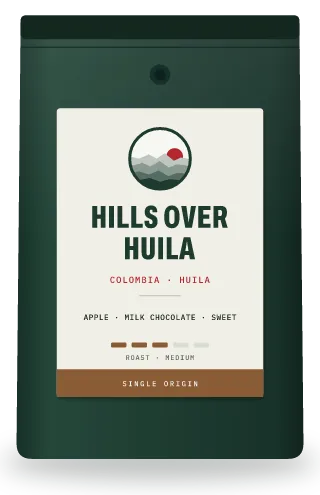 Hills Over HuilaColombia · Medium
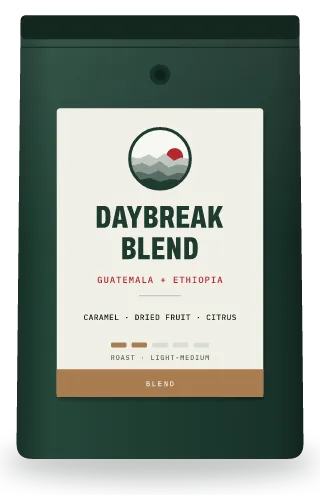 Daybreak BlendGuatemala & Ethiopia · Light-medium
Several of our coffees are still listed as coming soon, so check each page for current availability, roast and tasting notes. Building a pour-over setup? See our guides to the best gooseneck kettles and the best pour-over drippers, and our guide to brewing coffee at home to put it all together.