As an Amazon Associate, Regions Coffee Supply earns from qualifying purchases, at no extra cost to you.
Quick answer
A coffee scale that reads to 0.1 g and has a built-in timer is the simplest way to make your coffee taste the same every day. The RENPHO Espresso Scale is the budget pick, the Hario V60 Drip Scale and the Timemore Black Mirror Basic 2 are the mid-range picks, and the Fellow Tally Pro is the premium one, with guided ratio brewing. If a scale only reads in whole grams, skip it.
Our picks at a glance
Budget pick
RENPHO Espresso Scale
0.1 g, 3 kg, flow-rate indicator, pour-over and espresso modes
Auto timer and flow rate
Timemore Black Mirror Basic 2
0.1 g, 2 kg, auto timer, flow-rate display, USB-C
Guided ratio brewing
Fellow Tally Pro
0.1 g, 2.5 kg, Brew Assist Mode, OLED display, USB-C
Price range is relative to other coffee scales. Use the Check price links for today’s price and stock.
Why weigh your coffee?
A scoop of coffee isn’t a fixed amount. It changes with the roast, the bean size and how you fill the scoop. Weight doesn’t, so weighing your coffee and your water is what lets you repeat a brew you liked, or change one thing at a time when you’re trying to fix one that you didn’t.
A common starting point is about 1 g of coffee to 16 g of water. For 20 g of coffee, that’s about 320 g of water. Most recipes land somewhere between 1:15 and 1:18. Our coffee ratio and grind size chart lists a starting ratio for each method, and our guide to brewing coffee at home has recipes.
What to look for in a coffee scale
- 0.1 g resolution. A 1 g step is about 5 to 7 percent of a typical 15 to 20 g dose, which is too coarse to be useful.
- A built-in timer. It’s easier to repeat a brew when the time and weight are on the same screen. Auto-start, which begins timing when the first water hits, is a nice extra.
- Flow rate. Some scales show how fast you’re pouring. It’s helpful while you’re learning your pour, though not essential.
- Capacity and platform size. A big carafe such as a 10-cup Chemex, plus a liter of water, is heavy, so a scale with plenty of headroom is a safer buy. Make sure the platform fits under your dripper and your cup.
- Splash resistance and battery. You’ll be pouring hot water nearby, so a silicone pad or a splash-resistant design helps. A rechargeable battery means fewer trips for AAAs.
The best coffee scales
01RENPHO Espresso Scale: budget pick
A budget scale with a 0.1 g readout, a 3 kg capacity, a timer and three modes: basic, pour-over and espresso with an auto timer. It also has a flow-rate indicator that shows how fast you’re pouring, and according to the listing it locks in the weight in about 0.2 seconds. It’s very well reviewed for the price, with 4.5 stars from more than 8,000 ratings on Amazon at the time of writing.
If you just want to start weighing, start here. We can’t vouch for how long a budget scale lasts, though. A second budget option with similar specs and a silicone cover is the BAGAIL coffee scale.
02Hario V60 Drip Scale: the classic pour-over scale
This is the scale built to sit under a V60 and a kettle. It reads to 0.1 g, has a timer in the same display, and handles up to 2 kg. It’s the most-reviewed of the mid-range scales here, with a 4.2-star average from more than 2,000 ratings on Amazon at the time of writing.
Some reviewers say the buttons don’t have much tactile feel, the display has no backlight and the scale takes a moment to register weight, so it’s not the fastest one here. It’s a solid, simple choice if you brew on a V60, as we do.
03Timemore Black Mirror Basic 2: auto timer and flow rate
A 2 kg scale with 0.1 g resolution, an auto timer that starts when it detects a change in weight, a real-time flow-rate display and a USB-C rechargeable battery. A silicone pad protects it from heat. Reviewers mostly praise the accuracy, and some find the touch buttons a little too sensitive. It has 4.1 stars from a few hundred ratings on Amazon at the time of writing.
04Fellow Tally Pro: guided ratio brewing
The Tally Pro is built around pour-over. In Brew Assist mode you set your coffee-to-water ratio once and follow the on-screen target to the last gram. It reads to 0.1 g, handles up to 2,500 g, has an OLED display and charges over USB-C, and according to Amazon the weight settles in under a second. It has 4.6 stars from a couple of hundred ratings at the time of writing.
It’s the priciest scale here. If all you need is a number on a screen, the budget picks do that. If you like the idea of the scale doing the ratio math for you, this is the one.
How we chose these scales
We only considered scales that read to 0.1 g and have a timer, since those are the two features that matter most for pour-over. From there we looked at response speed, capacity, how easy the scale is to use with a kettle in your other hand, battery type and customer ratings. We also left out scales that weren’t in stock on Amazon when we checked in October 2026.
We haven’t tested every product in this guide. We’ve been brewing coffee at home for more than 15 years, and our own setup is a Technivorm Moccamaster (Stone Grey), an original AeroPress, a 10-cup Chemex and a Hario V60. We only describe something as our own experience when it’s one of those. Everything else is a researched pick, based on manufacturer details, Amazon listings and customer ratings we checked in October 2026.
Coffee scale FAQ
Do I really need a coffee scale?
You can make good coffee with a scoop, but a scale makes it repeatable. If you want to brew the same cup twice, or work out why one brew tasted better than another, weight is the easiest thing to control.
What resolution does a coffee scale need?
0.1 g. A 1 g step is roughly 5 to 7 percent of a 15 to 20 g dose, which is too coarse for a precise recipe. Look for 0.1 g readout and a capacity of at least 2 kg.
Can I use a regular kitchen scale?
If it reads to 0.1 g, yes. Many kitchen scales read in 1 g steps and have no timer, which makes them a poor match for small coffee doses.
What coffee-to-water ratio should I use?
A common starting point is about 1 g of coffee to 16 g of water, for example 20 g of coffee to 320 g of water. Most recipes fall between 1:15 and 1:18. Stronger or lighter is a matter of taste. Our guide to brewing coffee at home has more recipes.
Do I need a timer or a flow-rate display?
A timer is very useful for repeating a brew. A flow-rate display is a nice extra that helps you keep a steady pour, but you can brew well without it.
Will a coffee scale work with a Chemex or other large carafe?
It can, but check the capacity and the platform size. A large carafe plus a liter or more of water is heavy, so a scale with headroom, such as a 2.5 or 3 kg model, is a safer choice.
Brew it with Regions coffee
Weighing pays off most when you’re dialing in a new coffee. Try Hills Over Huila, from Huila in Colombia, or Fruits of Kochere, an Ethiopian coffee from Kochere in Yirgacheffe. If you make espresso, Espresso Sunrise is a blend named for it. Several of our coffees are still listed as coming soon, so check each page for availability, roast and tasting notes.
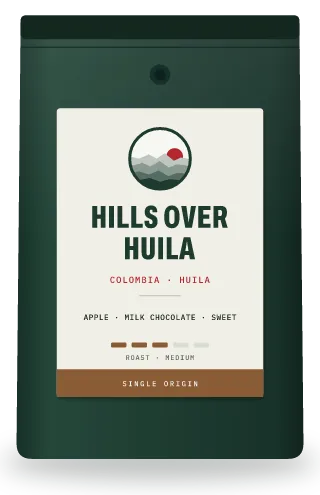 Hills Over HuilaColombia · Medium
 Fruits of KochereEthiopia · Light
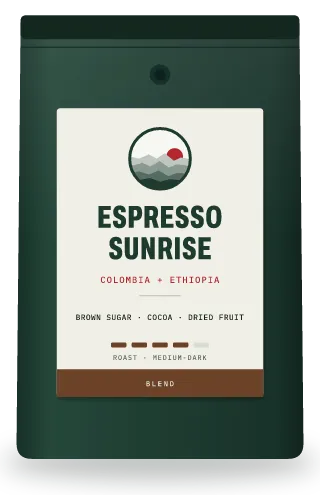 Espresso SunriseColombia & Ethiopia · Medium-dark
Putting a setup together? See our guides to the best coffee grinders and the best gooseneck kettles, and our guide to brewing coffee at home.