As an Amazon Associate, Regions Coffee Supply earns from qualifying purchases, at no extra cost to you.
Quick answer
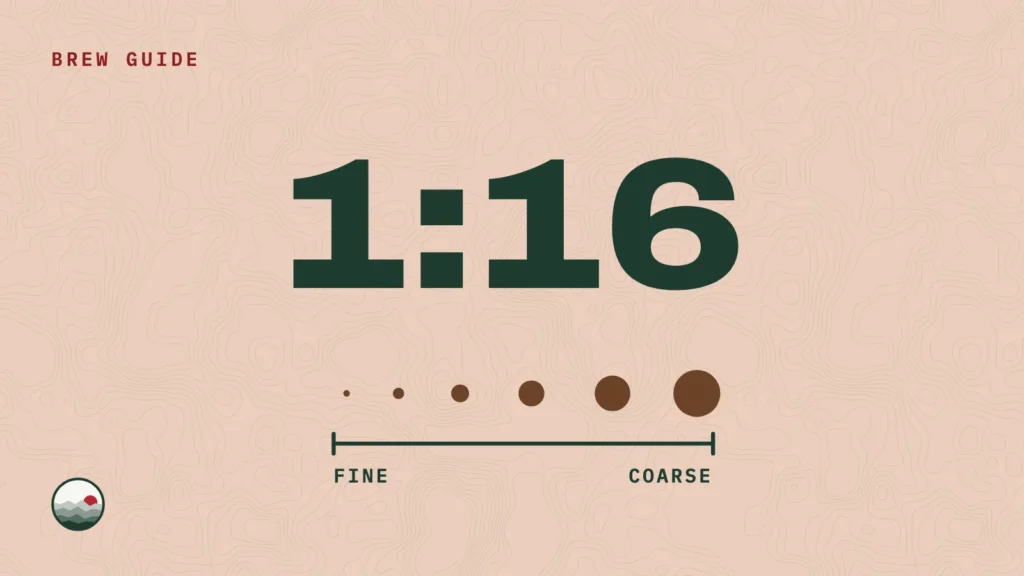
A good starting ratio for most filter coffee is 1 g of coffee to 16 g of water, with a medium to medium-fine grind and water just off the boil. Use the chart below to find the ratio and grind for your method, then adjust: go finer or use more coffee if it tastes weak or sour, and go coarser if it tastes bitter. Weighing your coffee is what makes any of these numbers work.
The chart
| Method | Ratio | Example | Grind | Water temp | Brew time |
|---|---|---|---|---|---|
| Hario V60 | 1:16 | 20 g coffee, 320 g water | Medium-fine | 195-205°F | About 2:30 to 3:30 |
| Kalita Wave | 1:16 | 20 g coffee, 320 g water | Medium | 195-205°F | About 3:00 to 3:30 |
| Chemex | 1:15 to 1:17 | 50 g coffee, 800 g water | Medium-coarse | 195-205°F | About 3:30 to 4:30 |
| AeroPress (original) | 1:12 to 1:16 | 17 g coffee, 220 g water | Medium-fine | 185-205°F | About 1:30 to 2:30, including the press |
| Drip machine or Moccamaster | About 1:17 to 1:18 | 55 g coffee per 1 L of water | Medium | Set by the machine | 4 to 6 minutes for a full pot |
| French press | 1:15 | 30 g coffee, 450 g water | Coarse | 195-205°F | About 4 minutes |
| Cold brew (concentrate) | 1:8 | 100 g coffee, 800 g water | Coarse | Cold or room-temperature water | 12 to 18 hours |
| Espresso | 1:2 | 18 g in, 36 g out | Fine | Set by the machine | 25 to 30 seconds |
How much water for your dose (at 1:16)
| Coffee | Water | Roughly |
|---|---|---|
| 15 g | 240 g | About 8 oz |
| 20 g | 320 g | About 11 oz |
| 25 g | 400 g | About 13 oz |
| 30 g | 480 g | About 16 oz |
| 40 g | 640 g | About 22 oz |
| 50 g | 800 g | About 27 oz |
| 60 g | 960 g | About 32 oz |
How to use the chart
There are three things to adjust, and it helps to change only one at a time.
- Ratio. More coffee per gram of water makes a stronger cup. Less makes a lighter one.
- Grind. Finer grounds slow the water down and extract more. Coarser grounds speed it up and extract less. As a rough guide, fine is closer to table salt, medium is like sand, and coarse is like sea salt. The click numbers on your grinder will differ from anyone else’s.
- Time and temperature. Longer contact and hotter water extract more. Brew time mostly follows from your grind and your recipe.
For the method itself, see our guide to brewing coffee at home.
Sour or bitter? How to adjust
- Sour, thin or salty: the coffee is under-extracted. Grind finer, use hotter water, or brew a little longer.
- Bitter, harsh or dry: the coffee is over-extracted. Grind coarser, use slightly cooler water, or shorten the brew.
- Weak but not sour: use more coffee, so go from 1:17 toward 1:15.
- Heavy or muddy: your grind may be too fine for the method, or the filter may be clogging. Try a slightly coarser grind.
The gear that makes the chart work
You need a way to weigh, grind and heat water. Our guides cover each of those, and these are the brewers from the chart:
- Weighing: see our guide to the best coffee scales.
- Grinding: see our guides to the best coffee grinders and the best hand coffee grinders.
- Heating water: see our guide to the best gooseneck kettles.
- V60: Hario V60 02
- Chemex: Chemex 10-cup or 6-cup
- AeroPress: AeroPress Original
- French press: Bodum Chambord 34 oz
- Drip machine: Technivorm Moccamaster KBGV Select
Where these numbers come from
These are widely used starting points for home brewing, not lab results. The Specialty Coffee Association’s Golden Cup standard is about 55 g of coffee per liter of water, which is roughly 1:18, and most pour-over recipes sit a little stronger at around 1:15 to 1:17. Your coffee, your water and your taste will move the numbers, which is why the chart says to adjust.
We haven’t tested every product in this guide. We’ve been brewing coffee at home for more than 15 years, and our own setup is a Technivorm Moccamaster (Stone Grey), an original AeroPress, a 10-cup Chemex and a Hario V60. We only describe something as our own experience when it’s one of those. Everything else is a researched pick, based on manufacturer details, Amazon listings and customer ratings we checked in October 2026.
Coffee ratio and grind size FAQ
What’s the best coffee-to-water ratio?
There isn’t one best ratio, but 1:16 (1 g of coffee to 16 g of water) is a good place to start for most filter methods. Go toward 1:15 for a stronger cup and toward 1:17 or 1:18 for a lighter one.
How do I measure coffee without a scale?
You can use a scoop, but scoops vary with the roast and how you fill them, so results won’t be consistent. A scale is the easiest way to repeat a cup you liked. See our guide to the best coffee scales.
What does medium-fine grind mean?
It’s a size between fine (espresso) and medium. A rough comparison is table salt for fine, sand for medium and sea salt for coarse. Because every grinder numbers its settings differently, start in the middle and adjust by taste.
How hot should the water be?
A common range for brewing is 195 to 205°F (90 to 96°C), which is just off the boil. Cold brew uses cold or room-temperature water.
Why does my coffee taste sour or bitter?
Sour or thin usually means under-extraction, so go finer, hotter or longer. Bitter or harsh usually means over-extraction, so go coarser, cooler or shorter. Change one thing at a time.
Does the same grind work for every brew method?
No. Espresso needs a fine grind, pour-over and drip need medium to medium-fine, and French press and cold brew need coarse. If your grinder can’t cover the whole range, see our guide to the best coffee grinders for home.
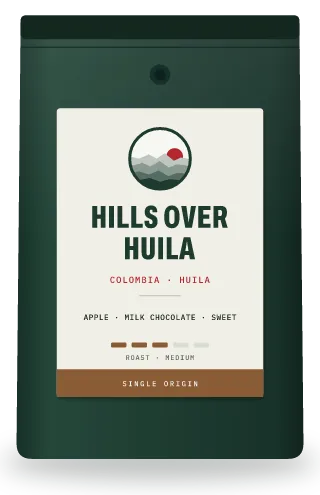
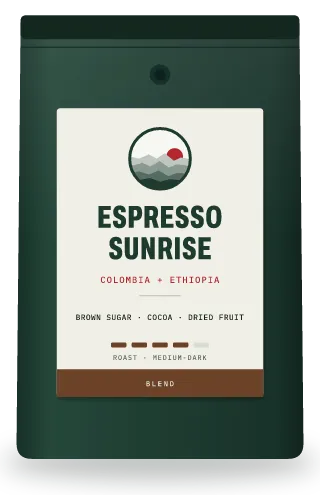
Brew it with Regions coffee
Put the chart to work on a coffee worth dialing in. Try Fruits of Kochere in a V60, Hills Over Huila in a Chemex, or Espresso Sunrise if you’re weighing espresso shots. For an everyday pot, try Daybreak Blend. Several of our coffees are still listed as coming soon, so check each page for availability, roast and tasting notes. For a full recipe, see our guide to brewing Ethiopian coffee for pour-over.