This guide includes affiliate links to gear I use and recommend. As an Amazon Associate, Regions Coffee Supply earns from qualifying purchases, at no extra cost to you.
Brewing great coffee at home comes down to four things you control: the coffee-to-water ratio, the grind size, the water temperature and the brew time. Get those right and almost any brewer will make a cup you’re proud of. Below are the five methods I come back to most, with the numbers I use for each and the gear I’ve actually lived with.
Quick answer: ratio, grind and time for each method
| Method | Coffee to water | Grind | Brew time | Best for |
|---|---|---|---|---|
| Chemex | 1:15 (34 g to 500 g) | Medium-coarse | About 4 minutes | Clean, bright cups to share |
| Hario V60 | 1:16 (30 g to 500 g) | Medium-fine | About 4 minutes | Precision and consistency |
| French press | 1:12 to 1:15 | Coarse | 4-minute steep | Rich, full-bodied coffee |
| AeroPress | 1:12 (15 g to 180 g) | Fine to medium-fine | 1 to 2 minutes | Travel and single strong cups |
| Drip machine | 1:17 (10 g per 6 oz cup) | Medium | 5 to 7 minutes | Hands-off mornings |
Before you brew: three things that matter more than the brewer
- Fresh, whole-bean coffee. Coffee tastes best within about a month of roasting. Grind it right before you brew.
- A burr grinder. Even grounds extract evenly. Blade grinders make a mix of dust and boulders that tastes bitter and sour at the same time.
- A scale and good water. Weighing coffee and water is the easiest way to repeat a great cup. Use filtered water heated to 195–205°F.
1. Chemex
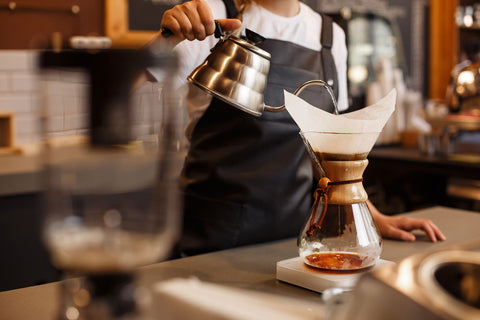
First, one of my favorites: the Chemex. It’s an elegant, timeless pour-over that makes a clean, full-flavored cup, and it’s one of the simplest methods to learn. Its thick paper filters hold back oils and fine particles, which is why Chemex coffee tastes so clean.
- Ratio: 1:15, or 1 gram of coffee to 15 grams of water. For example, 34 g of coffee to 500 g of water.
- Grind: medium-coarse, like kosher salt.
- Brew time: about 4 minutes total.
- Technique: rinse the filter with hot water and pour that water out. Add the coffee, pour about twice its weight in water and let it bloom for 30 to 45 seconds, then pour the rest in slow circles to keep the grounds evenly wet.
I have the 10-cup Chemex because I like enough coffee to sip through the morning. For most people, I’d start with the 6- or 8-cup model.
2. Hario V60
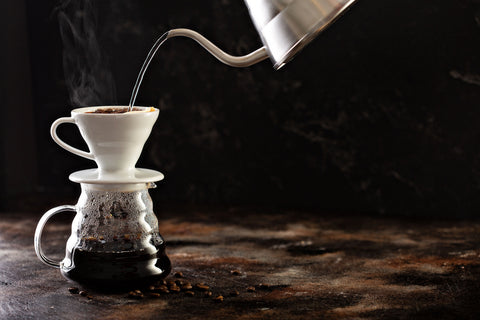
The Hario V60 is a favorite among coffee enthusiasts for its precision and control. If your goal is a consistent cup every morning, this is the method to learn. I use about 30 grams of coffee and 500 grams of water.
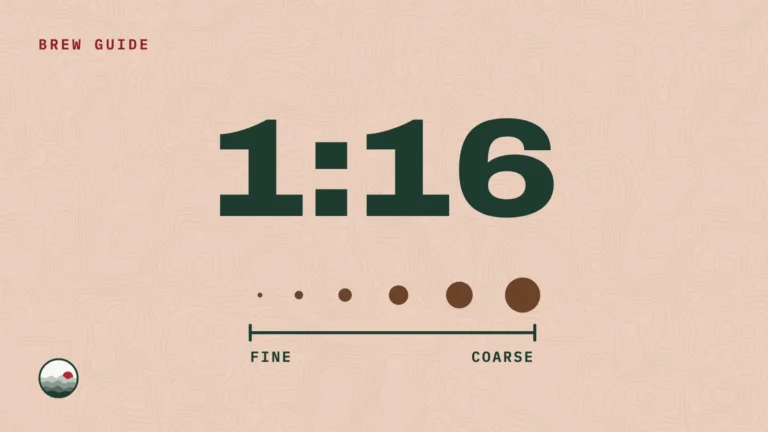
- Ratio: 1:16, or 1 gram of coffee to 16 grams of water.
- Grind: medium-fine, like table salt.
- Brew time: about 4 minutes total.
- Bloom. Pour 2 to 3 times the coffee’s weight in water (60 to 90 g) to saturate the grounds, then swirl the V60 so everything is evenly wet. Wait about 45 seconds.
- First pour. Pour the first 50 to 60 percent of your water, about 300 g of 500 g, in a steady spiral.
- Second pour. Keep pouring in a spiral until you reach your total water weight at around 1:45 on the timer. The V60 will be quite full, but the filter can hold it.
- Settle. Give it a gentle stir, then one last swirl so the grounds settle flat in the bottom of the filter.
- Finish. The water should finish draining at about 4:00. Toss the filter and enjoy.
See the Hario V60 kit on Amazon
3. French press
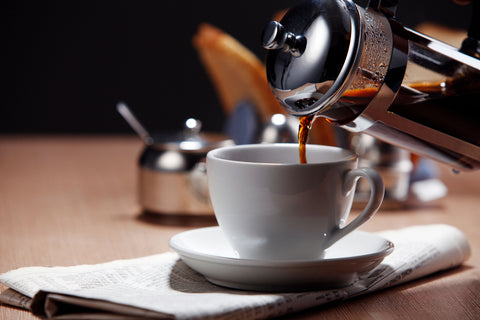
The French press, or press pot, makes a full-bodied, robust cup because its metal filter lets the coffee’s natural oils through. If you love coffee that packs a punch, this is your method.
- Ratio: 1:12 for a strong cup, up to 1:15 for a lighter one.
- Grind: coarse, like breadcrumbs.
- Brew time: 4 minutes.
- Technique: add hot water, stir gently, then put the lid on and let it steep. Press the plunger down slowly and pour right away, so the coffee doesn’t keep steeping and turn bitter.
There are a lot of French presses out there. I’ve found the best is still the classic Bodum.
See the Bodum French press on Amazon
4. AeroPress
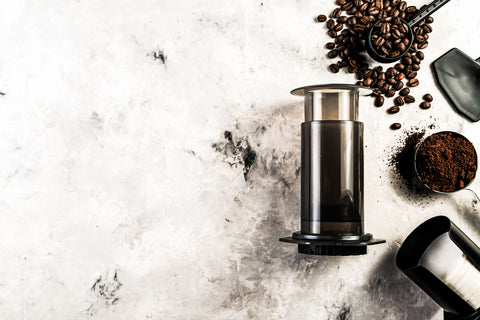
The AeroPress is versatile and portable, and it makes a smooth, concentrated cup. If you want excellent coffee on the go, start here. I still use the original model I bought almost a decade ago.
- Ratio: 1:12, for example 15 g of coffee to 180 g of water.
- Grind: fine to medium-fine.
- Brew time: 1 to 2 minutes.
- Technique: use the inverted method. Flip the AeroPress upside down, add the coffee and water, stir and let it steep. Attach the rinsed filter cap, flip it onto your mug and press slowly. Try different grind sizes to find your balance.
AeroPress now makes several versions:
- AeroPress Original, the one I use
- AeroPress XL, for bigger batches
- AeroPress Clear, a see-through version
- AeroPress Go, a travel edition that packs into its own mug
5. Drip machine
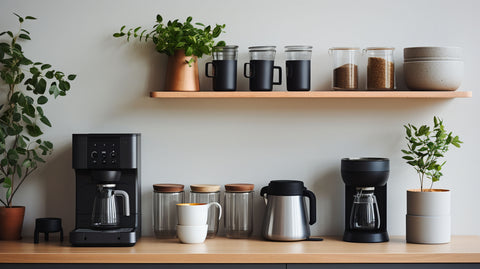
Many coffee lovers prefer a set-it-and-forget-it approach, and a good drip machine is a convenient way to brew. The key word is good: many inexpensive machines never get the water hot enough to brew properly.
- Ratio: 1:17, about 2 level tablespoons (10 g) of coffee per 6 oz cup.
- Grind: medium, like sand.
- Brew time: follow your machine, usually 5 to 7 minutes.
- Water temperature: 195–205°F.
When you shop for a machine, look for one certified by the Specialty Coffee Association (SCA). The SCA tests brewers for water temperature, brew time and the quality of the finished coffee before giving its approval, so a certified machine takes the guesswork out.
After more than 15 years of trying machines, these are the ones I recommend. For the last few years I’ve used a Technivorm Moccamaster in Stone Grey. When it’s time to replace it, I may go with the glass-carafe model, since some people find glass has a noticeable effect on flavor.
- Technivorm Moccamaster with thermal carafe
- Technivorm Moccamaster with glass carafe
- Bonavita drip coffee maker
Which brewing method should you choose?
- For the cleanest, brightest cup: Chemex.
- For control and consistency: Hario V60.
- For a rich, full-bodied cup with little effort: French press.
- For travel or a single strong cup: AeroPress.
- For hands-off mornings and a full pot: an SCA-certified drip machine.
Coffees to try with each method
Lighter roasts shine in pour-over, and darker roasts love a French press.
- Chemex or V60: Fruits of Kochere (light roast, Ethiopia) or Hills Over Huila (medium roast, Colombia)
- French press: Noche Oscura del Peru or Campfire Fusion
- AeroPress or espresso: Espresso Sunrise
- Drip machine: Daybreak Blend
Home brewing FAQ
What is the best coffee-to-water ratio?
Start at 1:16, one gram of coffee for every 16 grams of water. Go stronger (1:15, or 1:12 for French press and AeroPress) or lighter (1:17 for drip) to taste.
How much coffee should I use per cup?
About 2 level tablespoons, or 10 grams, of ground coffee per 6-ounce cup. For a 12-ounce mug, use about 22 grams.
What water temperature is best for brewing coffee?
Between 195°F and 205°F (90–96°C). Without a thermometer, let boiling water sit for about 30 seconds before you pour.
What grind size should I use?
Coarse for French press, medium-coarse for Chemex, medium for drip, medium-fine for V60 and fine to medium-fine for AeroPress. If your coffee tastes sour, grind finer. If it tastes bitter, grind coarser.
Why does my coffee taste bitter?
Usually over-extraction: the grind is too fine, the water is too hot or the coffee brewed too long. Try a slightly coarser grind or a shorter brew time first.
The bottom line
Whichever method you choose, the real secret is experimenting. Adjust your grind, ratio and brew time until the cup tastes right to you. Grab some fresh beans, get your gear ready and enjoy brewing at home. Happy brewing!