





Quick answer
The Ethiopian coffee ceremony, or buna, is a traditional way of preparing and sharing coffee with family, friends and neighbors. The host roasts green beans in a pan, grinds them by hand and brews them in a clay pot called a jebena, then pours the coffee into small cups, often with incense burning and fresh grass on the floor. Coffee is usually served in three rounds, abol, tona and baraka, and the whole ceremony can last an hour or more. It’s as much about time together as it is about coffee.
The ceremony at a glance
| Name | What it is |
|---|---|
| Buna | The Amharic word for coffee, and the everyday name for the ceremony |
| Jebena | A round-bellied clay coffee pot with a long neck, spout and handle |
| Sini | Small, handleless cups the coffee is served in |
| Rekebot | The tray or low wooden stand the cups sit on |
| Mukecha and zenezena | A wooden mortar and a pestle for grinding the roasted beans |
| Abol, tona, baraka | The first, second and third rounds of coffee |
Why the ceremony matters
Ethiopia is where Arabica coffee comes from, and coffee is woven into daily life there. A well-known saying, buna dabo naw, means “coffee is our bread.” In many homes the ceremony happens every day, sometimes more than once, and being invited is a sign of friendship and respect. It’s a time to slow down, talk, share news and welcome guests. The ceremony is also part of life in neighboring Eritrea, where the rounds have Tigrinya names.
Traditionally, a woman of the household leads the ceremony, and doing it well is a point of pride. Our Ethiopian coffee guide covers the regions and flavors behind the coffee itself.
The ceremony, step by step
1. Setting the scene
The host spreads fresh grass or flowers on the floor and arranges the cups on the rekebot. Incense, often frankincense, is burned on hot coals, filling the room with its scent. Guests gather around, and a small charcoal stove is lit for roasting and brewing.
2. Roasting the beans
Green coffee beans are washed, then roasted in a flat pan with a long handle over the coals. The host stirs or shakes the beans so they roast evenly, usually until they’re dark, shiny and fragrant. The pan is often carried around the room so guests can enjoy the smoke and aroma.
3. Grinding by hand
The roasted beans are pounded into a fine powder in a wooden mortar, the mukecha, with a pestle called the zenezena. Today some homes and restaurants use a grinder instead.
4. Brewing in the jebena
Water is brought to a boil in the jebena, and the ground coffee is added. The pot is boiled again, then set aside, sometimes tilted on a ring, so the grounds settle. Many jebenas have a small plug of straw or horsehair in the spout to hold the grounds back.
5. Pouring and serving
The host pours in one steady stream from a height, moving along the row of cups without stopping, so the grounds stay in the pot. The eldest or most honored guest is often served first. Coffee is usually taken with sugar, and in some rural areas with salt or spiced butter instead. Some people add a sprig of rue, called tena adam, for a fresh, citrusy note. Snacks like popcorn, roasted barley or peanuts are often passed around.
The three rounds: abol, tona and baraka
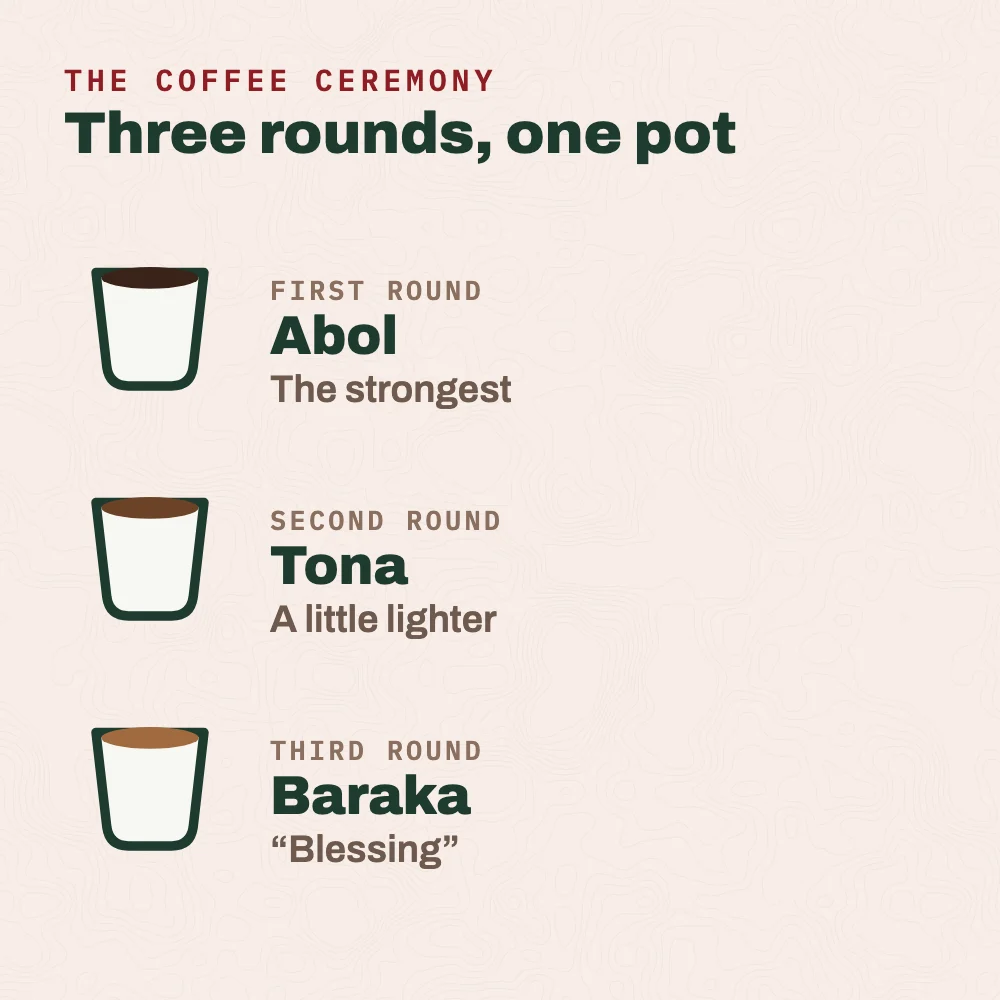
After the first pot is poured, the host adds more water to the same grounds and brews again, and then once more. The first round, abol, is the strongest. The second, tona, is a little lighter. The third, baraka, means “blessing,” and finishing it is said to bring good wishes to everyone present. Leaving before the third round can be seen as impolite, which is part of why the ceremony takes its time.
How to try an Ethiopian-style coffee at home
You don’t need a full ceremony to enjoy the spirit of it. Here’s a simple home version:
- Choose a coffee: an Ethiopian coffee, roasted to your taste. Traditional ceremonies roast dark, but a lighter roast shows off Ethiopian fruit and florals.
- Grind it fine: close to espresso or a little coarser.
- Boil and steep: bring water to a boil in a jebena, or a small saucepan or Turkish-style pot. Add the coffee, about 1 heaped tablespoon per small cup, and let it come back up to a boil.
- Let it settle: take it off the heat and wait 3 to 5 minutes for the grounds to sink.
- Pour gently: pour slowly into small cups, leaving the grounds behind, and serve with sugar and a snack.
For an everyday way to brew Ethiopian coffee with paper filters, our guide to brewing Ethiopian coffee for pour-over has a step-by-step recipe.
Where this guide comes from
This is a researched guide, not a firsthand account. It draws on cultural and food writing about the ceremony, Ethiopian restaurant and coffee guides, and coffee reference sites, checked in October 2026. The ceremony varies by region, family and community, so treat this as a general overview, and if you’re ever invited to one, follow your host’s lead.
Ethiopian coffee ceremony FAQ
What is the Ethiopian coffee ceremony?
A traditional way of roasting, grinding, brewing and sharing coffee, usually at home. It’s a social ritual of hospitality and friendship, and it can last an hour or more.
What is a jebena?
A traditional Ethiopian clay coffee pot with a round base, a long neck, a spout and a handle. Coffee is boiled in it, then poured out once the grounds settle.
What are the three rounds called?
In Amharic, abol, tona and baraka. Baraka, the third, means “blessing.” In Tigrinya, spoken in Eritrea and northern Ethiopia, the first two have different names.
How long does the ceremony take?
Usually an hour or more, and it can stretch to several hours. The roasting, grinding and brewing take minutes, but the three rounds and the conversation take their time.
Why is popcorn served at the ceremony?
It’s a simple, traditional snack to share with the coffee. Roasted barley, peanuts or bread are common too.
Do Ethiopians put salt or butter in coffee?
Most take it with sugar, but in some rural areas people add a pinch of salt or spiced butter instead.
Is the coffee ceremony also Eritrean?
Yes. Eritrea shares the tradition, with very similar steps and its own names for the rounds.
Try it with Regions coffee
Fruits of Kochere is our Ethiopian coffee, from the Kochere area of Yirgacheffe, with a floral aroma, juicy stone fruit and a bright citrus finish. It’s a light roast rather than the dark roast of a traditional ceremony, so it brings out the fruit and florals Ethiopian coffee is known for. It’s coming soon, so tap Notify me on its page to hear when it’s ready.