



On this page
Quick answer
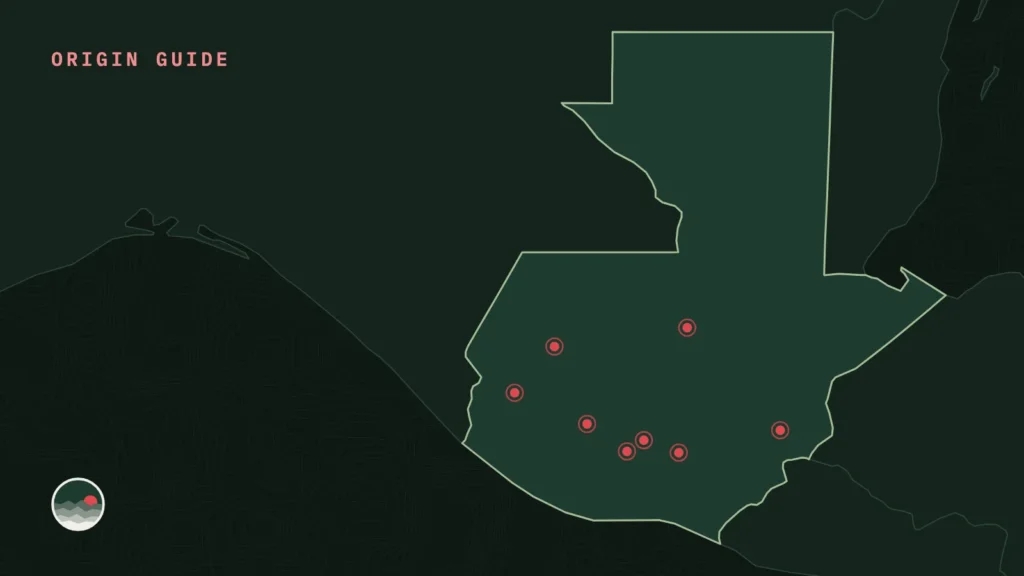
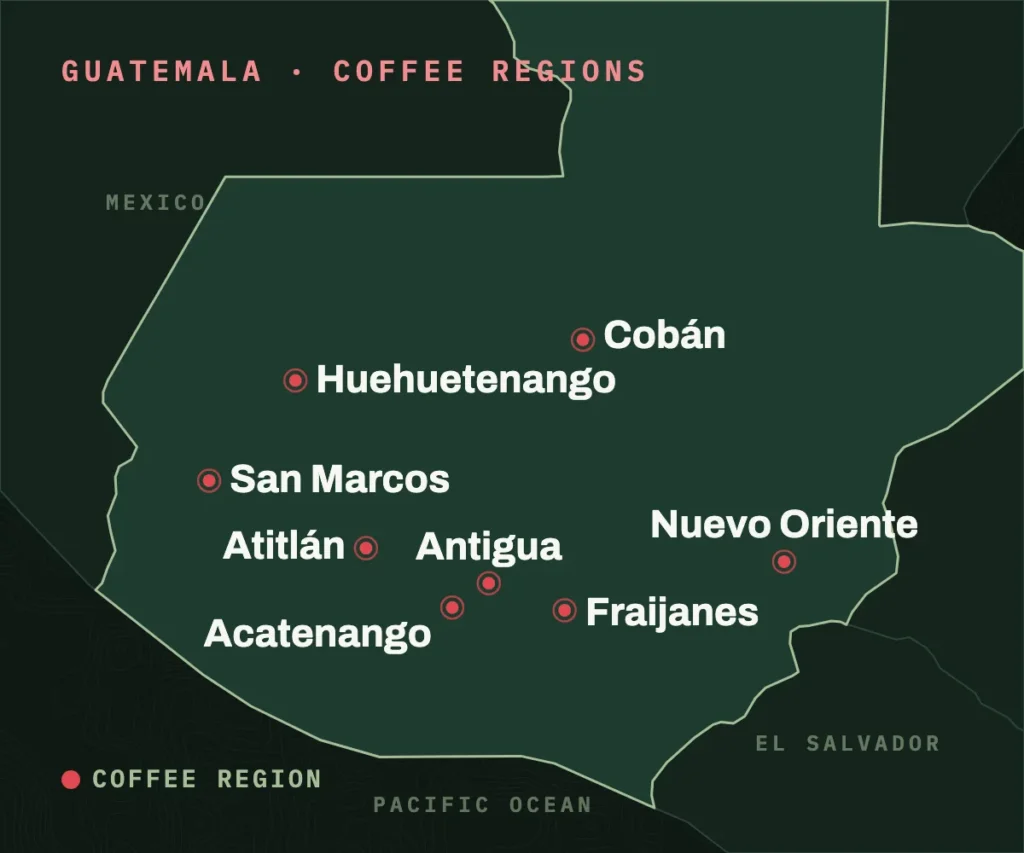
Guatemalan coffee is known for being sweet, balanced and full-bodied, with chocolate, caramel and nuts, a bright citrus or fruity acidity and often a hint of spice. It’s almost all arabica, mostly washed, and much of it grows high on volcanic slopes. Guatemala’s coffee association recognizes eight growing regions, and the best known are Antigua, a classic chocolatey, spicy cup from the valley below three volcanoes, and Huehuetenango, a high, dry region known for bright, fruity coffees. Guatemalan coffee tastes great on its own and adds sweetness and body to blends.
Guatemala’s eight coffee regions at a glance
| Region | Known for | What it tends to taste like |
|---|---|---|
| Antigua | A valley ringed by volcanoes | Chocolate, caramel and spice, with a full body |
| Acatenango | Slopes beside the active Fuego volcano | Sweet and fruity, with honey and spice |
| Atitlán | Farms around Lake Atitlán | Full body, balanced acidity, chocolate and cinnamon |
| Huehuetenango | High, dry mountains near Mexico | Bright and fruity, with lively acidity |
| San Marcos | The warmest, wettest region | Floral, with pronounced acidity |
| Fraijanes | A high plateau near Guatemala City | Bright acidity, citrus and nuts |
| Cobán | Rainy cloud forest in the north | Mild and fruity, with a lighter body |
| Nuevo Oriente | The east, near Honduras | Balanced and chocolatey, with a heavier body |
Why Guatemalan coffee tastes the way it does
Volcanoes and altitude. Guatemala has more than 30 volcanoes, and many coffee farms grow on their slopes, in rich volcanic soil. Much of the best coffee grows high, often well above 1,300 meters, where cool nights slow ripening and build sweetness and acidity. Guatemala grades its highest-grown coffee as SHB, or Strictly Hard Bean, because high-grown beans are denser.
Microclimates. Mountains, lakes, volcanoes and two coasts give Guatemala many different climates in a small area. That’s why its coffee association defines eight separate regions, each with its own typical flavor.
Classic varieties and washed processing. Many farms grow traditional arabica varieties like Bourbon, Caturra, Catuai and Typica, and most coffee is washed, which gives a clean, sweet cup. Our guides to types of coffee beans and coffee processing explain both.
Antigua
Antigua is Guatemala’s most famous coffee region. The old colonial city of Antigua sits in a valley surrounded by three volcanoes, Agua, Fuego and Acatenango, and coffee grows on the slopes all around it, roughly 1,500 to 1,800 meters up. Volcanic ash enriches the soil, and the valley’s dry season and cool nights help the coffee ripen slowly. Antigua coffees are known for chocolate, caramel and spice, with a full body and gentle acidity. Because the name is so valuable, Antigua growers have worked to protect it from coffee grown elsewhere.
Huehuetenango
Huehuetenango, often shortened to “Huehue”, is a high, dry region in the mountains near the Mexican border. Hot winds from Mexico’s lowlands protect its farms from frost, so coffee can grow very high, up to around 2,000 meters. Huehuetenango coffees are known for bright, lively acidity and fruity flavors, and they’re one of the most common Guatemalan names on specialty menus.
Guatemala’s other coffee regions
Atitlán and Acatenango
Around Lake Atitlán, farms grow on volcanic slopes that drop straight down to the water, and the coffees tend to be full-bodied and balanced, with chocolate and cinnamon. Next to Antigua, Acatenango grows coffee beside Fuego, one of the most active volcanoes in Central America, whose ash keeps renewing the soil. Its coffees are often sweet and fruity.
San Marcos and Fraijanes
San Marcos, in the west near the Tajumulco volcano, is the warmest and wettest region, and its coffee flowers earlier than elsewhere. Its coffees are often floral with pronounced acidity. Fraijanes, a high plateau near Guatemala City, is known for bright acidity and citrus.
Cobán and Nuevo Oriente
Cobán, in the north, is a rainy, cloud-forested region with coffees that are often mild and fruity. Nuevo Oriente, in the east near Honduras, grows coffee on old, non-volcanic soils, and its coffees tend to be balanced and chocolatey, with a heavier body.
A short history of coffee in Guatemala
Coffee reached Guatemala in the 1700s, but for a long time the country’s big export was cochineal, a red dye made from insects. When cheaper synthetic dyes were invented in the mid-1800s, demand for cochineal collapsed, and Guatemala turned to coffee. By around 1880, coffee made up most of the country’s exports. Today Guatemala grows around 3 million 60 kg bags a year, almost all of it arabica.
How to brew Guatemalan coffee
Guatemalan coffee works in almost any brewer. Medium roasts shine in drip and pour-over, where their chocolate and citrus come through clearly, and darker roasts make a rich French press or espresso. For pour-over, try 22 g of coffee to 350 g of water with a medium-fine grind. Our coffee ratio and grind size chart has starting points for every method.
Where this guide comes from
This is a researched guide. It draws on coffee importers’ and roasters’ guides to Guatemala’s regions, USDA reports on Guatemala’s coffee sector and coffee reference sites, checked in October 2026. Sources often disagree on altitudes and flavor notes, so treat them as tendencies.
Guatemalan coffee FAQ
What does Guatemalan coffee taste like?
Usually sweet and balanced, with chocolate, caramel and nuts, a bright citrus or fruity acidity and sometimes spice. Antigua tends to be chocolatey and spicy, and Huehuetenango brighter and fruitier.
Is Guatemalan coffee good?
Yes. It’s one of the most respected origins in Central America, known for sweet, balanced, high-grown coffees that work in almost any brewer.
What is Guatemala Antigua coffee?
Coffee from the Antigua valley, ringed by the Agua, Fuego and Acatenango volcanoes. It’s known for chocolate, caramel and spice, with a full body.
What is Huehuetenango coffee?
Coffee from Guatemala’s high, dry northwest near Mexico. It’s often grown very high and known for bright acidity and fruity flavors.
What does SHB mean on Guatemalan coffee?
Strictly Hard Bean, Guatemala’s top altitude grade. It’s given to coffee grown high up, where beans grow slowly and become denser.
When is coffee harvested in Guatemala?
Mostly from about December to March, with timing varying by altitude and region.
How is Guatemalan coffee different from Colombian coffee?
Both are sweet, washed arabicas. Guatemalan coffee often has a fuller body and more chocolate and spice, and Colombian coffee is often a little rounder and more caramel-sweet. Our Colombian coffee guide covers that side.
Try it with Regions coffee
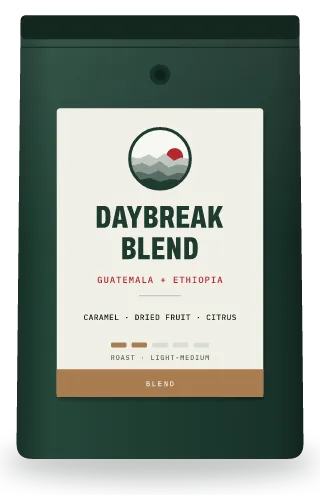
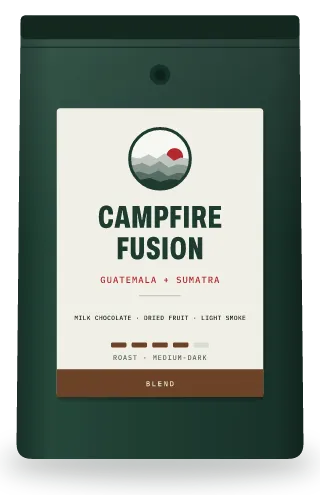
Guatemalan coffee is the base of two of our blends. Daybreak Blend pairs Guatemala’s round body and caramel sweetness with an Ethiopian coffee’s bright citrus, roasted light-medium for an easygoing morning cup. Campfire Fusion pairs Guatemala’s chocolate and sweetness with Sumatra’s earthy, full body, roasted medium-dark, with milk chocolate, dried fruit and a touch of smoke. Our coffees are listed as coming soon, so tap Notify me on either one to hear when they’re ready.
Our guides to single origin vs blend coffee and Indonesian coffee explain what each side of these blends brings.