



On this page
Quick answer
Indonesian coffee is known for a heavy, syrupy body, low acidity and deep, earthy flavors: dark chocolate, cedar, spice, tobacco and herbs. Much of that comes from wet hulling, a processing method used almost only in Indonesia. Sumatra is the most famous coffee island, and names like Mandheling and Gayo come from there. Java gave coffee its nickname, and Sulawesi, Bali and Flores grow distinctive coffees too. Most of Indonesia’s coffee is robusta, but the arabica it exports is some of the most recognizable in the world. It’s a natural for dark roasts, French press and blends.
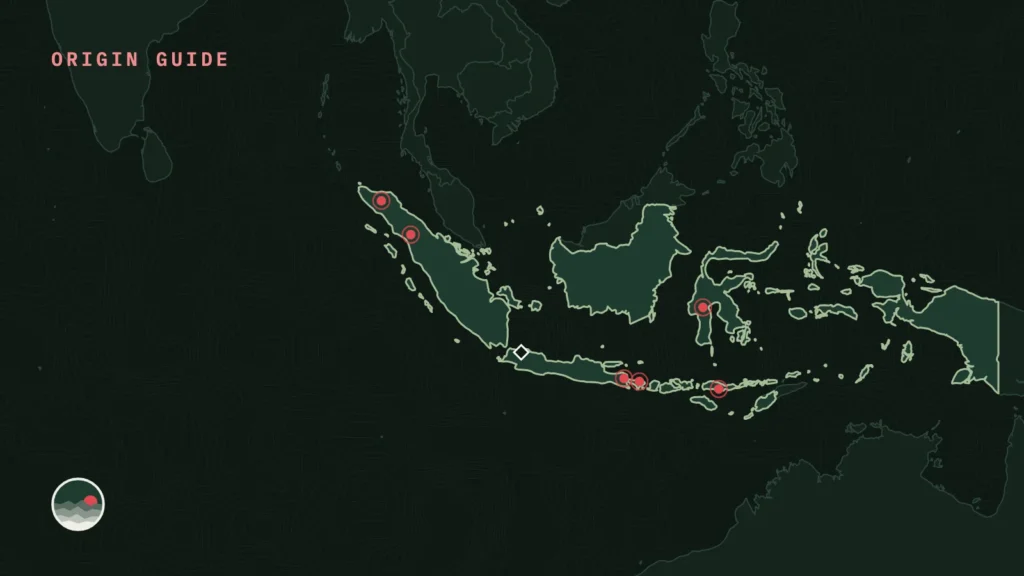
Indonesia’s coffee regions at a glance
| Region | Island | What it tends to taste like |
|---|---|---|
| Gayo, Aceh | Sumatra | Full and earthy, with herbal notes and low acidity |
| North Sumatra (Lintong, Mandheling) | Sumatra | Heavy and syrupy: dark chocolate, cedar, spice and tobacco |
| Ijen and East Java | Java | Clean and smooth, with a heavy body and mild acidity |
| Toraja | Sulawesi | Full-bodied, with dark chocolate, ripe fruit and spice |
| Kintamani | Bali | Lighter and brighter, with citrus |
| Bajawa | Flores | Nutty and chocolatey, sometimes floral |
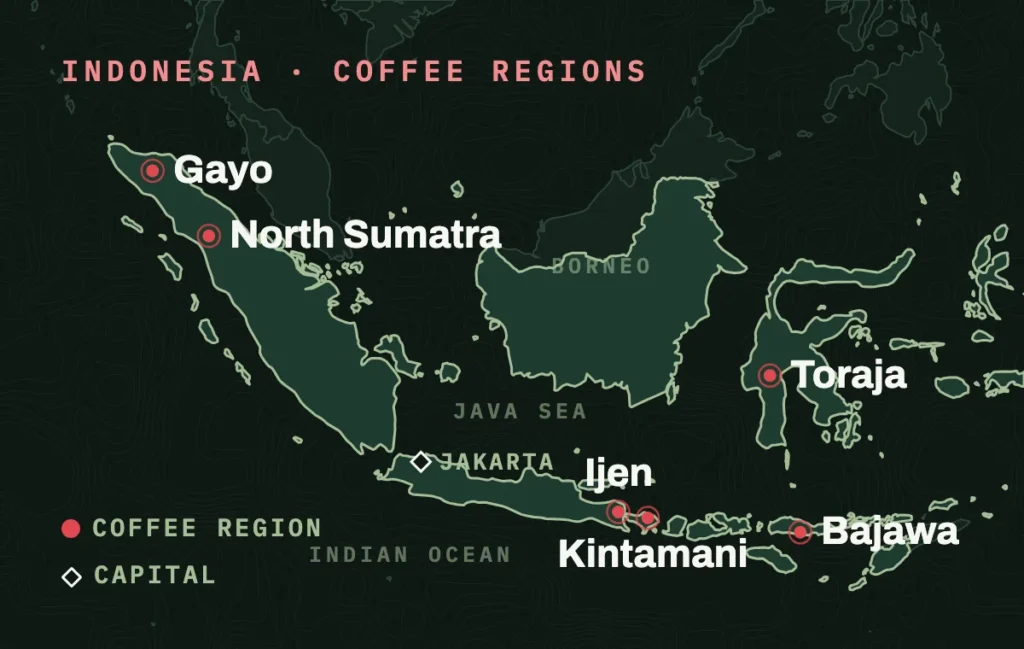
Why Indonesian coffee tastes the way it does
Wet hulling. Most Indonesian arabica is processed with a method called wet hulling, or giling basah. Elsewhere, coffee is dried in its papery parchment layer until it’s quite dry, around 10 to 12% moisture, before that layer is removed. In much of Indonesia, the air is too humid to dry coffee that far, so farmers hull it while it’s still damp, at roughly 50% moisture, and finish drying the bare beans. The result is a heavier body, lower acidity and earthy, woody, herbal flavors. It also gives green Sumatran beans their typically darker, bluish-green look.
Volcanic islands. Indonesia’s coffee grows across thousands of islands, often on volcanic soil in the highlands. Each island has its own climate and traditions, which is why Sumatra, Java, Sulawesi and Bali taste so different from each other.
Mostly robusta. Robusta makes up nearly 90% of Indonesia’s harvest, much of it grown in southern Sumatra. USDA figures put the 2025/26 crop at about 12.4 million 60 kg bags, of which roughly 1.4 million were arabica. The arabica, grown higher up in places like Aceh, North Sumatra and Sulawesi, is what most specialty roasters sell. Our guide to the types of coffee beans explains arabica vs robusta.
Small farms. Most Indonesian coffee comes from smallholders with a hectare or two, who often sell their coffee through collectors and mills before it’s exported.
Sumatra
Sumatra is Indonesia’s biggest coffee island and the source of its most famous arabicas. Its coffees are the classic Indonesian style: heavy and syrupy, with low acidity and flavors of dark chocolate, cedar, spice, tobacco and earth. People tend to either love that or prefer something brighter.
Gayo and Aceh
In the far north of Sumatra, the Gayo highlands of Aceh, around Lake Laut Tawar and the town of Takengon, grow much of the island’s arabica. Gayo coffees are full and earthy, with herbal notes and low acidity, and some farms produce cleaner washed lots too.
North Sumatra and Mandheling
Around Lake Toba in North Sumatra, areas like Lintong grow some of Sumatra’s best-known coffees. You’ll often see “Mandheling” on bags. It’s not a place: it’s a trade name for wet-hulled Sumatran arabica, taken from the Mandailing people, who were historically coffee traders. A Mandheling usually means a heavy, chocolatey, spicy cup.
Java: the island that named coffee
The Dutch East India Company began planting coffee on Java in the 1690s, and by the early 1700s Java coffee was arriving in Amsterdam. For a time, the island supplied most of the coffee sold there, which is why “java” became slang for coffee itself. Then, in the 1870s, coffee leaf rust devastated Java’s arabica. Planters tried liberica, then switched largely to robusta around 1900, and robusta still dominates the island’s lowlands today.
Arabica still grows in Java’s highlands, especially on the Ijen plateau in East Java, where some old Dutch-era estates remain. Unlike Sumatran coffee, much Java arabica is washed, so it tastes cleaner and smoother, with a heavy body and mild acidity. You may also see “Mocha Java”, a classic blend that pairs coffee from Yemen, once shipped through the port of Mocha, with coffee from Java. Today the name is often used loosely for any blend in that style.
Indonesia’s other coffee islands
Sulawesi
The Toraja highlands of Sulawesi grow full-bodied coffees with dark chocolate, ripe fruit and spice, usually a little brighter and cleaner than Sumatran coffee. You may also see them sold as Kalosi, after a nearby market town.
Bali
Around Kintamani, on the slopes of Mount Batur, Bali’s farmers grow coffee under a traditional cooperative system called subak abian, often alongside citrus trees. Kintamani coffees are lighter and brighter than most Indonesian coffee, with citrus notes.
Flores
East of Bali, the island of Flores grows coffee around Bajawa on volcanic highlands. Flores coffees are often described as nutty and chocolatey, sometimes with floral notes.
What about kopi luwak?
Kopi luwak, or civet coffee, is Indonesia’s most famous coffee name abroad. The beans are collected from the droppings of civets that eat coffee cherries. Investigations have found that much of it comes from caged animals, and many coffee professionals say it tastes ordinary. Our guide to the most expensive coffee in the world explains why we’d skip it.
How to brew Indonesian coffee
Indonesian coffee shines in brewers that show off body. A French press is a natural fit: try 30 g of coffee to 450 g of water, coarse grind, for 4 minutes. It also makes rich cold brew and stands up well to milk. Because it’s low in acidity, it takes a dark roast well, and it often adds depth to blends. Our guides to light, medium and dark roasts and single origin vs blend coffee explain why.
Where this guide comes from
This is a researched guide. It draws on coffee importers’ and roasters’ origin guides, USDA reports on Indonesia’s coffee sector, and coffee reference and travel sources, checked in October 2026. Sources often disagree on details like altitudes and flavor notes, so treat them as tendencies.
Indonesian coffee FAQ
What does Sumatra coffee taste like?
Heavy and syrupy, with low acidity and flavors of dark chocolate, cedar, spice, tobacco and earth. Much of that comes from wet hulling.
Why is coffee called java?
Because the island of Java, in Indonesia, was one of the world’s main coffee sources in the 1700s and 1800s, so “java” became slang for coffee.
What is Mandheling coffee?
A trade name for wet-hulled arabica from Sumatra, named after the Mandailing people, who were historically coffee traders. It usually means a heavy, chocolatey, spicy cup.
What is wet-hulled coffee?
Coffee whose parchment layer is removed while the beans are still damp, then dried again. It’s used mainly in Indonesia and gives a heavier, earthier, lower-acid cup.
Is Indonesian coffee low in acid?
Generally, yes. Sumatran coffee in particular is known for low acidity, which is why it’s popular with people who find brighter coffee too sharp.
Is Indonesian coffee arabica or robusta?
Both. Nearly 90% of Indonesia’s harvest is robusta, but its well-known specialty coffees, like Sumatra, Java and Sulawesi arabicas, are arabica.
What is Mocha Java?
A classic blend of coffee from Yemen, once shipped through the port of Mocha, and coffee from Java. Today the name is often used for any blend in that style.
Try it with Regions coffee
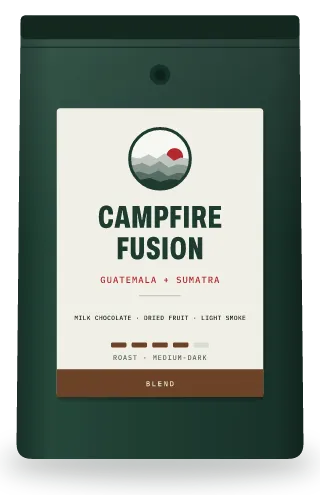
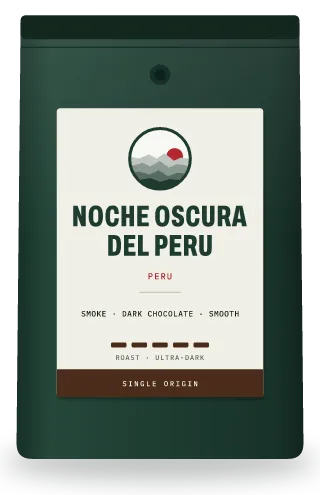
Campfire Fusion blends Sumatra with Guatemala and is roasted medium-dark. Guatemala brings chocolate and sweetness, and Sumatra adds the deep, earthy, full-bodied character the island is famous for. Expect velvety milk chocolate, dried fruit and a touch of light smoke, with low acidity: it’s richer than a Central American coffee alone and cleaner than a Sumatra alone. For another bold, low-acid cup, try Noche Oscura del Peru, our darkest roast. Our coffees are listed as coming soon, so tap Notify me on either one to hear when they’re ready.
For the bigger picture, see our coffee growing regions flavor map, which compares Indonesia with coffee from the rest of the world.