



On this page
- Quick answer
- Light vs medium vs dark roast at a glance
- What roasting does to coffee
- Light, medium and dark roast, one by one
- Which roast has the most caffeine?
- Is dark roast less acidic?
- How to choose a roast
- How to brew each roast
- Roast names, decoded
- Where this guide comes from
- Coffee roast FAQ
- Try it with Regions coffee
Quick answer
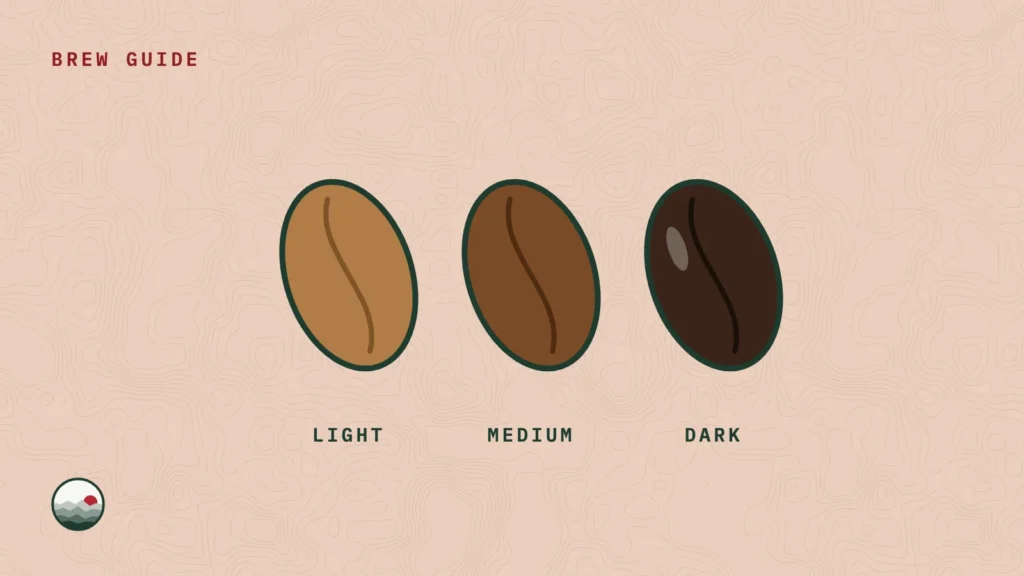
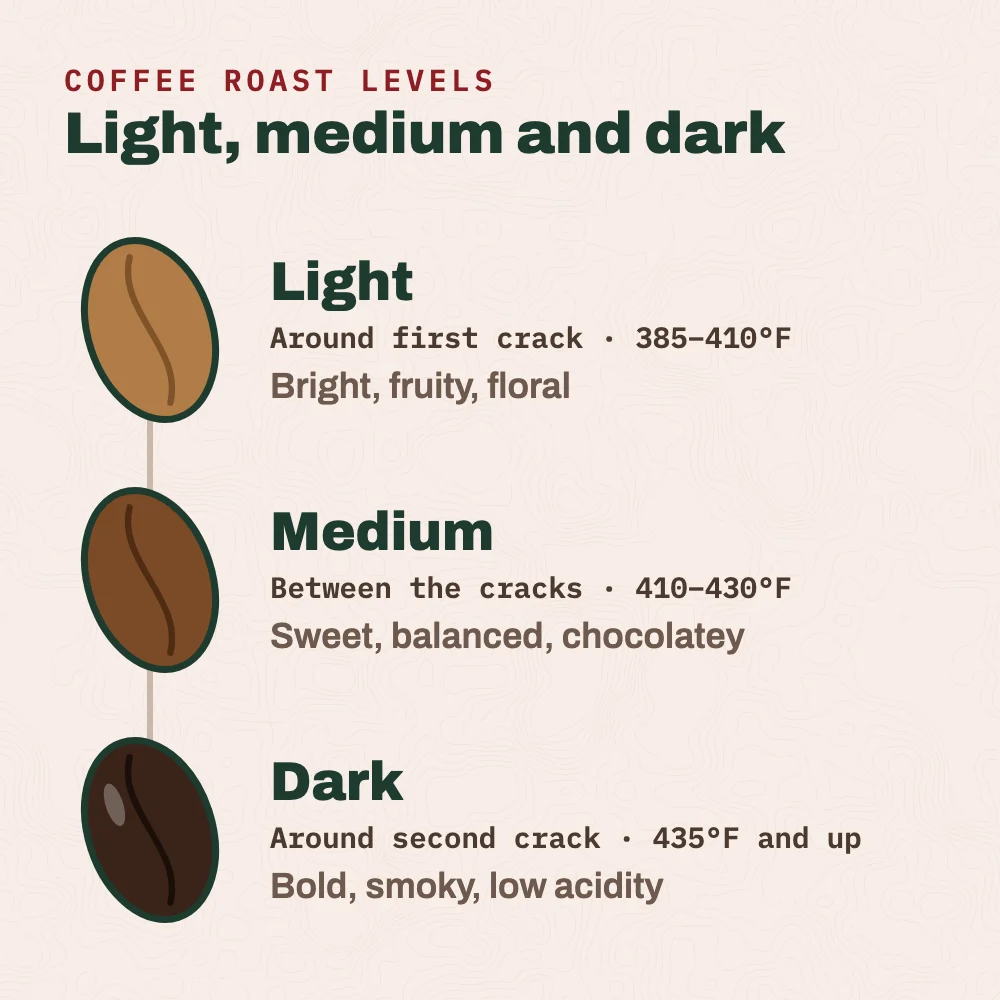
The roast is how long and how hot coffee beans are roasted, and it changes the flavor more than almost anything else. Light roasts keep more of the bean’s own character: bright, fruity and floral, with a lighter body. Medium roasts are balanced and sweet, with caramel, chocolate and nut flavors. Dark roasts taste of the roast itself: dark chocolate, toast and smoke, with low acidity and a heavy body. Caffeine barely changes with roast, so pick the flavor you like. Light suits pour-over, medium suits everyday drip, and dark suits espresso with milk, French press and cold brew.
Light vs medium vs dark roast at a glance
| Roast | What it tastes like | Good for |
|---|---|---|
| Light | Bright and lively, with fruit, floral and tea-like notes. Light body and dry, matte beans. | Pour-over, AeroPress and fruity single origins like Ethiopia |
| Medium | Balanced and sweet: caramel, milk chocolate and nuts, with some brightness. Medium body. | Drip machines, pour-over and everyday coffee |
| Dark | Bold and roasty: dark chocolate, toast and smoke, with low acidity. Heavy body and often oily beans. | Espresso with milk, French press and cold brew |
What roasting does to coffee
Raw coffee beans are green, hard and grassy-smelling. In the roaster, they dry out, turn yellow and then brown as sugars and amino acids react and caramelize. Around 385 to 400°F, the beans make a popping sound called first crack, as steam and gas break through. Light roasts are stopped around here. Keep going and the beans darken, and around 435 to 445°F they make a second, quieter crackle called second crack, where dark roasts begin.
The longer coffee roasts, the more it tastes of the roast and the less it tastes of where it grew. The beans also lose water and get lighter and bigger. A light roast loses roughly 12 to 15% of its weight, and a very dark roast loses closer to 20%. In dark roasts, oils start to come to the surface, which is why dark beans look shiny.
Light, medium and dark roast, one by one
Light roast
Light roast coffee is light brown and dry, roasted to around first crack. It keeps the most of the bean’s origin flavor, so it’s where you taste the difference between an Ethiopian and a Colombian most clearly. Expect bright acidity, like citrus or berries, floral aromas and a light, tea-like body. Some brands call light roasts “blonde roast”. Light roast suits high-quality single origins and clean brewers like a V60 or Chemex. If it tastes sour, grind a little finer or use hotter water.
Medium roast
Medium roast coffee is medium brown, roasted past first crack but stopped before second crack. It’s the middle ground: some of the origin’s brightness, plus the caramel, milk chocolate and nutty sweetness that roasting adds. It’s the most popular roast for everyday drip coffee because it’s balanced and forgiving. Roasters sometimes call it city+, full city or breakfast roast.
Dark roast
Dark roast coffee is dark brown to nearly black and often shiny with oil, roasted to around or past second crack. Roasted flavors take over: dark chocolate, toast, smoke and sometimes a pleasant bitterness, with low acidity and a heavy body. It stands up well to milk and sugar, which is why it’s common for espresso drinks. Names like French roast and Italian roast usually mean very dark. Dark beans stale a little faster, because the oil on the surface is exposed to air. Mild, sweet origins like Peru take a dark roast especially well, as our Peruvian coffee guide explains. Dark roasting is also the tradition in the Ethiopian coffee ceremony, where beans are roasted in a pan over hot coals.
Which roast has the most caffeine?
The difference is small. Caffeine survives roasting almost unchanged, so a light roast bean and a dark roast bean have about the same amount. Dark beans lose more weight, though, so a gram of dark roast holds slightly more beans, and slightly more caffeine.
In a 2019 lab test by Juliet Han, a head roaster at Blue Bottle, the darkest roast gave about 32% more caffeine than the lightest when measured by weight, and about 9% more when measured by the scoop. That test used very light and very dark roasts and boiled the coffee to extract nearly everything, so everyday differences will be smaller. In practice, how much coffee you use matters far more than the roast. For more caffeine, use more coffee.
Is dark roast less acidic?
It tastes less acidic. Roasting breaks down the acids that make light roasts taste bright, such as chlorogenic acids, so dark roasts taste softer and rounder. Darker roasts also contain more of a compound called N-methylpyridinium, which forms during roasting. A small 2014 study found that a dark roast blend triggered less stomach acid than a medium blend in volunteers. The evidence is limited, but if regular coffee bothers your stomach, a darker roast is worth trying. Our guide to the coffee growing regions also points to low-acid origins like Sumatra and Brazil.
How to choose a roast
- You like fruity, bright coffee and drink it black: try a light roast, especially from Ethiopia or Kenya.
- You want something smooth and easy every morning: start with a medium roast.
- You take milk or sugar, or like bold, chocolatey coffee: go medium-dark or dark.
- You make espresso: medium to medium-dark is the easiest place to start. Light espresso is delicious but harder to dial in.
- You make cold brew or French press: medium or dark roasts give the chocolatey, full-bodied cup most people want.
How to brew each roast
Lighter roasts are denser and harder to extract, and darker roasts give up their flavor easily. Adjust your water temperature and grind to match.
- Light: hotter water, about 200 to 205°F, and a slightly finer grind.
- Medium: about 198 to 202°F and your brewer’s usual grind.
- Dark: cooler water, about 190 to 198°F, and a slightly coarser grind to avoid harsh, bitter flavors.
These are starting points. Our coffee ratio and grind size chart has ratios for each brewer, and our guide to brewing coffee at home walks through five methods.
Roast names, decoded
| Name on the bag | Roast level |
|---|---|
| Blonde, cinnamon, city | Light |
| City+, full city, breakfast, American | Medium |
| Full city+, Vienna | Medium-dark |
| French, Italian, Spanish | Dark to very dark |
| Espresso roast | Usually medium-dark to dark, but it varies |
Where this guide comes from
This is a researched guide. It draws on roasting references, roasters’ guides, a 2019 lab study on caffeine and roast level, and published research on how roasting changes coffee’s chemistry, checked in October 2026. Roast temperatures and names vary between roasters, so treat the numbers as approximate. Your own taste is the best guide.
Coffee roast FAQ
Does dark roast have more caffeine?
Slightly, if you weigh your coffee, because dark beans weigh less. The difference is small, and the amount of coffee you use matters much more than the roast.
Does light roast have more caffeine?
Not really. That’s a common belief, but caffeine barely changes during roasting, and one lab test found dark roast came out slightly ahead by weight and by the scoop.
Which roast is the strongest?
Dark roast tastes the strongest, but “strong” really depends on how much coffee you use. A light roast brewed with more coffee will be stronger than a dark roast brewed weak.
What is blonde roast?
It’s a brand name for a light roast. It’s milder and brighter than a medium or dark roast, with a lighter body.
Is dark roast less acidic?
It tastes less acidic, because roasting breaks down the acids that make light roasts bright. One small study found a dark roast triggered less stomach acid than a medium roast, though the evidence is limited.
Why does dark roast taste bitter?
Longer roasting creates bitter, roasty compounds. Brewing with slightly cooler water and a coarser grind helps, and so does a fresh bag.
Which roast is best for espresso?
Medium to medium-dark is the easiest place to start, especially with milk. Light roasts make fruity, bright espresso but are harder to dial in.
Try it with Regions coffee
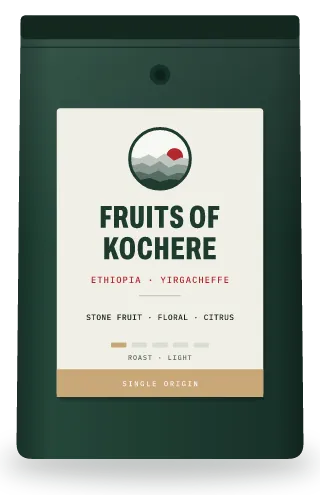
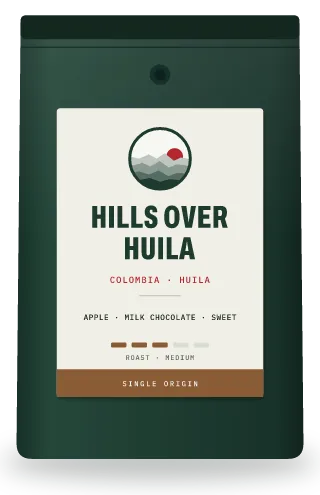
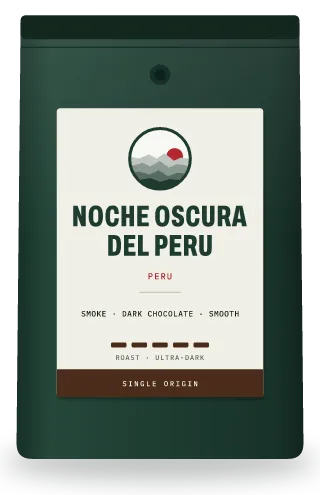
Taste the difference side by side. Fruits of Kochere is a light roast from Ethiopia with stone fruit, floral notes and citrus. Hills Over Huila is a medium roast from Colombia with crisp apple and milk chocolate. Noche Oscura del Peru is an ultra-dark roast with smoke, dark chocolate and very little acidity. Our coffees are listed as coming soon, so tap Notify me on any of them to hear when they’re ready.