



On this page
- Quick answer
- Espresso vs drip coffee at a glance
- What “espresso beans” really means
- How espresso coffees are different
- Can you use espresso beans for regular coffee?
- Can you use regular coffee beans for espresso?
- Is espresso stronger than coffee?
- How to choose coffee for espresso
- Where this guide comes from
- Espresso beans FAQ
- Try it with Regions coffee
Quick answer
Espresso beans and coffee beans are the same thing. Espresso is a way of brewing, not a type of bean: hot water is forced through finely ground coffee at about 9 bar of pressure for 25 to 30 seconds. Beans sold as “espresso” are usually roasted medium-dark to dark and blended for a sweet, full-bodied shot with good crema. You can brew them as drip, pour-over or French press, and you can make espresso from almost any fresh whole beans, as long as you grind them fine enough.
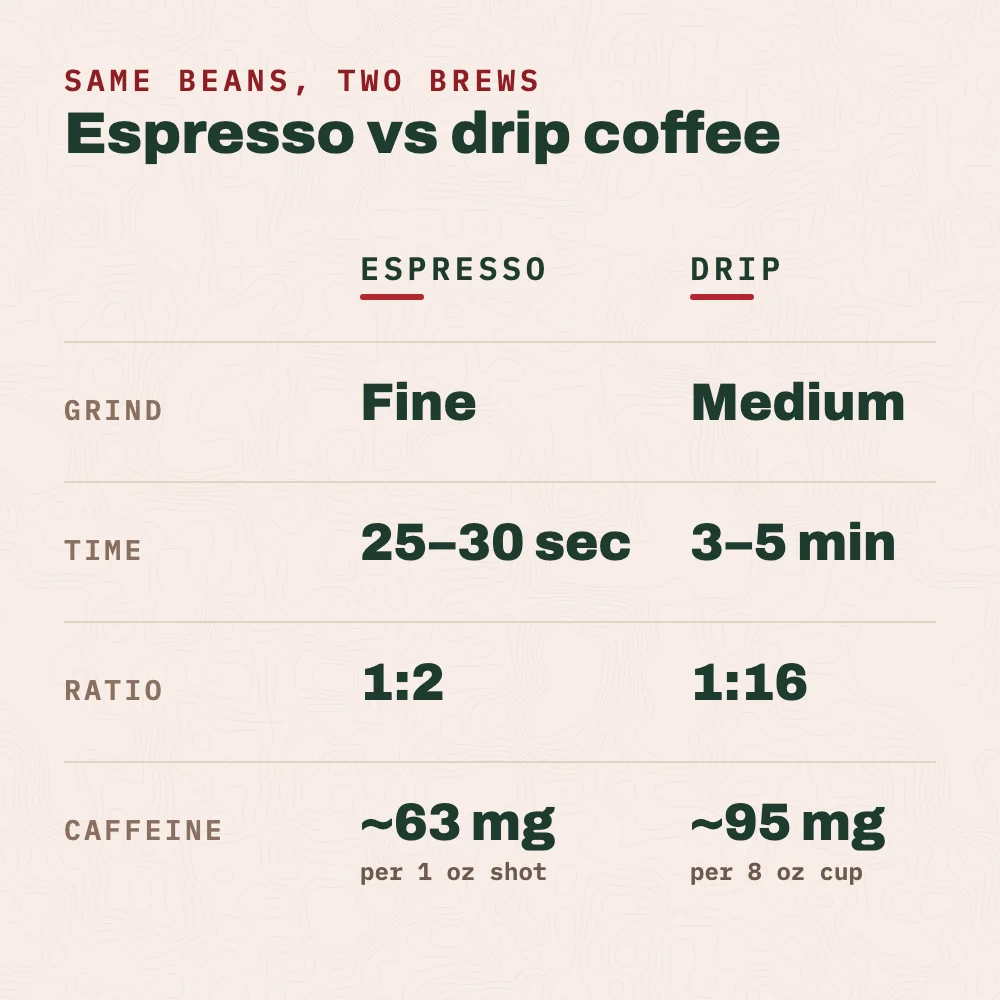
Espresso vs drip coffee at a glance
| Espresso | Drip coffee | |
|---|---|---|
| Grind | Fine, a little finer than table salt | Medium, like sand |
| How it brews | Hot water forced through at about 9 bar of pressure | Hot water drips through by gravity |
| Time | 25 to 30 seconds | 3 to 5 minutes |
| Ratio | About 1:2, for example 18 g of coffee to 36 g of espresso | About 1:16, for example 20 g of coffee to 320 g of water |
| Serving | 1 to 2 oz | 8 to 12 oz |
| Caffeine | About 63 mg in a 1 oz shot | About 95 mg in an 8 oz cup |
| Typical roast | Medium to dark, though any roast works | Any roast, light to dark |
What “espresso beans” really means
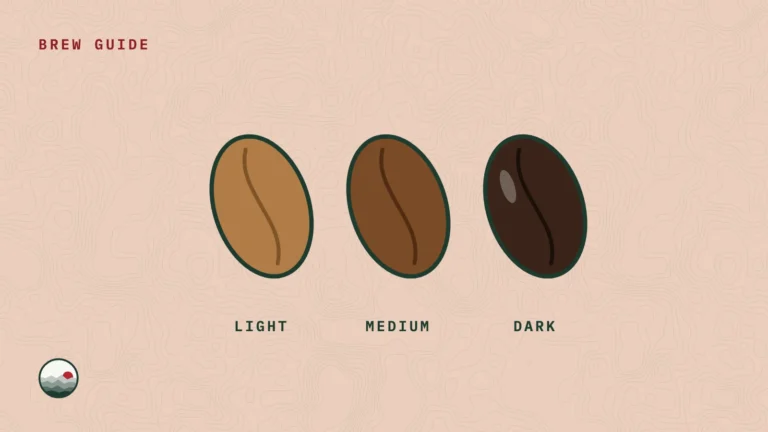
All coffee beans are the seeds of the coffee plant, roasted. There’s no special espresso plant or espresso bean. When a bag says “espresso”, the roaster is telling you they chose and roasted that coffee to taste good as espresso. Usually that means a medium-dark to dark roast and often a blend of several coffees. “Espresso roast” isn’t a standard term, so one roaster’s espresso can be lighter than another’s medium.
How espresso coffees are different
- Darker roasts: espresso extracts in under 30 seconds, and darker beans give up their flavor easily. They also taste less acidic, which matters because espresso concentrates every flavor, sourness included.
- Blends: roasters often blend coffees for a balanced, consistent shot, for example a chocolatey base with a fruitier coffee on top. A blend can also be designed to taste good with milk.
- Sometimes robusta: some traditional Italian-style blends include robusta, a different coffee species with roughly twice the caffeine of arabica, about 2.2% of the bean’s weight against 1.2%. It’s known for a thick crema and a bitter, earthy taste. Most specialty espresso is 100% arabica. Our guide to the types of coffee beans compares the two.
- Single origins too: many specialty cafés now pull lighter, single-origin espresso for bright, fruity shots. These taste great but are harder to brew well at home.
Can you use espresso beans for regular coffee?
Yes. Grind them for your brewer, coarser than you would for espresso, and brew as usual. An espresso blend usually makes a rich, chocolatey cup of drip, pour-over or French press coffee. Because espresso coffees are often roasted darker, use water a little cooler, around 195°F, if the cup tastes bitter. Our guide to light, medium and dark roasts explains why.
Can you use regular coffee beans for espresso?
Yes, with a few conditions:
- Grind fresh and fine: espresso needs a fine, even grind from a burr grinder that can grind for espresso. Most pre-ground coffee is too coarse and makes a weak, watery shot.
- Use fresh beans, but not too fresh: beans roasted about 1 to 4 weeks ago work best. Very fresh beans are still releasing gas, so give them about a week. Our guide to storing coffee beans covers freshness.
- Start medium: medium and medium-dark roasts are the easiest to dial in. Very light roasts can taste sour as espresso unless you grind finer, use hotter water or pull a longer shot.
New to espresso? Our guides to the best beginner espresso machines and the best coffee grinders for home cover the gear.
Is espresso stronger than coffee?
Ounce for ounce, yes. A 1 oz shot of espresso has about 63 mg of caffeine, while an 8 oz cup of drip coffee has about 95 mg, so espresso is far more concentrated. But because the serving is so small, a single shot usually has less caffeine than a cup of coffee, and a double shot is about the same. Espresso beans don’t have extra caffeine either, unless the blend includes robusta.
How to choose coffee for espresso
- For milk drinks like lattes and cappuccinos: look for medium-dark coffees with chocolate, caramel or nut notes, which cut through milk.
- For straight espresso: try a medium roast or a single origin if you like brighter, fruitier shots.
- Check the roast date: buy whole beans roasted within the last few weeks. Our guide to choosing coffee beans covers the rest of the bag.
- Don’t worry about the label: a coffee doesn’t need to say “espresso” to make good espresso. Our coffee ratio and grind size chart has starting points for every brewer.
Where this guide comes from
This is a researched guide. It draws on Specialty Coffee Association material on espresso, roasters’ and coffee reference guides, and published caffeine figures, checked in October 2026. Caffeine numbers are averages, and real coffees vary a lot. Espresso recipes are starting points to adjust to your taste and your machine.
Espresso beans FAQ
Are espresso beans and coffee beans the same?
Yes. They’re the same seeds from the same plants. “Espresso” on a bag means the coffee was roasted and often blended to taste good as espresso.
What is espresso roast?
A roaster’s name for a coffee roasted for espresso, usually medium-dark to dark. There’s no industry standard, so it varies between brands.
Do espresso beans have more caffeine?
No, not unless the blend includes robusta. Espresso tastes stronger because it’s concentrated, but a single shot usually has less caffeine than a cup of drip coffee.
Can I use espresso beans in a drip coffee maker?
Yes. Grind them medium for a drip machine, or coarse for a French press. They usually make a rich, full-bodied cup.
Can I make espresso without an espresso machine?
Not true espresso, which needs about 9 bar of pressure. A moka pot or an AeroPress makes strong, concentrated coffee that works well in milk drinks.
What are chocolate-covered espresso beans?
Whole roasted coffee beans coated in chocolate and eaten as a snack. They’re regular coffee beans, usually a darker roast, and they do contain caffeine.
Is espresso healthier than coffee?
They’re the same coffee brewed differently, so neither is clearly healthier. A plain shot of espresso and a black cup of coffee both have almost no calories. Milk and sugar make the real difference.
Try it with Regions coffee
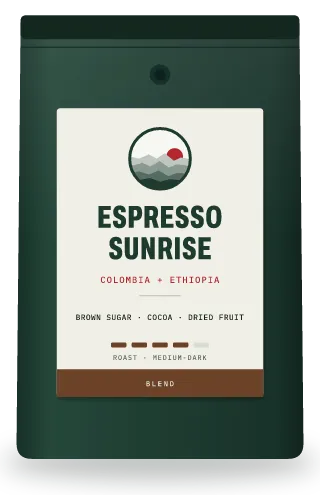
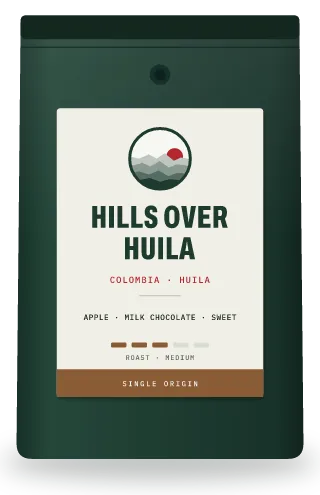
Espresso Sunrise is our espresso blend: a medium-dark roast of coffees from Colombia and Ethiopia, with brown sugar, cocoa and a hint of dried fruit. Start with 18 g of coffee in and about 36 g of espresso out, in 25 to 30 seconds. It’s great as pour-over too, which proves the point of this guide. For a medium single origin that works in almost any brewer, try Hills Over Huila, with crisp apple and milk chocolate. Our coffees are listed as coming soon, so tap Notify me on either one to hear when they’re ready.