



Quick answer
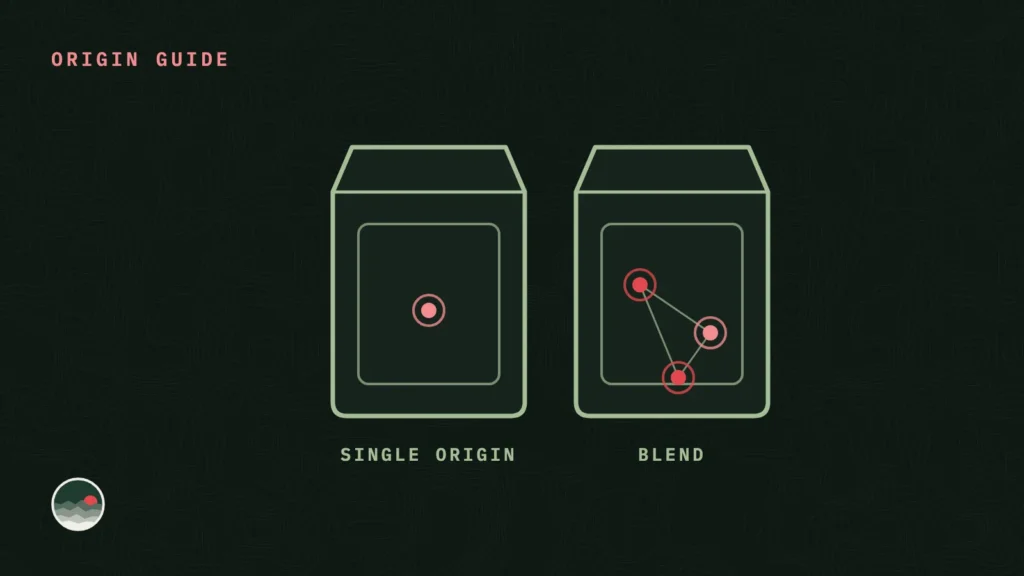
Single origin coffee comes from one place: one country, one region or even one farm. It tastes of where it grew, and it changes from harvest to harvest. A blend mixes coffees from two or more places to create a balanced flavor that stays the same all year. Neither is better. Choose a single origin to explore a region’s character, especially black or as pour-over, and choose a blend for a dependable everyday cup, for espresso or for coffee with milk.
Single origin vs blend at a glance
| Single origin | Blend | |
|---|---|---|
| Comes from | One country, region, farm or lot | Two or more coffees from different places |
| Flavor | Distinctive, showing off where it grew | Balanced, designed by the roaster |
| Year to year | Changes with each harvest, and may sell out | Kept consistent all year |
| Best for | Black coffee and pour-over | Everyday drip, espresso and milk drinks |
| Price | Often higher, especially from a single farm | Often lower, though great blends aren’t cheap |
What single origin coffee means
Single origin means all the coffee in the bag comes from one identifiable source. There’s no official rule for how narrow that source has to be, so the label can mean different things:
- A country: for example “Colombia”. This is the broadest kind of single origin.
- A region: for example Huila in Colombia or Yirgacheffe in Ethiopia.
- A farm or washing station: often called single estate.
- A microlot: a small batch from one part of a farm, one picking or one processing method.
The more specific the label, the more it tells you about the coffee. Because a single origin comes from one harvest, it’s seasonal: the next crop can taste a little different, and a favorite can sell out. Our coffee growing regions flavor map shows what each region tends to taste like.
What a coffee blend is
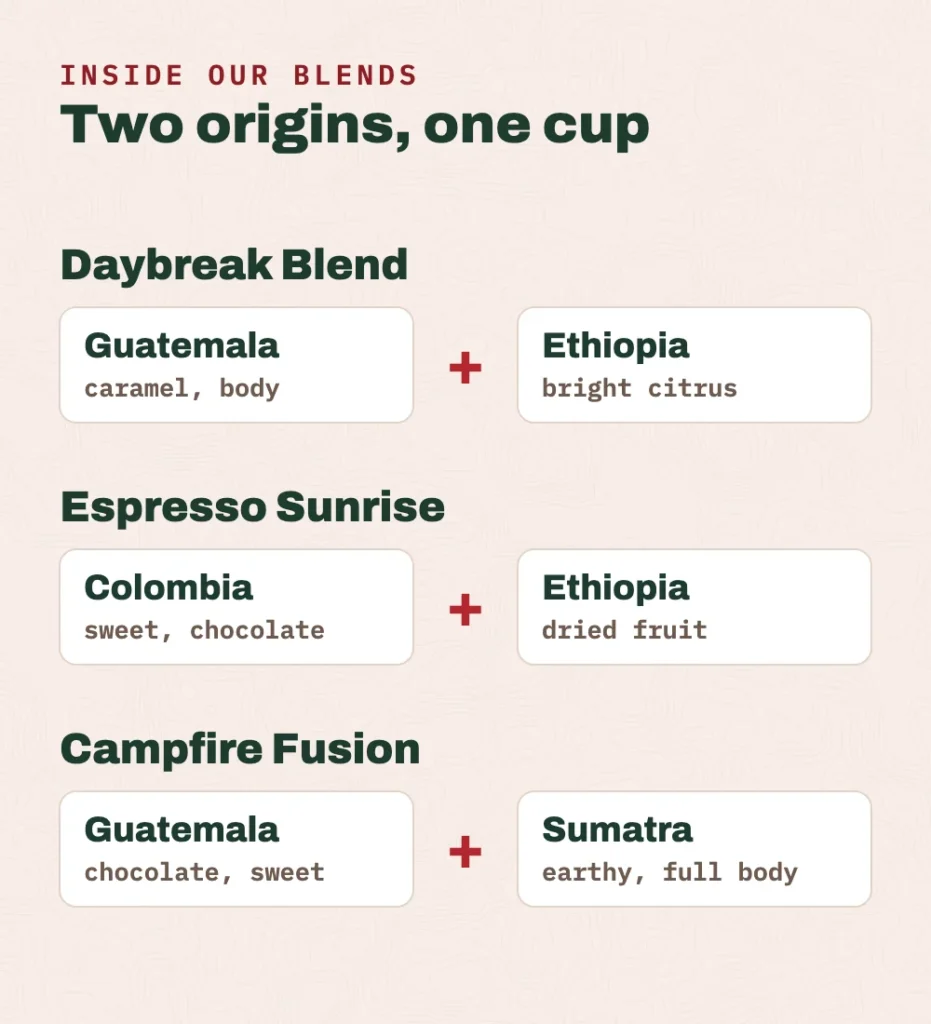
A blend combines two or more coffees, usually from different countries. Some roasters mix the green beans and roast them together, and others roast each coffee separately and blend afterward. Roasters blend for a few reasons:
- Balance: one coffee brings sweetness and body, and another brings brightness or fruit. Together they taste more complete than either one alone.
- Consistency: harvests come and go, so roasters can swap in similar coffees to keep a blend tasting the same all year.
- A purpose: a blend can be built for one job, like espresso, cold brew or standing up to milk.
Breakfast blend
Breakfast blend usually means a light to medium roast that’s bright, smooth and easy to drink, made for a morning mug. There’s no standard recipe, so it varies a lot between brands.
House blend
House blend is a café’s or roaster’s signature everyday coffee, usually a crowd-pleasing medium roast. It’s whatever that business thinks best represents its style.
Espresso blend
Espresso blends are built to taste sweet and balanced in a short, concentrated shot, and to stand up to milk. They’re often roasted medium-dark. Our guide to espresso beans vs coffee beans explains what makes a coffee good for espresso.
Is single origin coffee better?
Not automatically. Single origin tells you where a coffee comes from, not how good it is. A carefully sourced, freshly roasted blend can beat a tired single origin, and some single origins are ordinary coffee with a fancy label. What single origins do offer is traceability: you can see where your coffee was grown, and often who grew it.
Single origins often cost more because they come in smaller amounts, especially single-farm coffees and microlots. Blends can use larger amounts of coffee and are easier to keep in stock, which often keeps the price down.
How to choose
- You drink coffee black and like trying new things: go single origin, and try a few regions side by side.
- You want the same great cup every morning: pick a blend you like and stick with it.
- You make espresso or drink coffee with milk: start with a blend made for it.
- You brew pour-over: single origins shine here, because a clean brewer shows off their character.
Whichever you choose, freshness and roast level matter as much as origin. Our guides to light, medium and dark roasts and storing coffee beans cover both. For the rest of the label, see our guide to choosing coffee beans.
Where this guide comes from
This is a researched guide. It draws on roasters’ and coffee reference guides to single origins and blends, checked in October 2026, and on our own coffees’ product pages for the blend descriptions. Terms like single origin, breakfast blend and house blend aren’t regulated, so their meaning varies between roasters.
Single origin and blend FAQ
What does single origin coffee mean?
All the coffee comes from one source: a country, a region, a farm or a single lot. The more specific the label, the more it tells you about the coffee.
Is single origin coffee better than a blend?
No. They’re different, not better or worse. Single origins show off one place, and blends are designed for balance and consistency. Quality and freshness matter more.
What is a coffee blend?
Two or more coffees combined, usually from different countries, to create a balanced flavor that the roaster can keep consistent all year.
What is breakfast blend coffee?
Usually a light to medium roast blend that’s bright, smooth and easy to drink in the morning. There’s no standard recipe.
What is house blend coffee?
A café’s or roaster’s signature everyday coffee, usually a medium roast blend made to please most people.
Can you make espresso with single origin coffee?
Yes. Single origin espresso tastes brighter and more distinctive than a typical espresso blend. It can be a little harder to dial in, especially with light roasts.
Why is single origin coffee more expensive?
It often comes in smaller amounts from one farm or region, with more traceability and care along the way. Blends can use larger amounts of coffee, which helps keep costs down.
Try it with Regions coffee
Taste the difference with a side-by-side pair. Fruits of Kochere is a single origin from Ethiopia, bright with stone fruit, floral notes and citrus. Daybreak Blend pairs an Ethiopian coffee with a Guatemalan one for caramel sweetness and body, so you can taste what blending adds. For a second pair, compare Hills Over Huila, a single origin from Colombia, with Espresso Sunrise, which blends Colombian and Ethiopian coffees. Our coffees are listed as coming soon, so tap Notify me on any of them to hear when they’re ready.
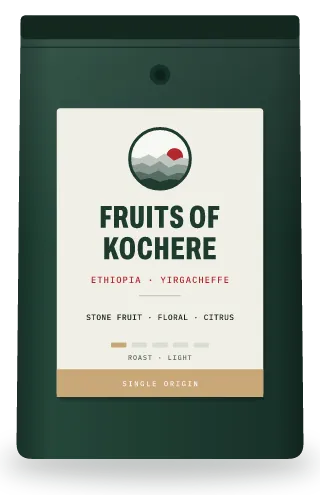 Fruits of KochereEthiopia · Light
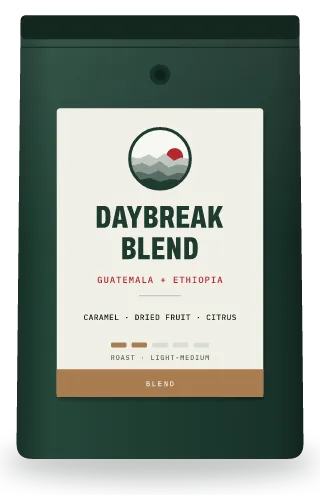 Daybreak BlendGuatemala & Ethiopia · Light-medium
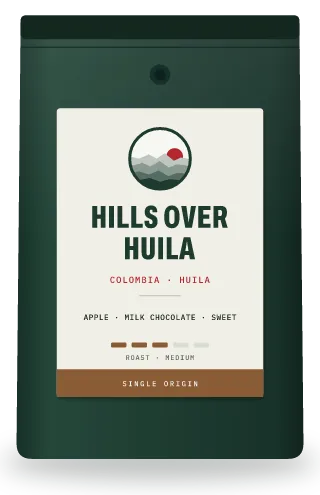 Hills Over HuilaColombia · Medium
You can also browse all our single origins or blends.