



On this page
- Quick answer
- Colombia’s coffee regions at a glance
- Why Colombian coffee tastes the way it does
- Huila: Colombia’s biggest coffee region
- Colombia’s other coffee regions
- What Supremo and Excelso mean
- A short history of coffee in Colombia
- How to brew Colombian coffee
- Where this guide comes from
- Colombian coffee FAQ
- Try it with Regions coffee
Quick answer
Colombian coffee is known for being balanced, sweet and clean, with caramel, chocolate and nutty flavors and a gentle, fruity brightness. It’s all arabica, almost all washed, and grown by around half a million families on small farms high in the Andes. The north tends to be fuller and chocolatey, the central Coffee Axis sweet and easygoing, and the high south, including Huila, Cauca and Nariño, brighter and fruitier. Huila is Colombia’s biggest coffee region and one of its most celebrated. Colombian coffee works in almost any brewer, which is a big part of why it’s so popular.
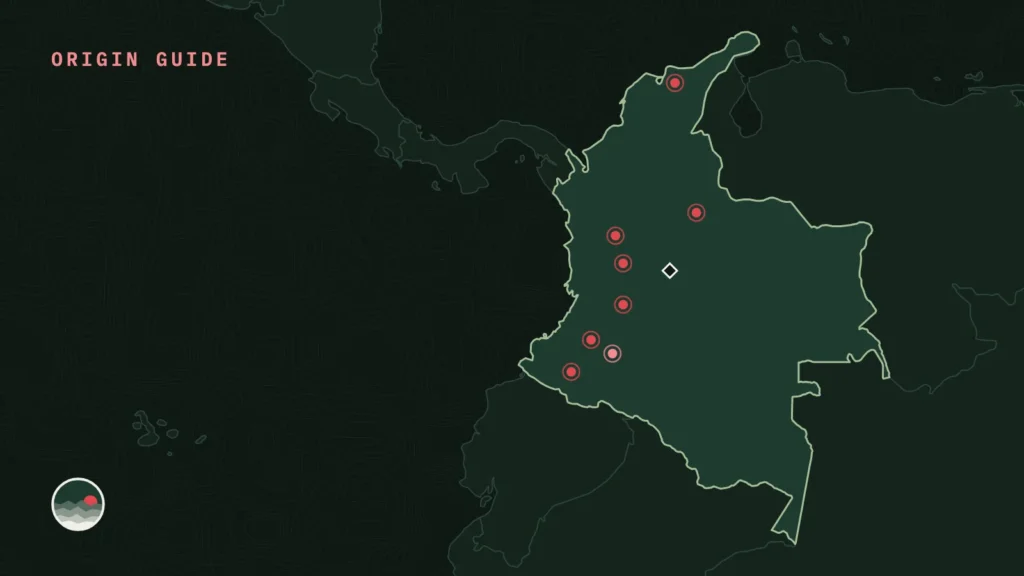
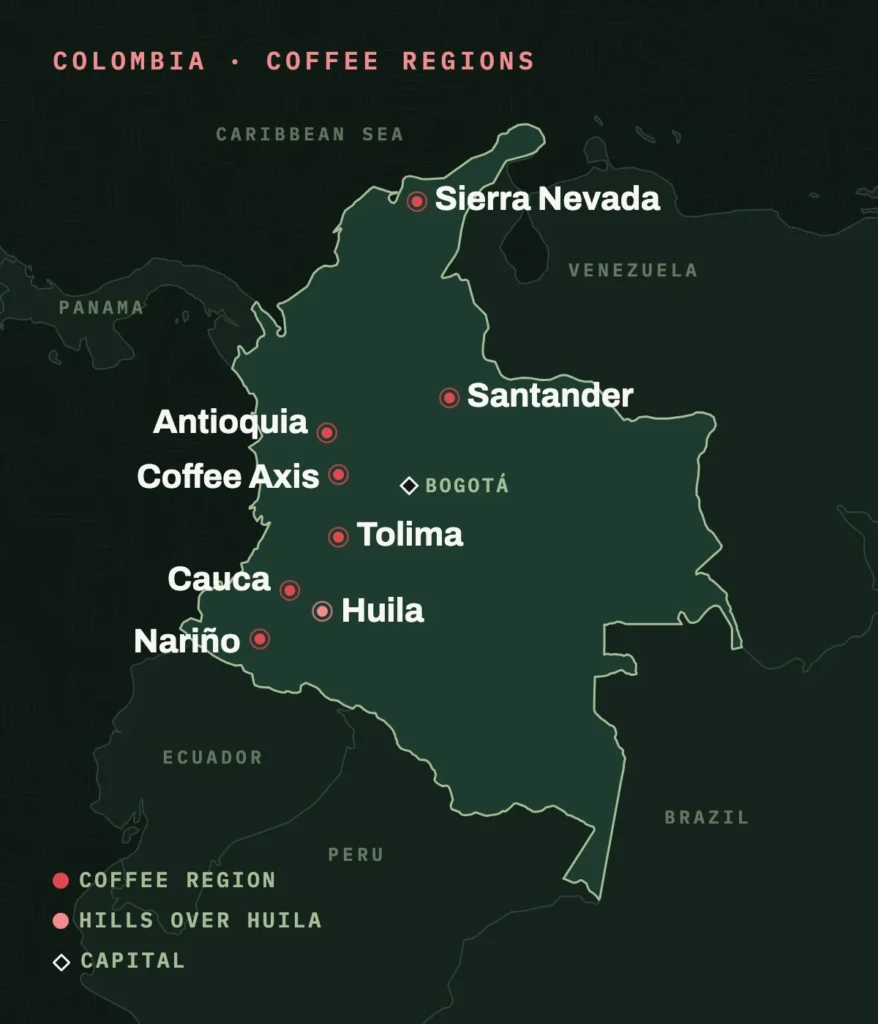
Colombia’s coffee regions at a glance
| Region | What it tends to taste like | Known for |
|---|---|---|
| North: Sierra Nevada, Santander | Full body, chocolate and nuts, lower acidity | Lower, often shade-grown farms |
| Central: Antioquia and the Coffee Axis | Sweet and easygoing: caramel, soft nuttiness, gentle acidity | Colombia’s classic coffee heartland |
| Tolima | Sweet, with brighter fruit in its high south | Colombia’s third-biggest coffee region |
| Huila | Bright and sweet: red fruit, citrus, caramel and chocolate | The biggest coffee region, with many top specialty lots |
| Cauca | Bright, sweet and often floral | High farms near the equator |
| Nariño | Lively acidity, fruity and complex | Some of Colombia’s highest-grown coffee |
Why Colombian coffee tastes the way it does
The Andes. The Andes split into three ranges as they run through Colombia, and coffee grows on their slopes. High, cool farms let the cherries ripen slowly, which builds sweetness and a bright, clean acidity.
Two harvests. Colombia sits close to the equator, so in many regions coffee flowers more than once a year. Farms often have a main harvest and a smaller second one called the mitaca, which is why fresh Colombian coffee is available for much of the year. The timing depends on the region.
Washed processing. Almost all Colombian coffee is washed: the fruit is removed before the beans dry. That gives a clean, clear cup. Some farms now experiment with honey, natural and other processes for specialty lots. Our guide to coffee processing explains the difference.
Small farms and careful varieties. Around 540,000 families grow coffee in Colombia, mostly on farms of a few hectares. Common varieties include Castillo, a rust-resistant variety developed by Colombia’s coffee research center, along with Caturra, Colombia, Typica and Bourbon. Specialty farms, especially in Huila, also grow varieties like Pink Bourbon and Geisha.
Huila: Colombia’s biggest coffee region
Huila is in southern Colombia, in the upper valley of the Magdalena River, between the Central and Eastern ranges of the Andes. It has been Colombia’s largest coffee-producing department for more than a decade, growing about a fifth of the country’s coffee, from roughly 80,000 producers. Towns like Pitalito, Acevedo and San Agustín are surrounded by small farms on steep slopes, many of them well above 1,500 meters.
Huila coffees are known for being bright and sweet, with red fruit, citrus, caramel and chocolate, and a clean finish. The region regularly does well in Colombia’s Cup of Excellence competition, and a good share of its crop is sold as specialty coffee. Huila’s main harvest usually comes in roughly from November to January, with a smaller mitaca harvest around May to July.
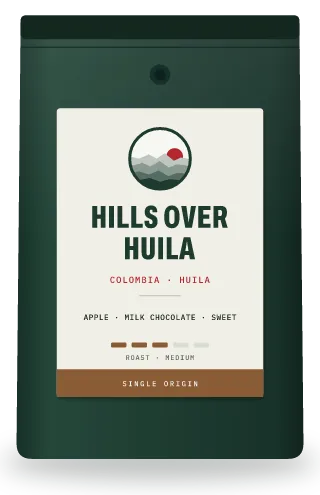
Our Hills Over Huila comes from here, grown at 1,500 to 1,600 meters, with crisp apple, velvety milk chocolate and a sweet, clean finish.
Colombia’s other coffee regions
The north: Sierra Nevada and Santander
Northern Colombia grows coffee at lower altitudes, often under shade trees, from the Sierra Nevada de Santa Marta near the Caribbean coast to the mountains of Santander. These coffees tend to have a fuller body, lower acidity and chocolatey, nutty flavors.
Antioquia and the Coffee Axis
The center of the country is Colombia’s traditional coffee heartland. Antioquia is the second-biggest coffee region, and Caldas, Risaralda and Quindío form the Coffee Axis, or Eje Cafetero, whose coffee landscape is a UNESCO World Heritage site. Coffees here are known for being sweet and easy to drink, with caramel, soft nuttiness and gentle acidity.
Tolima
Tolima, just north of Huila, is Colombia’s third-biggest coffee region. Its high southern areas, around towns like Planadas, have become known for bright, sweet specialty coffees.
Cauca and Nariño
West and southwest of Huila, Cauca and Nariño grow coffee at high altitudes close to the equator, with Nariño’s farms among the highest in the country. That combination gives coffees with lively, complex acidity and fruity, often floral flavors. Their harvest timing differs from Huila’s, with the main crop usually around the middle of the year.
What Supremo and Excelso mean
You’ll often see “Colombian Supremo” or “Excelso” on bags. These are size grades, not flavor grades. Supremo beans are the largest, screen size 17 to 18 (the sorting screens’ holes are measured in 64ths of an inch), and Excelso beans are a little smaller, around screen 15 to 16, depending on the buyer. Bigger beans can roast more evenly, but size doesn’t tell you how a coffee tastes. A region, a farm and tasting notes tell you much more.
A short history of coffee in Colombia
Coffee is thought to have reached Colombia in the 1700s, and by the early 1900s it had become the country’s main export. In 1927, growers founded the National Federation of Coffee Growers, which still supports farmers with research, training and a guaranteed purchase price. In the 1950s it created Juan Valdez, the fictional farmer and his mule, to market Colombian coffee abroad, and the name became one of the best-known in coffee.
Today Colombia is the world’s third-largest coffee producer, after Brazil and Vietnam, and one of the biggest that grows only arabica. In the 2024/25 crop year, the federation reported nearly 15 million 60 kg bags.
How to brew Colombian coffee
Colombian coffee is famously forgiving. A medium roast tastes great as drip, pour-over or AeroPress, and darker Colombian roasts make chocolatey espresso and cold brew. For a bright Huila, try a pour-over at about 1:16, for example 22 g of coffee to 350 g of water with a medium-fine grind, to bring out its fruit. Our coffee ratio and grind size chart covers other brewers, and our guide to light, medium and dark roasts helps you pick a roast.
Where this guide comes from
This is a researched guide. It draws on coffee importers’ origin guides, production figures from Colombia’s National Federation of Coffee Growers and the USDA, and coffee trade reporting, checked in October 2026. Sources often disagree on details like harvest timing and flavor notes, so treat them as tendencies. Region names here follow Colombia’s departments.
Colombian coffee FAQ
What does Colombian coffee taste like?
Usually balanced and sweet, with caramel, chocolate and nutty flavors and a gentle, fruity brightness. Coffees from the high south, like Huila and Nariño, are brighter and fruitier.
Is Colombian coffee good?
It has a well-deserved reputation for quality and consistency, and its balanced flavor suits most people and most brewers. As with any coffee, freshness and the specific farm matter more than the country name.
Is Colombian coffee arabica?
Yes. Colombia grows only arabica coffee, so “Colombian vs arabica” isn’t a real choice: Colombian coffee is arabica from Colombia. Our guide to the types of coffee beans explains arabica vs robusta.
What is Colombian Supremo coffee?
Supremo is Colombia’s largest bean size grade, screen 17 to 18. It describes the size of the beans, not their flavor or quality.
Is Colombian coffee strong?
It doesn’t have more caffeine than other arabica coffees. How strong it tastes depends on the roast and how much coffee you use. Dark Colombian roasts taste bold, and light ones taste bright.
What is Huila coffee?
Coffee from Huila, in southern Colombia, the country’s biggest coffee region. It’s known for bright, sweet coffees with red fruit, citrus, caramel and chocolate.
How is Colombian coffee different from Ethiopian coffee?
Colombian coffee is usually rounder and sweeter, with caramel and chocolate. Ethiopian coffee is usually lighter and more floral and fruity. Our Ethiopian coffee guide covers that side.
Try it with Regions coffee
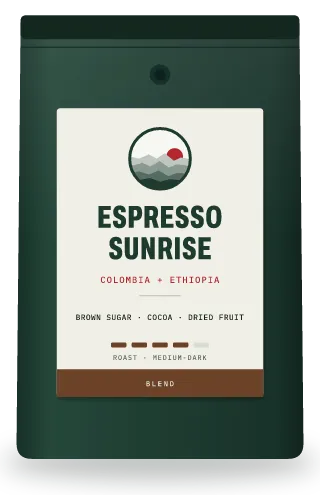
Hills Over Huila is our Colombian single origin: a medium roast from Huila, grown at 1,500 to 1,600 meters, with crisp apple, velvety milk chocolate and a sweet, clean finish. It tastes great in almost any brewer. For espresso, Espresso Sunrise pairs a Colombian coffee’s sweetness and chocolate with an Ethiopian coffee’s dried fruit. Our coffees are listed as coming soon, so tap Notify me on either one to hear when they’re ready.
For the bigger picture, see our coffee growing regions flavor map, which compares Colombia with coffee from the rest of the world. Our Peruvian coffee guide covers Colombia’s southern neighbor.