



As an Amazon Associate, Regions Coffee Supply earns from qualifying purchases, at no extra cost to you.
Quick answer
The best coffee canister is opaque, airtight and big enough for a whole bag. For most kitchens that’s the Airscape: its inner lid pushes the air out and its medium size holds about 1 lb of beans. The Coffee Gator is the budget pick, with a one-way valve and a date dial, and the Fellow Atmos pulls a vacuum, though its 0.7 liter size holds about 11 oz, just short of a 12 oz bag. Keep any of them in a cool cupboard, and if your bag has a one-way valve and seals well, it’s a fine canister too.
Our picks at a glance
Most kitchens
Airscape Canister
Plunger lid pushes air out, holds about 1 lb
A full bag on a budget
Coffee Gator Canister
One-way valve, date dial and scoop
Price range is relative to other coffee canisters. Use the Check price links for today’s price and stock.
How a coffee canister keeps beans fresh
Coffee goes stale, not bad. Air slowly dulls its aroma, and heat, light and moisture speed that up, so a good canister keeps out air and light and lives somewhere cool and dry. Canisters handle the air in one of three ways.
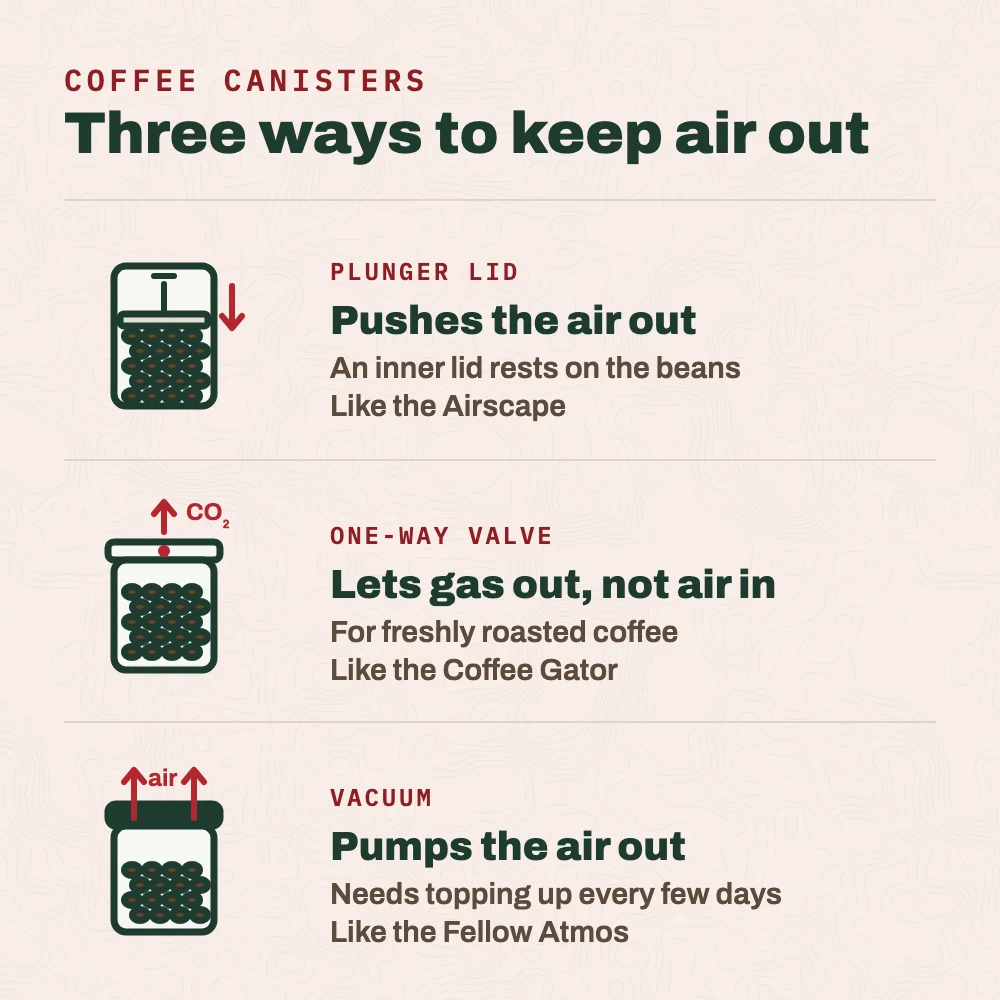
- Plunger lid: an inner lid sits right on top of the beans, so there’s little air left inside. As the coffee gets used up, the lid goes down with it.
- One-way valve: freshly roasted coffee gives off carbon dioxide for its first week or so. A valve lets that gas out without letting air back in, the same job the valve on a good coffee bag does.
- Vacuum: the lid pumps air out. Fresh coffee’s gas can slowly fill that space again, so vacuum canisters need re-pumping every few days.
Any of the three is a real step up from a clear jar on the counter. Our guide to storing coffee beans covers how long beans stay fresh and how to freeze them.
The best coffee canisters
01Airscape Canister: the one for most kitchens
Planetary Design’s Airscape is a stainless steel canister with a clear inner lid. You press that lid down onto the beans, the extra air escapes through a valve in it, and a lever on top locks it in place. The medium size is 64 oz, or about 1.9 liters, and holds about 1 lb (500 g) of whole beans, so a 12 oz bag fits with room left over. An outer lid goes on top, and the steel body keeps out light.
It’s simple, with no battery or pump to fail, and the lid follows the beans down as you use them. It comes in several colors and sizes, from a smaller one up to one that holds 2.2 lb.
02Coffee Gator Canister: a full bag on a budget
Coffee Gator’s stainless canister seals with a rubber gasket and has a one-way valve in the lid for fresh coffee’s gas, plus a dial on top to mark the date you opened the bag and a scoop. Pick the large size, labeled 22 oz: retailers list it at about 1.9 liters, about the same as the medium Airscape, so a 12 oz bag fits easily. Some sizes are sold without the valve, so check the listing.
It’s hand wash only. The valve and the date dial are the reasons to pick it over a plain airtight tin.
03Fellow Atmos: for vacuum fans
The Atmos pumps the air out of the canister to make a vacuum. The electric lid does it at the press of a button and tops the vacuum up on its own, and Fellow lists the battery at about four months between charges. The 0.7 liter steel version holds about 11 oz of beans, so a 12 oz bag leaves a little over. Dark roasts are less dense, so even less fits by weight.
Fellow also sells the original Atmos with a twist lid that pumps by hand, for less. Fellow suggests twisting it again every 4 to 5 days to keep the vacuum, and advises against finely ground coffee, which can clog the pump. Both are hand wash only.
Canister or the bag?
A good coffee bag already does most of a canister’s job. If it has a one-way valve and a zip or fold-over seal, squeeze the air out, close it tightly each time and keep it in a cupboard. A canister earns its place when the bag doesn’t reseal, when beans will be open for more than a couple of weeks, or when you’d like your coffee in one tidy spot on the shelf.
We brew on the Moccamaster most weekdays and save pour-over for weekends and fancier beans. If you keep two coffees going like that, the weekend beans are the ones that sit open longest, so they’re the ones worth a canister. The everyday coffee often runs out before it has time to fade.
What size canister do you need?
| Canister size | Whole beans it holds |
|---|---|
| 0.4 liter | About 6 oz |
| 0.7 liter | About 10 to 11 oz |
| 1.2 liters | About 14 to 16 oz |
| 1.9 liters (64 oz) | About 1 lb |
Match the canister to the bag you usually buy. A 12 oz (340 g) bag needs a little more than 0.7 liters, so aim for about 1 liter or more. Bigger isn’t better on its own: a canister that’s mostly empty holds more air, which is why the Airscape’s lid sits right on the beans. Buy about what you’ll drink in 2 to 4 weeks, and freeze the rest in sealed portions.
Where to keep your canister
In a cupboard away from the stove, the oven, the dishwasher and sunny windows. Room temperature is fine. Skip the fridge: coffee picks up moisture and smells there, and cold beans collect condensation each time you take them out. Wash the canister with warm, soapy water between bags and let it dry completely, so old coffee oils don’t go stale and flavor the next coffee.
How we chose these
These are researched picks. We read the makers’ specs, retailer pages and Amazon listings in late October 2026 and skipped anything Amazon showed as out of stock. We looked for canisters that keep out both air and light, fit or nearly fit a standard bag, and are easy to clean, and we included one of each kind: a plunger lid, a valve and a vacuum. We left out clear glass canisters, which only make sense in a dark cupboard.
Coffee canister FAQ
Do coffee canisters really keep coffee fresh?
They slow staling by keeping out air, light and moisture. They can’t stop it, so buy coffee you’ll finish in a few weeks and treat the canister as the place it waits, not a way to keep it for months.
Are vacuum canisters better?
They remove the most air, but fresh coffee keeps giving off gas, so the vacuum fades unless you pump it again every few days. A plunger lid or a valve does a similar job with less fuss.
Is glass or stainless steel better for coffee?
Stainless steel or ceramic, because they keep out light. Clear glass is fine only if the canister lives in a dark cupboard.
Does a coffee canister need a valve?
It helps for coffee in its first week or two after roasting, which is still giving off carbon dioxide. For older coffee, any airtight canister works.
What size canister holds a 12 oz bag of coffee?
About 1 liter or more. A 0.7 liter canister holds about 10 to 11 oz, just short of a full bag.
Can I keep ground coffee in a canister?
Yes, but use it within a week or two, because ground coffee goes flat much faster than whole beans. Fellow advises against finely ground coffee in the Atmos, because it can clog the pump.
Should I keep my coffee canister in the fridge?
No. A cupboard is better for the beans you’re using now, and the freezer, in sealed portions, is better for coffee you won’t open for weeks.
Fill it with Regions coffee
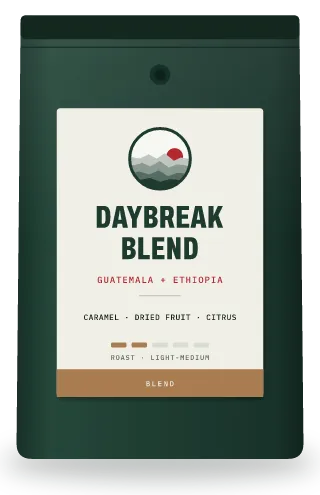
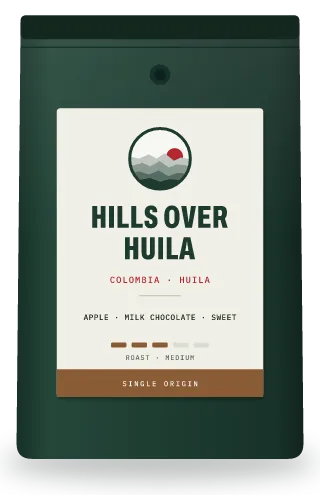
Our coffees are roasted to order, so they arrive near the start of their best weeks. For an everyday canister, try Daybreak Blend, our light-medium breakfast blend of Guatemalan and Ethiopian coffee with caramel, dried fruit and bright citrus, a good match for a drip machine. For weekend pour-over, try Hills Over Huila, a medium roast from Huila, Colombia, with crisp apple and milk chocolate. Both are coming soon, and Notify me on either page will let you know when your canister can be filled.