
Quick answer
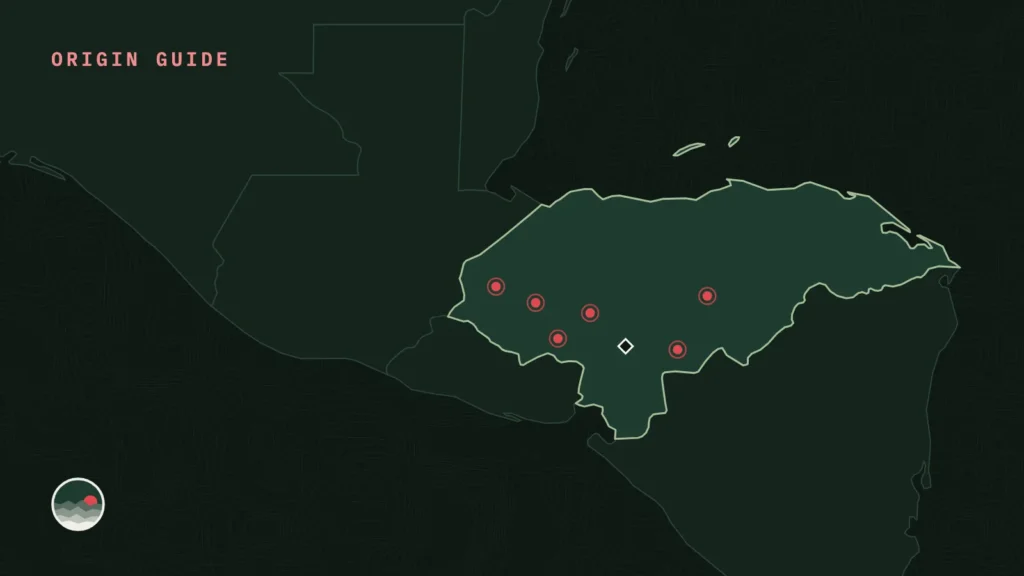
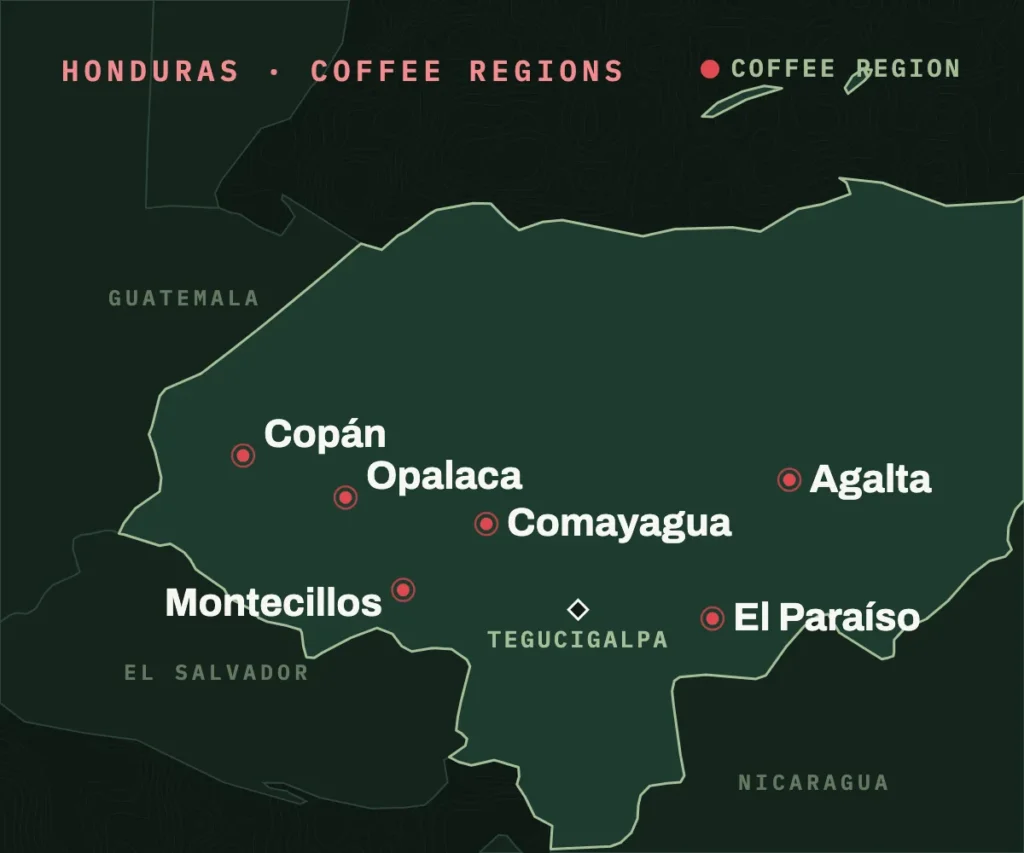
Honduran coffee is balanced and easy to drink, with chocolate, caramel and nutty sweetness, and the higher-grown lots add citrus, stone fruit and flowers. Honduras grows more coffee than any other country in Central America, about 5.5 million 60 kg bags of Arabica a year, mostly on small family farms. Its coffee institute, IHCAFE, names six regions, from Copán near Guatemala to El Paraíso near Nicaragua. Look for Marcala, Central America’s first coffee appellation, and Santa Bárbara, which has produced many of the country’s Cup of Excellence winners.
Honduras’s six coffee regions at a glance
| Region | Where | In the cup |
|---|---|---|
| Copán | The west, by Guatemala | Chocolate, sweet, round |
| Opalaca | Santa Bárbara, Intibucá, Lempira | Grape, blackberry, delicate acidity |
| Montecillos | La Paz, including Marcala | Orange, peach, velvety body |
| Comayagua | The center | Sweet citrus, creamy body |
| Agalta | Olancho, in the northeast | Caramel, tropical fruit |
| El Paraíso | The east, by Nicaragua | Citrus, smooth body |
What does Honduran coffee taste like?
A good Honduran coffee is classic and smooth: chocolate-toned sweetness, caramel, a little nuttiness and a medium to full body. It’s usually milder and less tart than Guatemalan or Costa Rican coffee. The higher farms, especially in Montecillos, Opalaca and Santa Bárbara, add brighter notes like orange, peach, red fruit and flowers.
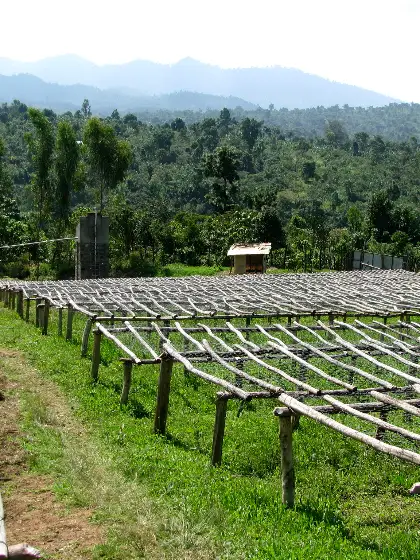
Drying shows up in the cup too. The harvest falls in a humid, often rainy season, and Coffee Review notes that slow drying can leave molasses or tobacco notes. IHCAFE encourages covered drying beds and solar dryers to avoid that.
Honduras’s coffee regions
Montecillos and Marcala
Montecillos runs through the highlands of La Paz, Comayagua and Intibucá, at roughly 1,200 to 1,600 m. Its best-known town is Marcala, which in 2005 became the first coffee appellation of origin in Central America, so “Marcala” on a bag is a protected name. Expect bright acidity, orange and peach, and a velvety body.
Santa Bárbara and Opalaca
Opalaca covers parts of Santa Bárbara, Intibucá and Lempira, and its coffees are known for delicate acidity and fruit like grape and blackberry. Santa Bárbara, which straddles Opalaca and Copán, is the name to watch at competitions: 17 of the 25 winning lots at the 2021 Cup of Excellence came from there.
Copán
Copán, in the far west by the Guatemalan border, also takes in Ocotepeque and part of Santa Bárbara. Its coffees lean chocolatey and sweet, with a round, balanced body. Coffee Review counts Copán, Opalaca and Montecillos as the sources of Honduras’s most admired coffees.
Comayagua, Agalta and El Paraíso
Comayagua, in the center of the country, is known for sweet citrus and a creamy body. Agalta, in Olancho and the northeast, brings caramel or chocolate and tropical fruit. El Paraíso, in the east by Nicaragua, grows coffees with citrus, a smooth body and a long finish.
How Honduran coffee is grown
- Size: about 5.5 million 60 kg bags in 2025/26 by USDA estimates, all Arabica, and rising. That’s the most in Central America and about 8th in the world. The US buys about 30 percent of the exports.
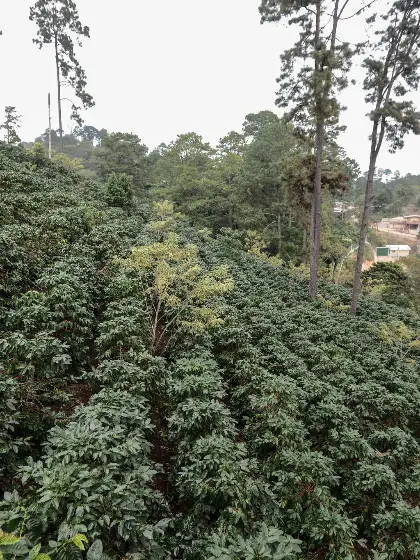
- Farmers: more than 100,000 families, about 95 percent of them on small farms, in 15 of the country’s 18 departments.
- Varieties: Catuai, Caturra, Bourbon, Typica and Pacas, plus varieties bred by IHCAFE, such as Parainema. Geisha has taken the top Cup of Excellence lot in recent years.
- Harvest: about November to April, finishing earlier on lower farms.
- Processing: mostly washed, with more honey and natural lots each year.
- Grades: SHG (strictly high grown) means coffee grown higher up, roughly above 1,200 to 1,350 m depending on the source, and HG (high grown) sits below it. Like Guatemala’s SHB, it tells you about altitude, not flavor.
From blending coffee to Cup of Excellence
For a long time Honduras was known for dependable, inexpensive coffee that roasters used in blends. That reputation has changed. Cup of Excellence, the competition and auction for a country’s best lots, has run in Honduras since 2004. In 2017 one winning lot sold for $124.50 a pound, at the time the highest price ever paid at any Cup of Excellence auction, and in 2024 a washed Geisha from Santa Bárbara called La Salsa sold for $136.50 a pound.
There were hard years too. In 2012 and 2013, coffee leaf rust swept Central America. Honduras declared a plant health emergency, about a quarter of its coffee land was affected, and the International Coffee Organization later estimated losses of about 1.3 million bags. Much of the country has been replanted since, and IHCAFE has bred rust-resistant varieties such as Parainema, released in 2004, though an earlier one, Lempira, lost its resistance by 2017.
How to brew Honduran coffee
Honduran coffee is easygoing, so it works almost any way you brew it. For pour-over, start with our V60 recipe: about 30 g of coffee to 500 g of water (1:16), ground medium-fine. Bloom with 60 to 90 g of water and swirl, wait about 45 seconds, then pour to about 300 g in a steady spiral and keep going to 500 g by about 1:45. Give it a gentle stir and a swirl, and it should finish draining around 4:00. Bright, high-grown lots from Montecillos or Santa Bárbara show their fruit best this way.
For a chocolatey everyday Honduran, a French press brings out the body: start at 1:15, coarse, for 4 minutes. If a cup tastes sour, grind a little finer, and if it tastes bitter, a little coarser. Our guides to the pour-over ratio and the French press ratio have the details.
Where this guide comes from
The regions and their flavors follow IHCAFE’s descriptions as published in Honduran media. The crop figures are USDA estimates reported in the coffee trade press and export data from Honduras’s statistics institute, and the rust figures come from the International Coffee Organization. Auction results come from the Alliance for Coffee Excellence, and the rest from World Coffee Research, Coffee Review and importers’ origin notes, read in October 2026, not on a visit. Sources disagree on altitudes, rankings and grade cutoffs, so treat those as ranges.
Honduran coffee FAQ
What does Honduran coffee taste like?
Balanced and smooth, with chocolate, caramel and nutty sweetness. Higher-grown lots add citrus, stone fruit and flowers.
Is Honduran coffee good?
Yes, and better than its old reputation as blending coffee. Honduran lots now sell for some of the highest prices at Cup of Excellence, and everyday Honduran coffee is a reliable, easy-drinking choice.
What is Marcala coffee?
Coffee from around Marcala, in La Paz in the Montecillos region. In 2005 it became the first coffee appellation of origin in Central America, so the name is protected.
What does SHG mean on Honduran coffee?
Strictly high grown: coffee from higher farms, roughly above 1,200 to 1,350 m depending on the source. It’s about altitude, not a promise of flavor.
Is Honduran coffee low in acid?
It usually tastes milder and less tart than Guatemalan or Costa Rican coffee, though high-grown lots can be bright. Our low-acid coffee guide explains what makes a coffee taste less acidic.
When is coffee harvested in Honduras?
About November to April, finishing earlier on lower farms.
Is Honduras the biggest coffee producer in Central America?
Yes. At about 5.5 million 60 kg bags a year, it grows more than Guatemala, Nicaragua or Costa Rica, and ranks about 8th in the world.
Try a similar Regions coffee
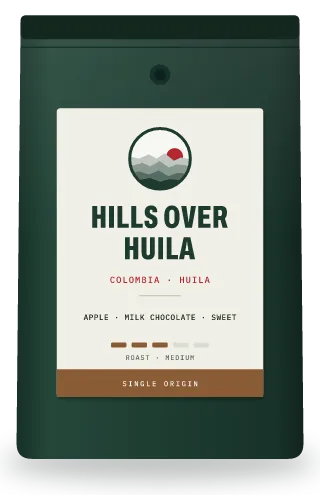
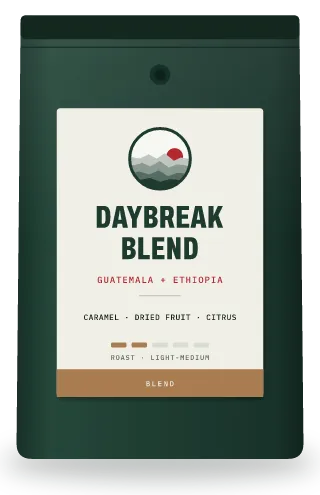
We don’t sell a Honduran coffee yet. If you like its balanced, chocolatey side, the closest in our lineup is Hills Over Huila, a medium roast from Huila, Colombia, with crisp apple, milk chocolate and a sweet, clean finish. For coffee from Honduras’s neighbor, Daybreak Blend pairs Guatemalan and Ethiopian coffee in a light-medium roast with caramel, dried fruit and bright citrus. Neither is on sale yet, so use Notify me on their pages to hear when they are.