
Quick answer
Start at 1:16, one gram of coffee for every 16 grams of water, for example 20 g of coffee to 320 g of water for one big mug. Grind medium-fine for a V60 or medium-coarse for a Chemex, and use water just off the boil, 195 to 205°F. Bloom first: pour about twice the coffee’s weight in water, wait 30 to 45 seconds, then pour the rest in slow circles. A one-mug V60 should finish in about 2:30 to 3:30, and a full Chemex in about 3:30 to 4:30.
How much coffee for pour-over
| Brew | Coffee | Water | Tbsp |
|---|---|---|---|
| One cup (8 oz) | 15 g | 240 g | 3 |
| One big mug (11 oz) | 20 g | 320 g | 4 |
| Two mugs | 30 g | 480 g | 6 |
| Chemex batch | 50 g | 800 g | 10 |
A scale makes pour-over much easier, because you can weigh the coffee and watch the water go in. Our guide to the best coffee scales covers good ones, and our guide to how much coffee per cup has scoop amounts if you don’t have one yet.
The best pour-over coffee ratio
Most pour-over recipes sit between 1:15 and 1:17. We start at 1:16, which is a little stronger than the Specialty Coffee Association’s Golden Cup guideline of about 55 g of coffee per liter of water, roughly 1:18. Go toward 1:15 for a stronger, fuller cup, or toward 1:17 for a lighter one. Change the ratio to change the strength, and change the grind to change the taste. Our coffee to water ratio chart has the numbers for every other brewer.
What is the coffee bloom?
Roasting leaves carbon dioxide trapped inside coffee beans. When hot water first hits fresh grounds, that gas rushes out, and the bed of coffee puffs up and bubbles. That’s the bloom. If you pour all the water at once, the escaping gas pushes water away, so some grounds stay dry and the cup tastes thin or sour. A short bloom lets the gas out first, so the rest of the water soaks in evenly.
- How much water: about twice the coffee’s weight, so 40 g for 20 g of coffee, or a little more if some grounds stay dry.
- How long: 30 to 45 seconds, or until the bubbling slows. Very fresh coffee needs the longer end.
- Help it along: give the dripper a gentle swirl, or stir once, so every ground gets wet.
The bloom is also a freshness check. Coffee roasted in the last few weeks puffs up and foams, while old coffee barely rises. Our guide to storing coffee beans explains how to keep it fresh.
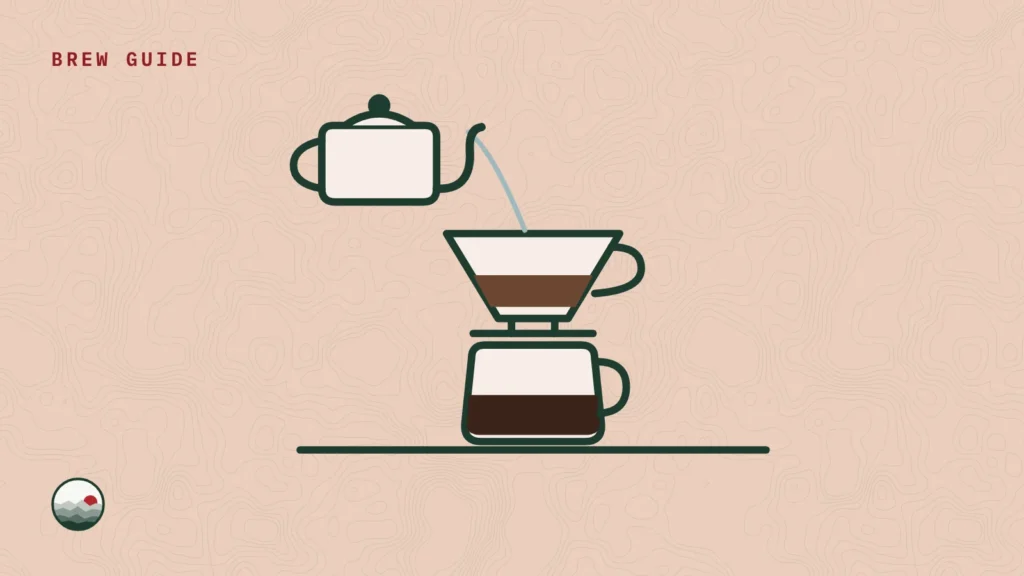
V60 pour-over recipe
- Rinse the filter. Set a paper filter in the V60, wet it with hot water to wash out the paper taste and warm everything up, then pour that water away.
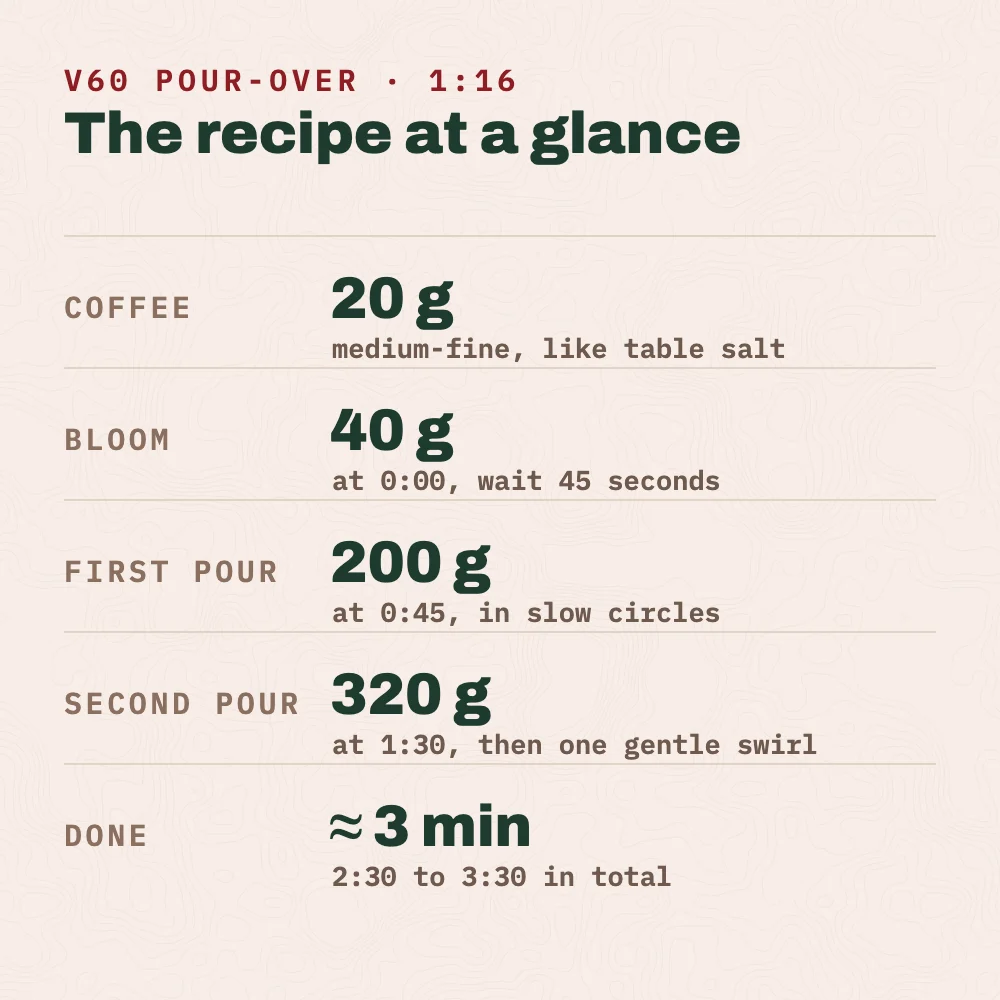
- Add the coffee. Grind 20 g medium-fine, about like table salt, tip it in and shake the dripper gently so the bed is flat.
- Bloom. Start a timer and pour 40 g of water at 195 to 205°F, wetting all the grounds. Wait until 0:45.
- First pour. At 0:45, pour slowly in circles to 200 g, keeping the stream in the middle and off the paper.
- Second pour. At 1:30, pour on to 320 g, then give the dripper one gentle swirl so the bed settles flat.
- Let it drain. It should finish between about 2:30 and 3:30. Light roasts often land near 3:00.
The V60 takes its name from its V shape and 60-degree angle. Its spiral ribs and single large hole let water flow fast, so the grind and the way you pour change the cup a lot. Brewing a light Ethiopian? Our guide to brewing Ethiopian coffee as a pour-over fine-tunes this recipe for bright, floral coffees.
Chemex recipe
The Chemex, designed by Peter Schlumbohm in 1941, is a dripper and carafe in one. Its thick bonded filters slow the flow and make a very clean cup, so grind a little coarser than for a V60, about like coarse sand.
- Set the filter. Open a Chemex filter into a cone with the thick, three-layer side toward the spout, so it doesn’t block the air channel. Rinse it with hot water, then pour that water out through the spout, leaving the filter in place.
- Add the coffee. Grind 50 g medium-coarse and level the bed.
- Bloom. Pour 100 g of water at 195 to 205°F to wet all the grounds, and wait 45 seconds.
- Pour in stages. Pour slowly in circles to about 450 g, let it drop a little, then keep pouring to 800 g by about 2:30. Keep the water below the top of the filter.
- Let it drain. A full batch should finish in about 3:30 to 4:30. Lift out the filter, swirl the carafe and serve.
That makes about 24 oz, enough for three or four cups. For a smaller pot, use 30 g of coffee and 480 g of water, and expect it to finish a little sooner. Our guide to V60 vs Chemex vs Kalita Wave compares the drippers.
Pouring tips
- Use a gooseneck kettle if you can. Its narrow spout gives a slow, steady stream that’s easy to aim. Our guide to the best gooseneck kettles covers good ones.
- Pour in the middle, in small circles, and avoid pouring straight onto the paper, where water can run down the sides without touching the coffee.
- Keep the water level steady rather than flooding the dripper, and finish with one gentle swirl so the grounds settle flat.
If it doesn’t taste right
- Sour, thin or drains too fast: grind finer, use hotter water, or pour a little more slowly.
- Bitter, dry or drains too slowly: grind coarser or use slightly cooler water.
- Weak but not sour: use a little more coffee, moving from 1:16 toward 1:15.
Change one thing at a time. Our guide to why coffee tastes bitter or sour explains what each change does.
Where these numbers come from
These are starting points, not lab results. They match our coffee to water ratio chart and the pour-over recipes in our other guides, and we checked them against the Specialty Coffee Association’s Golden Cup guideline, Hario’s and Chemex’s descriptions of their brewers, and common barista recipes, which mostly sit between 1:15 and 1:17. We brew on a Hario V60 and a 10-cup Chemex. Your coffee, grinder and water will move the numbers a little.
Pour-over coffee FAQ
What is the best pour over coffee ratio?
Start at 1:16, for example 20 g of coffee to 320 g of water. Go toward 1:15 for a stronger cup or 1:17 for a lighter one.
How much coffee do I use for pour-over?
About 15 g, or 3 level tablespoons, for an 8 oz cup, and 20 g for a big 11 oz mug. For a full Chemex, use about 50 g.
What is the coffee bloom?
The puffing and bubbling you see when hot water first hits fresh grounds, as trapped carbon dioxide escapes. Letting it out first helps the rest of the water soak in evenly.
How long should coffee bloom?
30 to 45 seconds, with about twice the coffee’s weight in water. Very fresh coffee needs the longer end.
What is the Chemex coffee to water ratio?
About 1:15 to 1:17. For a full batch, try 50 g of coffee to 800 g of water with a medium-coarse grind.
What grind size is best for pour-over?
Medium-fine, about like table salt, for a V60, and medium-coarse, about like coarse sand, for a Chemex, because its thick filter slows the flow.
How long should a pour-over take?
About 2:30 to 3:30 for a one-mug V60, and about 3:30 to 4:30 for a full Chemex, counting from the first pour.
Brew a pour-over with Regions coffee
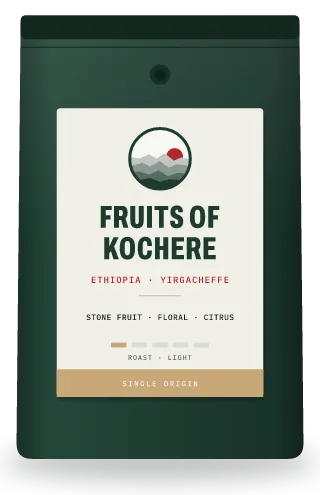
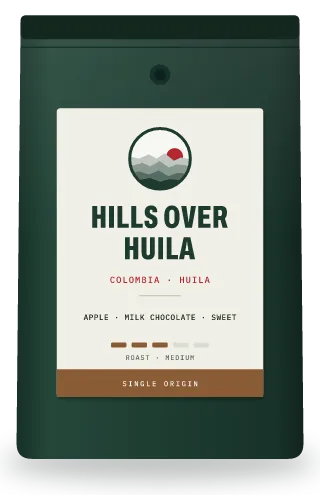
Pour-over shows off a coffee’s clarity, so bright, sweet coffees shine in it. Fruits of Kochere, a light roast from Kochere in Ethiopia’s Yirgacheffe region, opens with a floral aroma, moves into juicy stone fruit and finishes with a bright citrus snap. Hills Over Huila, a medium roast from Colombia, brings crisp apple, milk chocolate and a sweet, clean finish. Our coffees are listed as coming soon, so tap Notify me on any coffee to hear when it’s ready.