
Quick answer
To roast coffee at home, heat green coffee beans while keeping them moving, in a skillet, an oven, a hot-air popcorn popper or a small home roaster. Over roughly 8 to 15 minutes they turn yellow, then brown, then crackle like popcorn, which is first crack, at around 385 to 400°F. Stop a minute or two after first crack for a light roast, between the cracks for a medium roast, or as second crack starts, around 435 to 445°F, for a dark roast. Cool the beans fast, let them rest for a few days, then grind and brew. Roast outside or with strong ventilation, because it makes smoke and papery chaff, and never leave it unattended.
The roast stages, from green to dark
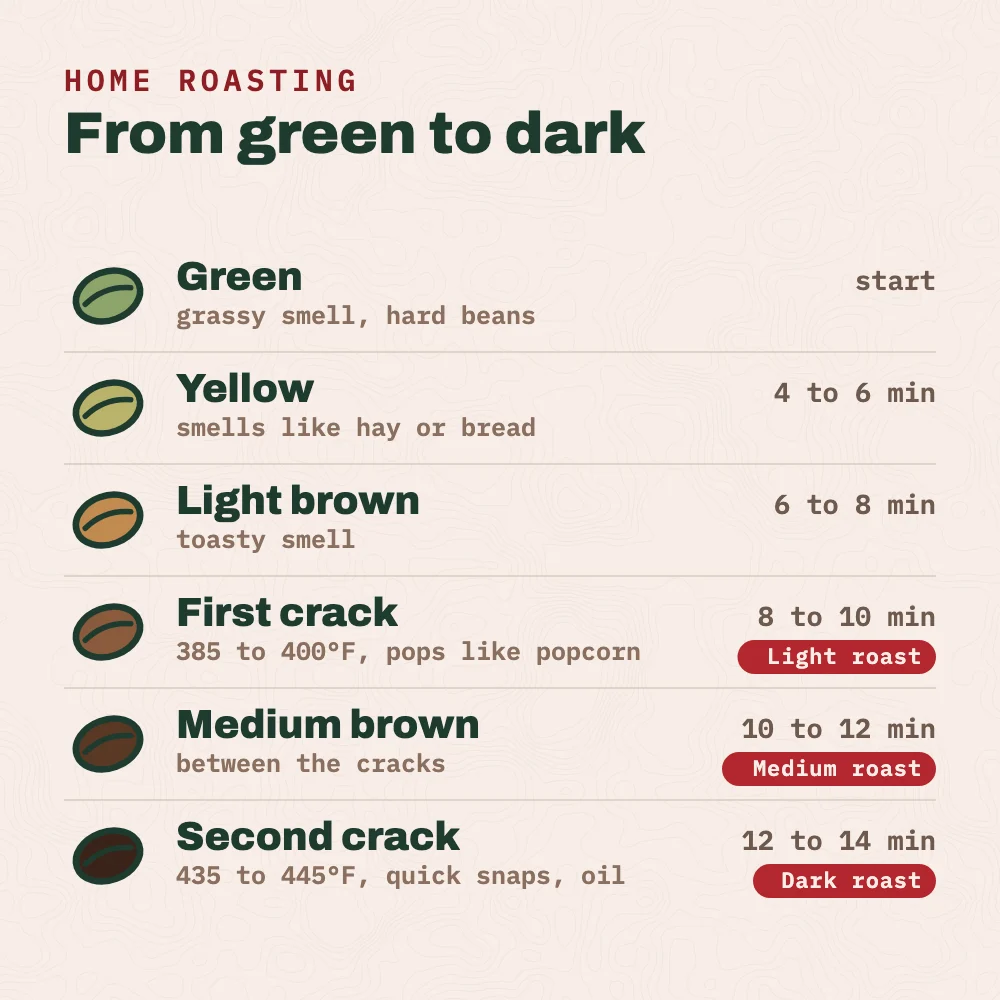
Your senses matter more than the clock. The beans start out grassy-smelling and green, turn yellow and smell like hay or bread as they dry, then brown as sugars caramelize. First crack sounds like popcorn popping and means the roast is drinkable. Second crack is quieter and faster, like crisped rice cereal in milk, and brings smoke and oil to the surface. Our guide to light, medium and dark roasts explains how each one tastes.
Four ways to roast coffee at home
| Method | Batch | Time | Good for |
|---|---|---|---|
| Skillet or pan | About 100 to 225 g | 10 to 15 min | Trying it with what you have |
| Oven | About 225 g | 15 to 20 min | Bigger batches, less even |
| Hot-air popcorn popper | About 70 to 90 g | 5 to 8 min | Cheap, fast and fairly even |
| Home coffee roaster | Varies by model | 8 to 15 min | Even, repeatable roasts |
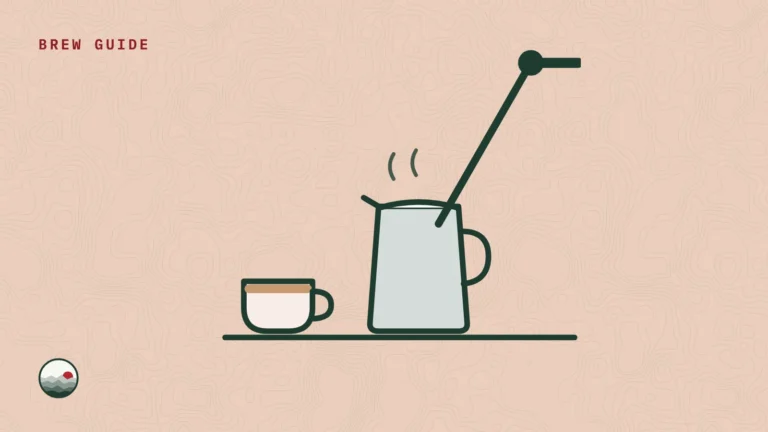
- Skillet or pan: use a heavy pan or a stovetop popcorn popper with a crank over medium heat, and stir constantly so the beans don’t scorch. It’s the most hands-on method and the hardest to roast evenly, but it needs nothing special.
- Oven: spread the beans in a single layer on a baking sheet or perforated pan, roast at about 450 to 475°F, and stir or shake them every few minutes. Ovens heat unevenly, so expect a mix of shades.
- Hot-air popcorn popper: moving hot air keeps the beans tumbling, so roasts come out fairly even. Use only a hot-air model, never one with oil, and keep the batch small. It isn’t what poppers are made for, so it can void the warranty, and you should never leave it running unattended.
- Home coffee roaster: small electric air or drum roasters control the heat and airflow and collect most of the chaff. They cost more, but they’re the easiest way to get the same roast twice.
How to roast coffee beans, step by step
- Set up outside or by a strong vent. Roasting smokes, especially dark roasts, and the beans shed papery chaff. Have two metal colanders ready for cooling.
- Weigh your green beans. Start small, 100 to 150 g, or roughly 2/3 to 1 cup, so you can keep them moving.
- Heat and keep the beans moving. Stir, shake or let the air do it. Watch them turn yellow, then light brown.
- Listen for first crack. When the popping starts, you have a light roast within a minute or two. Keep going for medium, or until the first snaps of second crack for dark.
- Cool them fast. Beans keep roasting from their own heat, so tip them into a colander and pour them back and forth between the two colanders outside for 2 to 3 minutes, until they’re cool to the touch. This also blows away most of the chaff.
- Let them rest. For the first day, keep them in a jar with the lid loose, or in a bag with a one-way valve, because the beans release carbon dioxide. Most coffee tastes best a few days after roasting, and espresso often needs a little longer.
Beans lose about 12 to 20% of their weight while roasting, mostly water, so 150 g of green coffee gives you roughly 120 to 130 g of roasted beans. Our guide to storing coffee beans explains how to keep them fresh once they’ve rested.
Where to buy green coffee beans
Green coffee is the dried, unroasted seed of the coffee cherry. Online home-roasting suppliers sell it by the pound from single farms and regions, often with roasting notes. It usually costs less per pound than roasted specialty coffee, and it keeps far longer, typically 6 months to a year in a cool, dry place. For your first roasts, many suppliers suggest a washed Central or South American coffee, which tends to roast evenly and forgive small mistakes.
Common home roasting problems
- Uneven color: the beans weren’t moving enough, or the batch was too big. Stir more, roast less at once, or try a popper or home roaster.
- Scorched or burnt outsides: the heat was too high at the start. Turn it down and take a little longer to reach first crack.
- Grassy or sour coffee: the roast stopped before first crack, or too soon after it. Go a minute longer next time.
- Bitter, ashy coffee: the roast went too far into second crack. Stop sooner and cool faster.
Where this guide comes from
This guide draws on home-roasting guides from green coffee suppliers and roasters, published descriptions of what happens to coffee during roasting, popcorn popper manufacturers’ safety instructions, and our own guides to roast levels and storage. Temperatures are bean temperatures, and the times are rough, because every method and batch is different.
Home coffee roasting FAQ
How long does it take to roast coffee beans?
Usually about 8 to 15 minutes, depending on the method and how dark you go. A hot-air popper can be done in 5 to 8 minutes, and an oven can take 15 to 20.
How do you roast coffee beans in the oven?
Spread green beans in a single layer on a baking sheet or perforated pan, roast at about 450 to 475°F and stir every few minutes until they reach the color you want, usually 15 to 20 minutes. Then cool them quickly in a colander.
What temperature do you roast coffee beans at?
The beans themselves reach about 385 to 400°F at first crack and about 435 to 445°F at second crack. Ovens are usually set to about 450 to 475°F to get them there.
Can you roast coffee in a popcorn popper?
Yes, in a hot-air popper, which many home roasters start with. Keep batches small, roast outside, and never leave it running unattended, since it isn’t what the popper was designed for.
How long should coffee rest after roasting?
At least overnight. Most coffee tastes best a few days after roasting, and espresso often needs a little longer.
Where can I buy green coffee beans?
From online home-roasting suppliers, which sell green coffee by the pound from many farms and regions. Green beans keep for 6 months to a year in a cool, dry place.
How long do roasted coffee beans last?
They taste best about 1 to 4 weeks after roasting and are still fine for 2 or 3 months if kept sealed, with the flavor slowly fading.
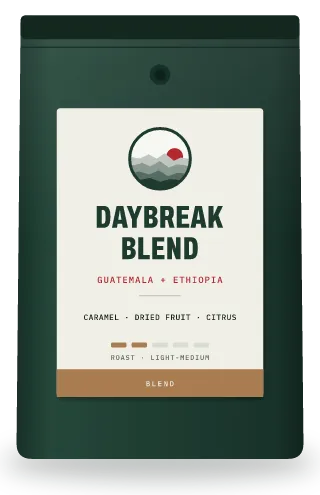
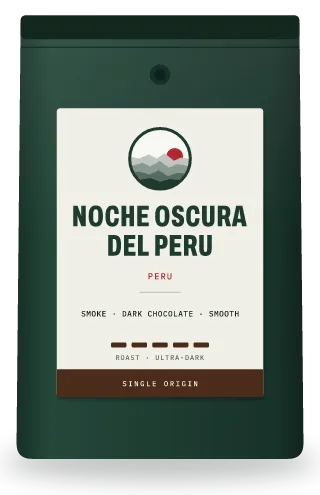
Skip the smoke with Regions coffee
Regions doesn’t sell green coffee, but if you’d rather not roast, our coffees are roasted to order by our specialty roasting partner in the United States, so they ship fresh. Daybreak Blend is our light-medium breakfast blend, with caramel, dried fruit and citrus, and Noche Oscura del Peru is our darkest roast, with smoke and bittersweet dark chocolate. Our coffees are listed as coming soon, so tap Notify me on any coffee to hear when it’s ready.