



On this page
- Quick answer
- Sour or bitter? How to tell
- Why it happens: extraction
- How to fix sour or bitter coffee
- Why does my coffee taste bitter?
- Why does my coffee taste sour?
- Burnt or watery coffee
- Fixes for each brewer
- Keep your gear clean
- Quick fixes for a cup that’s already brewed
- Where this guide comes from
- Sour or bitter coffee FAQ
- Dial it in with Regions coffee
Quick answer
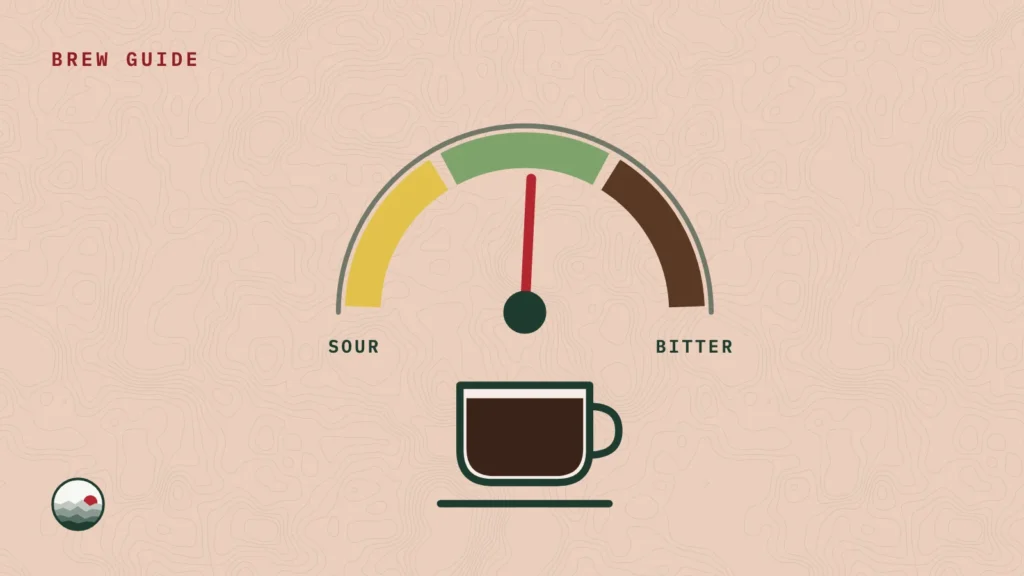
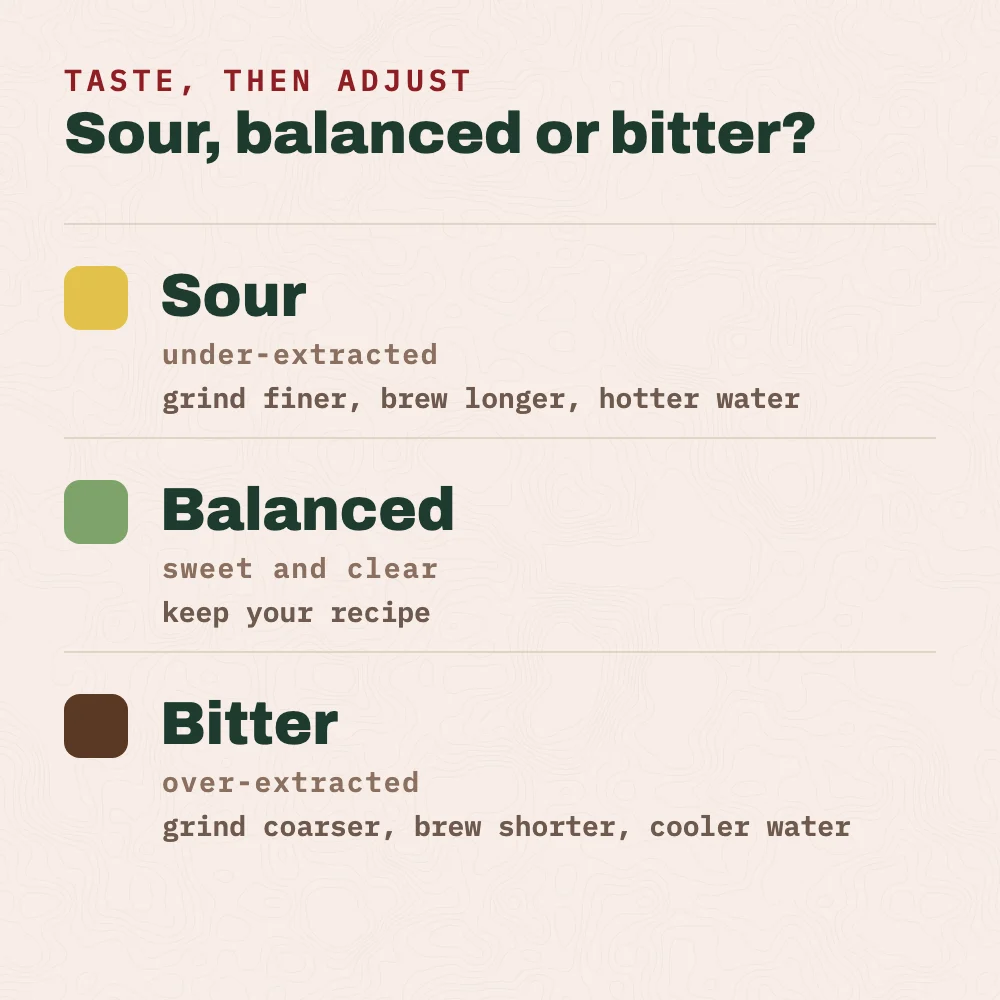
Sour coffee is usually under-extracted: the water didn’t pull enough out of the grounds, so you taste the sharp acids without the sweetness that balances them. Bitter coffee is usually over-extracted, or roasted very dark. To fix sour coffee, grind finer, brew a little longer or use hotter water. To fix bitter coffee, grind coarser, brew a little shorter or use water just off the boil instead of boiling. Change one thing at a time, and start with the grind.
Sour or bitter? How to tell
Sour tastes sharp and tangy, like an unripe lemon. It often comes with a thin, watery or slightly salty cup, and it fades quickly. Bitter tastes harsh and lingers, like burnt toast or tea that steeped too long, and it often leaves your mouth feeling dry. Pleasant brightness isn’t the same as sour: good acidity tastes juicy and comes with sweetness. Our guide to how to taste coffee explains the difference.
Why it happens: extraction
Brewing dissolves flavor out of the grounds, and it comes out in a rough order. Bright acids dissolve first, then the sugars and other compounds that bring sweetness and body, and the most bitter compounds come last. Stop too early and the cup tastes sour. Go too far and it turns bitter.
Coffee professionals aim to dissolve roughly 18 to 22 percent of the coffee’s weight into the cup, a range first set out in brewing research in the 1950s. In that zone, coffee tends to taste sweet and balanced. You don’t need to measure it. Four things control it: grind size, brew time, water temperature and the coffee-to-water ratio.
How to fix sour or bitter coffee
| Change | If it’s sour | If it’s bitter |
|---|---|---|
| Grind | Finer | Coarser |
| Brew time | Longer | Shorter |
| Water temperature | Hotter, 200 to 205°F | A little cooler, never boiling |
| Roast | Brew light roasts hotter and a bit finer | Try a lighter roast if dark ones taste burnt to you |
Make small changes: a click or two on a burr grinder, 15 to 30 seconds of brew time, or about 5°F of water temperature. Grind is usually the best place to start. The amount of coffee matters too. A strong, harsh cup can simply mean too much coffee for the water, and a thin one too little. Our coffee ratio and grind size chart has starting points for every brewer.
Why does my coffee taste bitter?
- The grind is too fine for your brewer, so water pulls out too much.
- It brewed too long, like a French press left well past 4 minutes, or coffee left sitting on its grounds.
- The water was boiling. Let it rest about 30 seconds off the boil.
- The roast is very dark, so the bitterness comes from the roast itself.
- Your gear needs cleaning. Old coffee oils turn rancid and taste bitter.
- It sat on a hot plate, which slowly cooks brewed coffee.
Why does my coffee taste sour?
- The grind is too coarse, so water runs through without picking up enough.
- It brewed too fast, like a pour-over that drains in a minute or an espresso shot that gushes.
- The water was too cool. Some cheap drip machines never get hot enough, and kettle water cools quickly once it’s off the heat.
- It’s a light roast brewed like a dark one. Light roasts are denser and usually need hotter water and a slightly finer grind.
- The grind is uneven. A blade grinder makes both fine dust and big chunks, so a cup can taste sour and bitter at once.
Burnt or watery coffee
Burnt: a burnt taste usually comes from a very dark roast, water at a full boil, or coffee left on a hot plate. On a warming plate, brewed coffee can start to taste cooked within about half an hour, so pour it into a thermal carafe instead. Brew with water just off the boil, and try a medium roast if dark roasts always taste burnt to you.
Watery: watery coffee usually means too little coffee for the water, or a grind so coarse that the water runs straight through. Weigh your coffee if you can. About 1 g of coffee for every 15 to 17 g of water is a good place to start.
Fixes for each brewer
- Pour-over: a single cup in a V60 usually takes about 2:30 to 3:30 in total. If it drains faster and tastes sour, grind finer. If it drags on and tastes bitter, grind coarser.
- French press: use a coarse grind, steep for 4 minutes, then pour all the coffee off the grounds right away. For bitter coffee, grind coarser or steep a little less. For sour or weak coffee, steep a minute longer.
- Drip machine: use a medium grind and enough coffee, and keep the machine clean. If the coffee always tastes sour, your machine may not get hot enough. SCA-certified brewers are tested for brewing temperature and time.
- Espresso: a common target is 18 g of coffee in and 36 g out in 25 to 30 seconds. Sour shots usually ran too fast, so grind finer. Bitter shots usually ran too slow, so grind coarser. Our guide to the best beginner espresso machines covers dialing in.
- Cold brew: if it’s bitter, steep for less time or grind coarser. If it’s weak, steep longer or use more coffee. Our guide to cold brew in a French press has the full recipe.
Keep your gear clean
Coffee oils build up in brewers, carafes and grinders, and as they go rancid they add a stale, bitter taste to every cup. Rinse your brewer after each use, wash the carafe and filter basket regularly, and descale a drip machine as often as its manual suggests, using the descaler or method the maker recommends. Hard water leaves scale faster, and filtered water often makes better-tasting coffee too.
Quick fixes for a cup that’s already brewed
A splash of milk softens bitterness, and a tiny pinch of salt can too. In lab studies, sodium suppresses bitter tastes more than sweet ones. Neither will rescue a brew that’s badly off, so adjust the next one.
Where this guide comes from
This is a researched guide, not a lab test. The brew times and ratios match our ratio chart and brew guides. The extraction range comes from the coffee industry’s long-standing brewing control chart, the salt note from taste research on sodium and bitterness, and the rest from roaster and coffee-site troubleshooting guides, checked in October 2026. Every coffee and brewer is a little different, so adjust to taste.
Sour or bitter coffee FAQ
How do I make coffee less bitter?
Grind coarser, brew a little shorter and use water just off the boil. Clean your brewer, try a lighter roast if you drink dark ones, and add a splash of milk or a tiny pinch of salt to a cup that’s already brewed.
Why does my coffee taste sour and bitter at the same time?
Usually an uneven grind. A blade grinder makes fine dust that over-extracts and big chunks that under-extract. A burr grinder fixes most of this, and our guide to the best coffee grinders for home can help you pick one.
Does dark roast coffee taste more bitter?
Usually, yes. Dark roasting creates roasty, bitter flavors and breaks down the acids that make lighter roasts taste bright. A medium roast is a good middle ground.
Why does my espresso taste sour?
It probably ran too fast. Grind finer so the shot takes about 25 to 30 seconds, and check that your machine is fully heated before you pull it.
Why does my espresso taste bitter?
It probably ran too slow or too long. Grind a little coarser, or stop the shot sooner.
Does salt make coffee less bitter?
A tiny pinch can. Sodium suppresses bitter tastes, so a few grains soften a harsh cup. Too much just makes it salty.
Do old coffee beans taste sour or bitter?
Stale beans usually taste flat, papery and dull rather than sour. Our guide to storing coffee beans explains how long they stay fresh.
Dial it in with Regions coffee
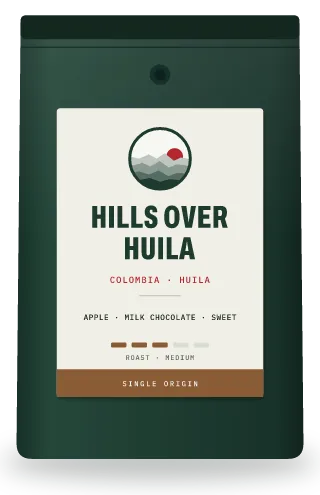
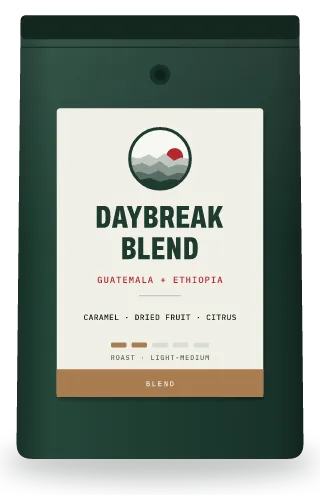
A forgiving coffee makes dialing in easier. Hills Over Huila is a medium roast from Colombia with crisp apple, milk chocolate and a sweet finish, and medium roasts are the easiest to keep out of sour or bitter territory. Daybreak Blend is an easygoing light-medium blend of Guatemalan and Ethiopian coffee with caramel, dried fruit and citrus. Our coffees are listed as coming soon, so tap Notify me on any coffee to hear when it’s ready.