
Quick answer
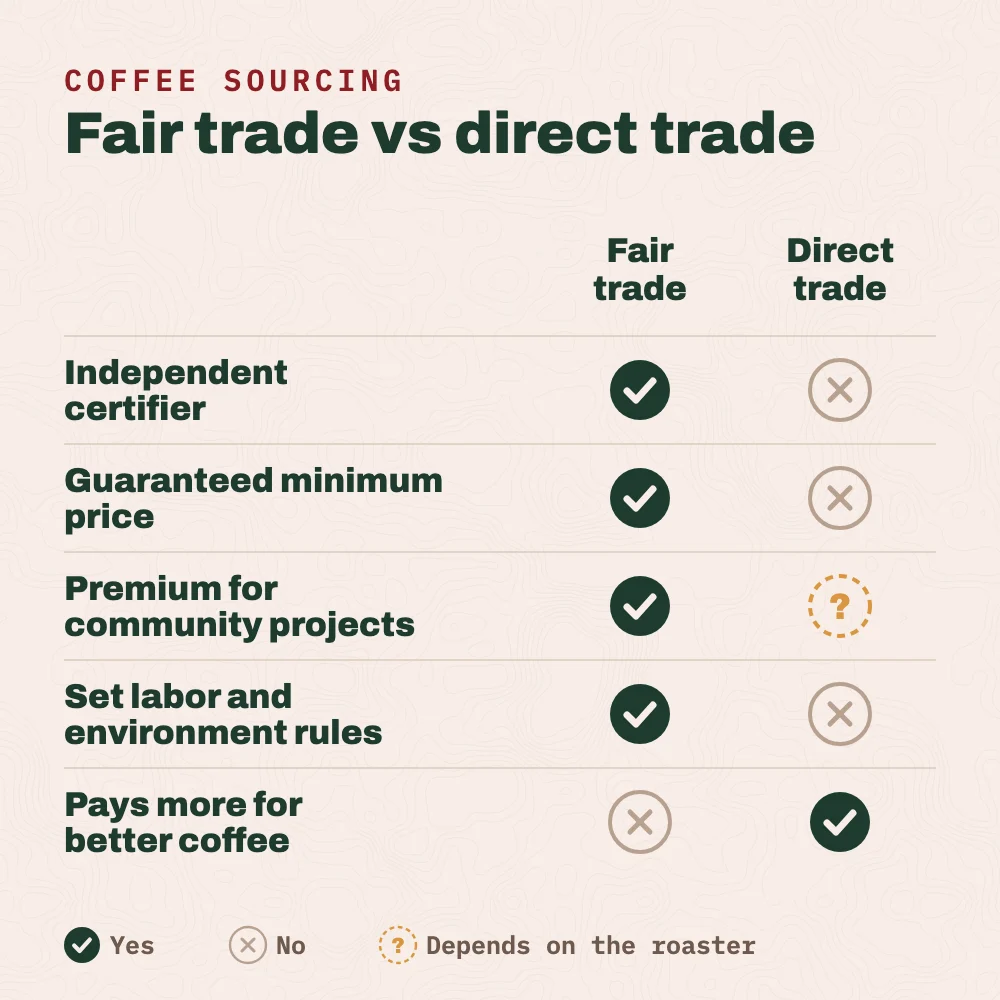
Fair trade is a certification. An independent group checks that farmer co-ops are paid at least a minimum price, currently $1.80 a pound for washed arabica, or the market price if that’s higher, plus a 20-cent premium for community projects, and that farms meet labor and environmental rules. Direct trade isn’t a certification. It means a roaster buys straight from farms, usually paying well above market for better coffee, but nobody checks the claim. Fair trade gives you a verified floor. Direct trade can pay farmers more, but you have to trust the roaster.
What fair trade coffee means
Fair trade coffee is bought under rules set by a certifier, mostly from cooperatives of small farmers. The certifier audits the co-ops and the companies that buy from them. Under Fairtrade International’s rules:
- A minimum price: buyers pay at least $1.80 a pound for washed arabica, or the market price when it’s higher. For contracts signed from December 1, 2026, the minimum rises to $2.00.
- A premium: another 20 cents a pound goes to the co-op, which its members vote on how to spend, for example on schools, healthcare or farm improvements.
- Extra for organic: certified organic coffee earns another 40 cents a pound on top of the minimum.
- Standards on the farm: rules against child and forced labor, and environmental rules on things like pesticides and water.
The minimum price matters most when coffee prices crash, because it puts a floor under farmers’ income. In recent years it hasn’t been needed: the New York price for arabica hasn’t fallen below $2.00 a pound since March 2024, and it hit a record of about $4.38 in October 2025. In those years, fair trade buyers pay the market price plus the premium.
Fairtrade vs Fair Trade USA
There are two main fair trade labels on US shelves. Fair Trade USA used to be part of the international Fairtrade system, but the two split in 2011 and 2012 over who could be certified. Fairtrade International certifies coffee only from small-farmer cooperatives. Fair Trade USA also certifies larger estates and independent farms that aren’t part of a co-op. Both use price floors, premiums and farm standards, but the details differ, so the two seals aren’t interchangeable.
What direct trade coffee means
Direct trade is a buying approach, not a label. The term is usually credited to Geoff Watts, then a green coffee buyer at Intelligentsia, around 2002. A direct trade roaster buys from specific farms or co-ops, often with fewer middlemen, visits them and pays a price tied to the quality of the coffee, often well above both the market price and the fair trade minimum. The best relationships last for years, so farmers can plan and invest.
Because there’s no certifier, direct trade means whatever the roaster says it means. Some roasters publish transparency reports showing which farms they bought from and what they paid. Others use the phrase loosely in their marketing. The coffee itself might come through an importer either way.
Fair trade vs direct trade at a glance
The criticisms of each
Neither system is perfect. Critics of fair trade, including a widely read 2011 article in the Stanford Social Innovation Review, point out that co-ops pay for their own certification, that the minimum price doesn’t reward better coffee, so co-ops may sell their best lots elsewhere, and that research on how much it raises farmers’ incomes is mixed. Its supporters answer that the floor and the premium protect small farmers when prices collapse, which is exactly when they need it.
The main criticism of direct trade is that nobody checks it. It also tends to help farms that can grow high-scoring specialty coffee, often at high altitude, more than smaller farms growing ordinary coffee. And the phrase has spread well beyond the roasters who started it, sometimes without the relationships it’s meant to describe.
Other labels you’ll see
- Rainforest Alliance: environmental and social standards, checked by auditors, but no minimum price.
- USDA Organic: how the coffee is farmed, not what the farmer is paid.
- Shade-grown and Bird Friendly: how much tree cover the farm keeps. Our guide to shade-grown coffee explains what each seal requires.
- Ethically sourced: a phrase with no standard behind it. Ask the company what it means.
How to choose
- If you want a guarantee, look for a Fairtrade or Fair Trade USA seal. Someone has checked the price and the farm rules.
- If a roaster says direct trade, look for the farm or co-op’s name, how long they’ve worked together and, ideally, the price paid. A roaster that shares those details is usually doing the real thing.
- Look past the label too. Traceability, meaning the bag names the country, region and farm or co-op, tells you a lot about how closely a roaster knows its coffee. Our guide to how to choose coffee beans explains how to read a bag.
Where this guide comes from
This guide draws on Fairtrade International’s published coffee prices and its July 2026 price announcement, coverage of the split between Fair Trade USA and Fairtrade International, histories of direct trade, futures market reports on the arabica price, and published critiques of both systems. Minimum prices change from time to time, so check the certifier’s current figures if you need them exactly.
Fair trade and direct trade FAQ
What does fair trade coffee mean?
Coffee bought under a certifier’s rules: farmer co-ops get at least a set minimum price, or the market price if it’s higher, plus a premium for community projects, and farms meet labor and environmental standards.
What is direct trade coffee?
Coffee a roaster buys straight from specific farms or co-ops, usually paying more for higher quality. It isn’t certified, so it depends on the roaster’s word.
What’s the difference between fair trade and direct trade?
Fair trade is an independent certification with a guaranteed minimum price. Direct trade is an uncertified relationship that often pays more but isn’t checked by anyone.
How does fair trade work?
A certifier sets a minimum price, a premium and farm standards, then audits the co-ops that sell the coffee and the companies that buy it, before they can use the seal.
Is fair trade coffee better?
It’s a guarantee about price and farm standards, not flavor. Fair trade coffee can taste great or ordinary, so judge the taste by the roast, origin and freshness.
Is direct trade better than fair trade?
It can pay farmers more, especially for high-quality coffee, but it isn’t verified. A roaster that names its farms and publishes what it paid gives you the best reason to trust it.
What is the Fairtrade minimum price for coffee?
$1.80 a pound for washed arabica, rising to $2.00 for contracts signed from December 1, 2026, plus a 20-cent premium. Buyers pay the market price instead whenever it’s higher.
How Regions coffee is sourced
Regions coffees aren’t Fairtrade or Fair Trade USA certified, and we don’t buy directly from farms. We work with a specialty roasting partner in the United States, and we name the country, growing area and, when it’s known, the farm or cooperative behind every coffee. Our How we source page explains the standards each coffee has to meet.