



Quick answer
A coffee cherry is the fruit of the coffee plant, and a coffee bean is its seed. Each small, round cherry usually holds two beans, wrapped in a thin skin, a layer of sweet, sticky fruit and a papery shell called parchment. The fruit is edible, sweet and a little tart, but there isn’t much of it. After picking, farms remove the fruit and dry the seeds, and those seeds are what get roasted into coffee. The dried skins and fruit can be saved and brewed as cascara, a fruity, tea-like drink with much less caffeine than coffee.
Inside a coffee cherry
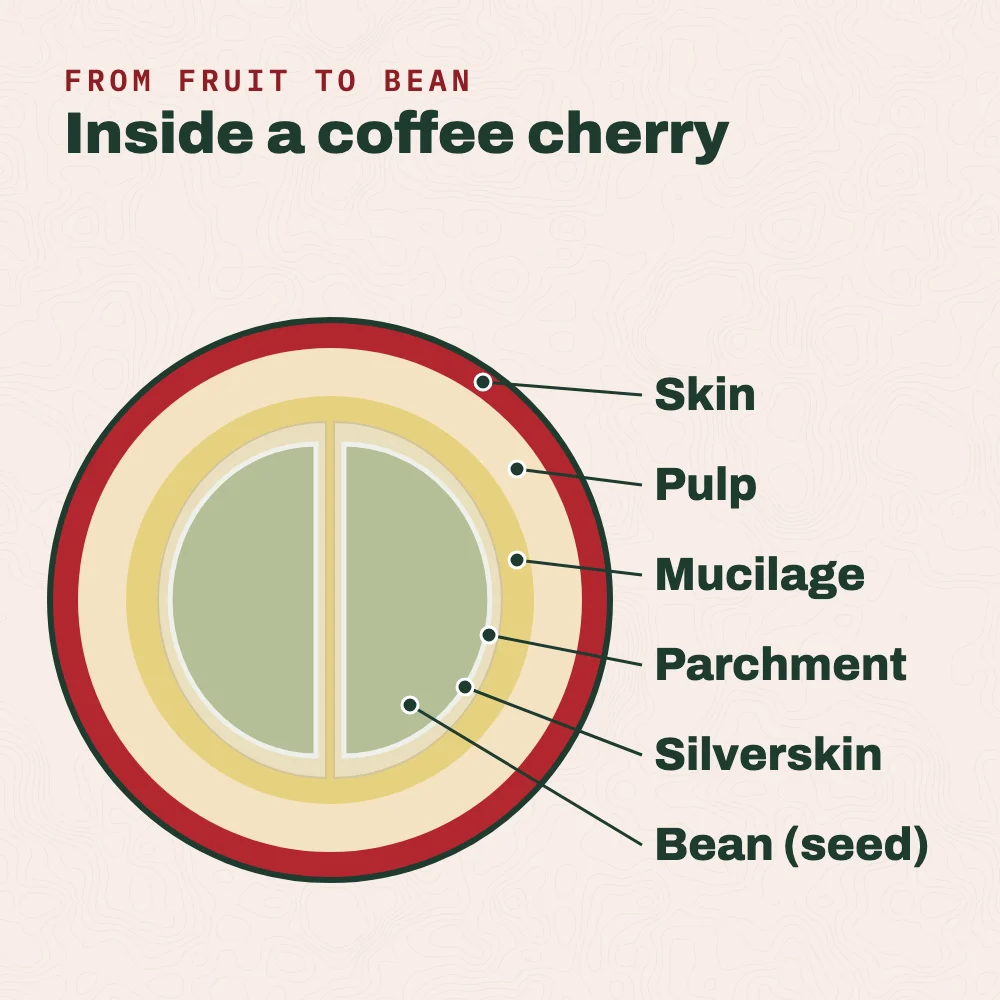
From the outside in, a coffee cherry has six layers. Each one ends up somewhere different on the way to your cup.
| Layer | What it is | What happens to it |
|---|---|---|
| Skin | A thin outer peel, green at first and usually red when ripe | Removed at the mill, or dried on for natural coffees |
| Pulp | The sweet, juicy flesh under the skin | Removed with the skin, or dried on for naturals. Dried skin and pulp become cascara |
| Mucilage | A sticky, sugary layer clinging to the parchment | Washed off, partly left on for honey coffees, or dried on for naturals |
| Parchment | A thin, papery shell around each bean | Dried with the bean, then hulled off before the coffee is shipped |
| Silverskin | A very thin, silvery film on the bean itself | Mostly comes off as chaff during roasting |
| Bean | The seed, usually two per cherry | Dried, sorted, shipped green and roasted |
The two beans grow facing each other, which is why a coffee bean has one flat side and one rounded side, with a crease down the middle of the flat side. Sometimes only one seed develops, and it grows round instead. That’s a peaberry, and our guide to types of coffee beans explains why some roasters sell them on their own.
Is coffee a fruit or a bean?
Coffee comes from a fruit, but the coffee bean itself is a seed. Botanists call the coffee cherry a drupe, the same kind of fruit as a cherry or a peach, where an inner layer hardens around the seed, like a cherry pit. In coffee, that layer is the thin parchment. It’s called a bean only because it looks like one. Coffee isn’t related to beans like pintos or green beans, which are legumes. The coffee plant belongs to the Coffea genus, in the same plant family as gardenias.
How coffee cherries grow
Coffee grows on shrubs and small trees in the tropics, in a band around the equator often called the coffee belt. Our coffee growing regions flavor map shows where. A new plant takes about three to four years to bear fruit. It flowers first, with clusters of small white blossoms that smell a little like jasmine, and the cherries form where the flowers were.
Arabica cherries take about seven to nine months to ripen after flowering, and robusta takes longer, around nine to eleven months. Most cherries turn from green to deep red, though some varieties ripen yellow, orange or pink. They don’t all ripen at once, even on the same branch, so on many specialty farms pickers come back every eight to ten days and pick only the ripe ones by hand.
It’s slow work. A good picker gathers about 100 to 200 pounds of cherries a day, which ends up as only 20 to 40 pounds of coffee beans. On larger farms, and in flat regions like much of Brazil, cherries are often stripped from the branch all at once or harvested by machine.
What does a coffee cherry taste like?
Ripe coffee cherries are sweet and a little tart. People who’ve tried them describe flavors like hibiscus, watermelon, cherry, red currant or apricot. The skin is thin and slightly bitter, and the flesh is just a thin layer around two big seeds, so there isn’t much to eat. Riper cherries are sweeter, and some farms check the sugar with a refractometer, the same tool winemakers use on grapes, to decide when to pick.
And yes, you can eat them. On coffee farms, people often taste a cherry straight off the branch. The fruit has a little caffeine too. You rarely see fresh coffee cherries for sale outside coffee-growing areas, because they start to ferment soon after picking, which is why farms usually process them the same day.
From cherry to coffee bean
- Picking: ripe cherries are picked by hand, or stripped and harvested by machine on some farms.
- Sorting: unripe, overripe and damaged cherries are taken out, often by putting the cherries in water, where the bad ones tend to float.
- Removing the fruit: washed coffees have the skin and pulp taken off right away, and the mucilage is fermented and washed off. Naturals are dried whole, fruit and all. Honey coffees are in between, dried with some of the sticky mucilage left on. Our guide to washed, natural and honey processing explains how each one changes the flavor.
- Drying: the beans are dried in the sun or in machines, usually to around 10 to 12 percent moisture. In the sun, that takes days to weeks.
- Hulling: at a dry mill, machines strip off the parchment, or the whole dried fruit for naturals. What’s left is green coffee. Farms often store their coffee in parchment until it’s sold, because the parchment protects the bean.
- Grading and shipping: the green beans are sorted by size, weight and color, graded, bagged and shipped.
- Roasting: a roaster turns the hard, grassy green seeds into the brown, fragrant beans you grind at home. Our guide to light, medium and dark roasts picks up from there.
What is cascara?
Cascara is the dried skin and pulp of the coffee cherry, brewed like tea. The word means husk or peel in Spanish. It’s saved when the fruit comes off the beans at the mill, then dried. You’ll also see it sold as coffee cherry tea or coffee fruit tea.
It isn’t new. In Yemen, a spiced drink of dried coffee husks called qishr, often made with ginger, has been popular for centuries. In Ethiopia, dried coffee husks are roasted and steeped to make a drink called hashara, and in Bolivia a husk drink called sultana is sweetened and spiced with cinnamon and clove. Specialty roasters and cafes have only started selling cascara widely in the last couple of decades, and in 2022 the European Union approved dried coffee cherry pulp as a traditional food.
Cascara tastes fruity and sweet, more like a herbal tea than coffee, with notes like hibiscus, rose hip, cherry, raisin or tamarind. It has some caffeine, but much less than coffee. In a 2013 lab test by the London roaster Square Mile, even the strongest cascara they brewed had about 111 mg of caffeine per liter, compared with roughly 400 to 800 mg per liter for brewed coffee.
One thing to watch for: coffee cascara is not cascara sagrada, a tree bark sold as a laxative. Look for coffee cherry or coffee fruit on the label.
How to brew cascara
- Hot: use about 12 g of cascara for 250 ml (about 8 oz) of water just off the boil, around 200°F. Steep for 4 to 5 minutes, then strain. A French press works well.
- Stronger: recipes range from about 6 g to 18 g per 250 ml, so use more cascara for a stronger, sweeter cup.
- Iced: steep it in cold water in the fridge overnight, then strain, or brew it hot at double strength and pour it over ice.
Cascara is forgiving, so treat these numbers as a starting point and adjust to taste.
Where this guide comes from
This is a researched guide, not a report from a farm visit. It draws on coffee association and importer guides to how coffee grows and is processed, roaster guides to cascara, Square Mile’s 2013 caffeine test and the EU’s 2022 decision on coffee cherry pulp, checked in October 2026. Figures like ripening times and picking rates vary by farm, variety and country, so treat them as typical ranges.
Coffee cherry FAQ
Can you eat coffee cherries?
Yes. Ripe coffee cherries are edible, sweet and a little tart. Most of each cherry is seed, though, so there’s only a thin layer of fruit to eat.
Do coffee cherries have caffeine?
Yes, a little. Cascara, the tea made from dried coffee cherries, has much less caffeine per cup than brewed coffee.
Are coffee beans the pits of a cherry?
In a way. They’re the seeds of the coffee cherry, usually two per fruit. Coffee cherries aren’t related to the cherries you buy at the store, though. They’re just similar in size and color.
Where do coffee beans come from?
They’re the seeds of coffee cherries, the fruit of coffee plants grown in tropical countries around the equator. Our coffee growing regions flavor map shows where they grow and how each region tastes.
Is cascara the same as cascara sagrada?
No. Coffee cascara is dried coffee cherry fruit. Cascara sagrada is the bark of a different tree and is sold as a laxative. Check that the label says coffee cherry or coffee fruit.
What does cascara taste like?
Fruity and sweet, like a herbal tea, with notes such as hibiscus, cherry, raisin or rose hip. It doesn’t taste like coffee.
Can you buy fresh coffee cherries?
Rarely, outside coffee-growing areas, because fresh cherries start to ferment soon after picking. Dried cascara is much easier to find, from specialty roasters and tea shops.
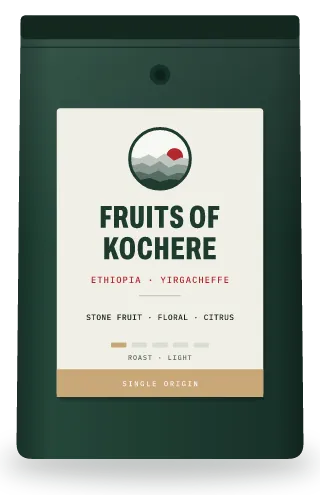
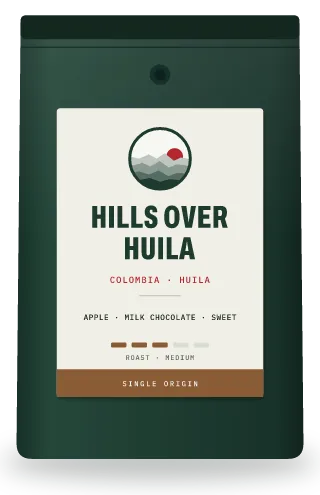
From cherry to cup with Regions coffee
Every bag of Regions coffee started as ripe coffee cherries on a farm. Fruits of Kochere comes from the Kochere area of Yirgacheffe, in Ethiopia, where arabica coffee first grew wild, with a floral aroma, juicy stone fruit and a bright citrus finish. Hills Over Huila comes from Huila, Colombia, with crisp apple, milk chocolate and a sweet finish. Each product page lists the roast and tasting notes. Our coffees are listed as coming soon, so tap Notify me on any coffee to hear when it’s ready.