




On this page
- Quick answer
- Experimental processes at a glance
- How anaerobic fermentation works
- What is carbonic maceration?
- What does anaerobic coffee taste like?
- Co-fermented, infused and thermal shock coffees
- Are anaerobic coffees worth trying?
- How to brew anaerobic coffee
- Where this guide comes from
- Anaerobic coffee FAQ
- Fruit-forward Regions coffee to try
Quick answer
Anaerobic coffee is fermented in a sealed tank with little or no oxygen, usually for one to five days, before it’s dried. Shutting out oxygen changes which microbes do the work, and the result is bold, fruity and sometimes boozy or spicy flavors you won’t find in a classic washed or natural coffee. Carbonic maceration is a kind of anaerobic fermentation borrowed from winemaking, where whole cherries are sealed in tanks filled with carbon dioxide. These coffees are experimental, often pricey and loved or disliked in equal measure. Brew them like a light roast, ideally as pour-over.
Experimental processes at a glance
| Process | What happens | Common flavors |
|---|---|---|
| Anaerobic natural | Whole cherries, sealed, then dried | Intense, jammy fruit, sometimes boozy |
| Anaerobic washed | Pulped beans, sealed, then washed | Fruity but cleaner and brighter |
| Carbonic maceration | Whole cherries in a CO₂-filled tank | Juicy, winey, candied fruit |
| Thermal shock | Washed hot, then cold | Very aromatic and perfumed |
| Co-fermented | Fermented with fruit, spice or yeast | Tastes of what was added |
How anaerobic fermentation works
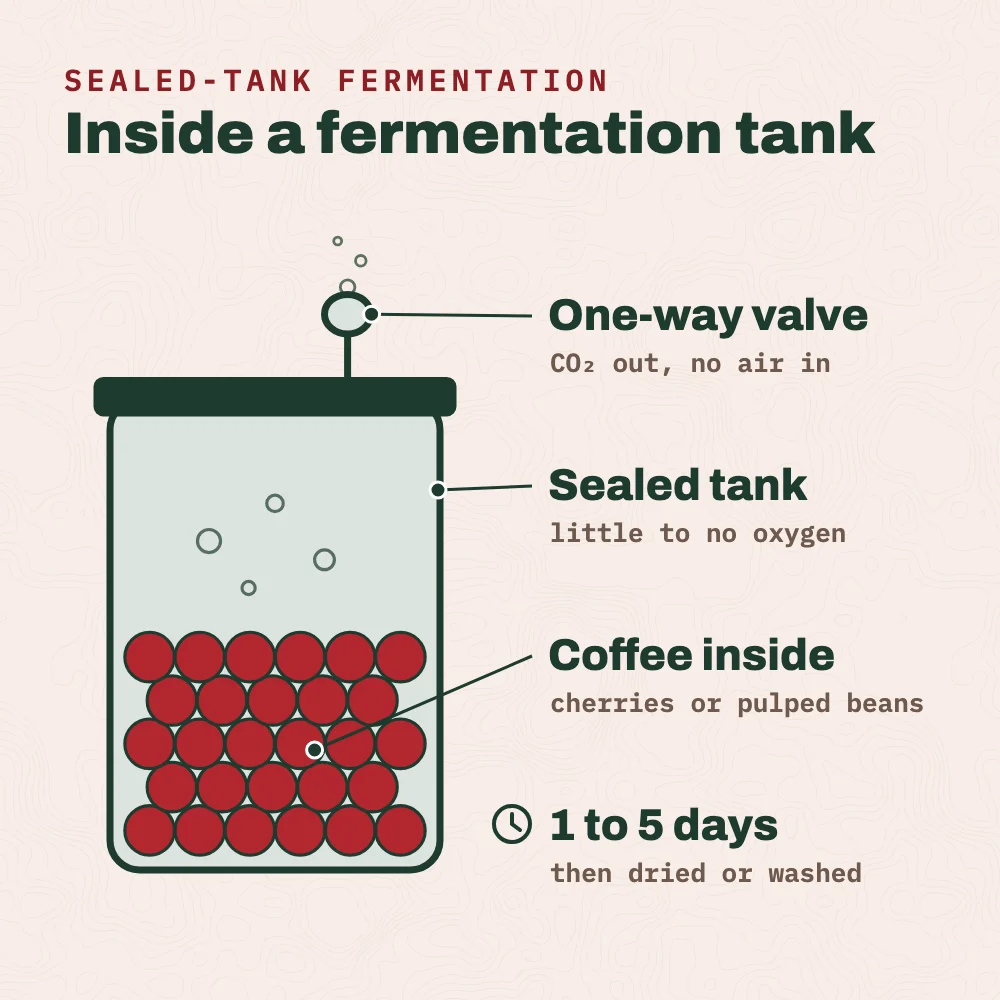
All coffee ferments a little as it’s processed, usually in open air, in tanks of water for washed coffees or inside the drying cherries for naturals. Anaerobic processing seals the coffee in a closed tank or barrel fitted with a one-way valve. As yeasts and bacteria feed on the sugars, they give off carbon dioxide, which pushes the remaining oxygen out through the valve, so the fermentation finishes with little or no oxygen.
Producers control the time, often anywhere from about 24 hours to five days, along with the temperature. Then they dry the coffee as a natural, or wash and dry it as a washed coffee. With less oxygen, different microbes take the lead, and they build fruitier, winier and sometimes yogurt-like flavors. Our guide to washed, natural and honey processing covers the classic methods these build on.
What is carbonic maceration?
Carbonic maceration comes from winemaking, where it’s used for wines like Beaujolais. In coffee, whole, unbroken cherries are sealed in a tank that’s flushed or filled with carbon dioxide. Because the skins stay intact, fermentation starts inside each cherry, and the results tend to be juicy and wine-like. Fermentation times vary widely, from a couple of days to more than a week.
The method became famous in coffee in 2015, when Australian barista Saša Šestić won the World Barista Championship with a Colombian coffee processed using carbonic maceration. Our guide to the coffee cherry explains the fruit these processes work with.
What does anaerobic coffee taste like?
Expect big, bold flavors: tropical fruit, strawberry, red wine, rum or liqueur, cinnamon and other spices, and sometimes yogurt or candy-like notes. The fermentation can shape the cup more than the origin does, so an anaerobic Colombian and an anaerobic Ethiopian may taste more like each other than like a classic coffee from either country.
Some people love that intensity. Others find it too much, or say it tastes funky or overly fermented, especially when a fermentation runs too long. On a flavor wheel, these coffees sit near the sour and fermented family, as our guide to how to taste coffee explains.
Co-fermented, infused and thermal shock coffees
Co-fermented coffees are fermented together with something else, like fruit, spices, special yeasts or another fruit’s pulp. A coffee co-fermented with strawberries can taste strongly of strawberry. Infused coffees go further and add flavor more directly. There are no formal definitions, and the two terms are often used interchangeably, so some of these coffees have been sold without saying what was added. That’s caused real controversy in specialty coffee.
It’s the main exception to the rule that tasting notes describe flavors a coffee has on its own. If a coffee tastes uncannily like cinnamon or passion fruit, check whether the roaster says it was co-fermented. Good roasters label it clearly.
Thermal shock, a technique popularized by Colombian producer Diego Bermúdez, washes freshly fermented coffee first with hot water and then with cold water. It’s meant to lock in the aromas the fermentation created.
Are anaerobic coffees worth trying?
They’re a fun way to taste how much processing shapes a coffee, and they often stand out in competitions. They also cost more than most coffees, because the process takes extra equipment, care and risk, and a fermentation that goes wrong can spoil a whole batch. If you like fruity, adventurous coffee, start with a small bag. If you prefer classic chocolatey or clean coffee, a washed coffee will probably suit you better.
How to brew anaerobic coffee
Most anaerobic and carbonic maceration coffees are roasted light, so brew them like a light roast. A pour-over at about 1:16, with water at 200 to 205°F and a medium-fine grind, shows off their fruit. They also make striking iced coffee. Our coffee ratio and grind size chart has starting points for other brewers.
Where this guide comes from
This is a researched guide. It draws on importers’ and roasters’ explanations of experimental processing, coffee trade reporting on co-fermented and infused coffees, and coverage of the 2015 World Barista Championship, checked in October 2026. Producers use these terms loosely and change their methods often, so treat the times and flavors here as typical, not fixed.
Anaerobic coffee FAQ
What is anaerobic coffee?
Coffee fermented in a sealed tank with little or no oxygen before drying. It usually tastes bold and fruity, sometimes boozy or spicy.
What does anaerobic mean in coffee?
Without oxygen. It describes how the coffee was fermented, not the type of bean or the roast.
What is carbonic maceration coffee?
Coffee made from whole cherries fermented in sealed tanks filled with carbon dioxide, a method borrowed from winemaking. It tends to taste juicy and wine-like.
What’s the difference between anaerobic and carbonic maceration?
Carbonic maceration is a type of anaerobic fermentation. It always uses whole cherries and adds carbon dioxide to the tank, while other anaerobic methods may use pulped beans and let the coffee’s own carbon dioxide push the oxygen out.
Is anaerobic coffee flavored?
Not usually. Anaerobic fermentation creates its flavors from the coffee itself. Co-fermented and infused coffees are different, because something is added.
What is co-fermented coffee?
Coffee fermented together with added ingredients like fruit, spices or yeasts, which can carry their flavors into the cup. Look for roasters that say so on the bag.
Why is anaerobic coffee more expensive?
It takes more equipment, time and care, and a fermentation that goes wrong can ruin a batch. Many of these coffees are also small, competition-quality lots.
Fruit-forward Regions coffee to try
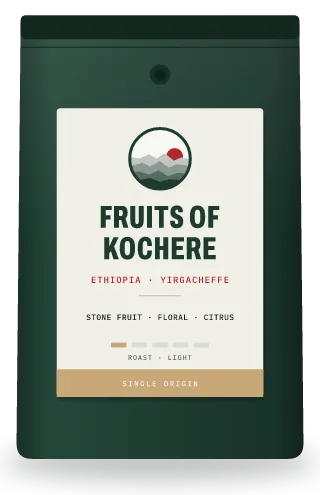
If you love bright, fruity coffee, try Fruits of Kochere, a light roast from the Kochere area of Yirgacheffe, in Ethiopia, with a floral aroma, juicy stone fruit and a bright citrus finish. It’s coming soon, so tap Notify me on its page to hear when it’s ready.