


As an Amazon Associate, Regions Coffee Supply earns from qualifying purchases, at no extra cost to you.
Quick answer
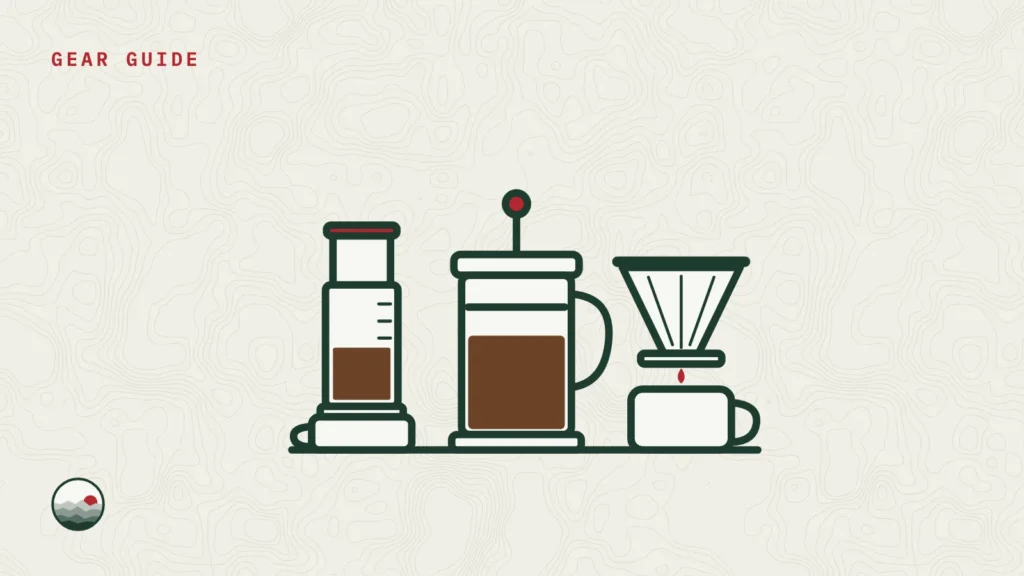
Buy an AeroPress if you want one quick, forgiving cup with almost no cleanup, a French press if you like a rich, heavy-bodied cup or brew for two to four people, and a pour-over dripper like the Hario V60 if you want the cleanest, brightest coffee and don’t mind learning to pour. The AeroPress makes up to 10 oz in about 2 minutes, a 34 oz French press makes about three big mugs in about 4 minutes, and a V60 brews a mug in about 3 minutes. We brew with an original AeroPress, a Hario V60 and a 10-cup Chemex at home. The French press is a researched pick.
Our picks at a glance
One fast cup, travel and easy cleanup
AeroPress Original
Up to 10 oz in about 2 minutes
A rich cup for two to four
Bodum Chambord French press
Up to 34 oz in about 4 minutes
Clean, bright cups, one or two at a time
Hario V60 02
1 to 4 cups in about 3 minutes
Price range is relative to the brewers in this guide. Use the Check price links for today’s price and stock.
AeroPress vs French press vs pour-over, compared
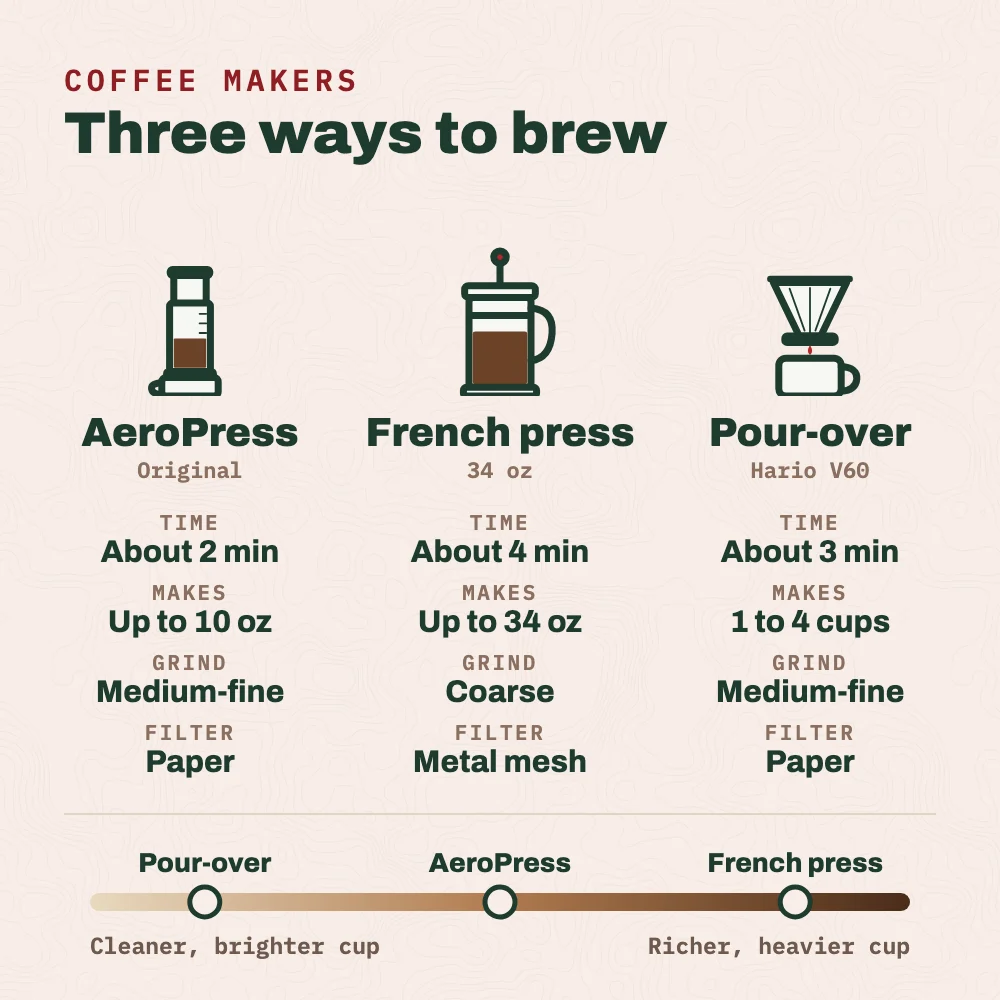
| AeroPress | French press | Pour-over | |
|---|---|---|---|
| How it brews | Steeps, then presses through paper | Steeps, then a mesh presses down | Drips through paper |
| The cup | Clean, with some body | Rich and heavy, a little silt | Cleanest and brightest |
| Grind | Medium-fine | Coarse | Medium-fine to medium-coarse |
| Ratio | 1:12 to 1:16 | 1:15 | 1:16 |
| Brew time | 1:30 to 2:30 | About 4 min | 2:30 to 4:30 |
| Batch | Up to 10 oz | Up to 34 oz | 1 to 4 cups (V60) |
| Skill | Low | Low | Medium |
| Cleanup | Pop out the puck, rinse | Scoop out grounds, wash | Toss the filter, rinse |
| Travel | Travels well | Best at home | A plastic V60 travels |
| Filters | Paper discs | Built in | Paper filters |
How each one brews
01AeroPress Original: pick it for one fast, easy cup
We brew with an original AeroPress. You steep the coffee in the chamber for a minute or two, then press it through a small paper filter with the plunger. The steep gives the coffee body, and the paper keeps the cup clean, so it lands between a French press and a pour-over. It’s also forgiving: a grind or recipe that’s a little off still makes a good cup.
The Original holds up to 10 oz, enough for one big mug, or up to three espresso-style shots to top up with hot water or milk. It’s light plastic, so it travels well, and cleanup is quick: push the spent puck of grounds into the trash and rinse. AeroPress says most of its brewers can go on the top rack of a dishwasher. It was invented by Alan Adler and came out in 2005.
02Bodum Chambord French press: pick it for a rich cup to share
A French press steeps coarse grounds in hot water for about 4 minutes, then you push a metal mesh filter down to hold them back. The mesh lets the coffee’s oils and some fine particles through, which is why French press coffee tastes rich and heavy and leaves a little silt at the bottom of the cup. It needs no filters and is hard to get wrong, but cleanup is messier, because you have to scoop the wet grounds out of the carafe.
The Bodum Chambord is a classic design. The 34 oz size holds 1 liter, which Bodum calls 8 cups because it counts a cup as 4 oz. In practice that’s about three big mugs. The carafe is borosilicate glass, so it’s better at home than in a bag. Our French press guide has the full recipe.
03Hario V60 02: pick it for clean, bright cups
We brew on a Hario V60. Hot water drips through the grounds and a paper filter, which catches most of the oils and fine particles, so pour-over gives the cleanest, brightest cup of the three. It’s the method that shows off a fruity, floral coffee best.
The trade-off is technique. How fast and where you pour changes the result, so a gooseneck kettle helps, and the V60 rewards a steady hand. The plastic size 02 brews 1 to 4 cups and is the cheapest way into pour-over. Our pour-over guide has the recipe, bloom included.
04Chemex 10-cup: pick it for a pot of clean coffee
We also brew on a 10-cup Chemex, which holds 50 oz (Chemex counts a cup as 5 oz). Its thick paper filter slows the flow, so we go a little coarser on the grind than we do on our V60, and it gives a very clean cup. The glass carafe doubles as a server, which makes it the pour-over to buy if you brew for a table. Next to a French press, the 6-cup, at 30 oz, makes a similar amount of coffee with a much cleaner cup. Our V60 vs Chemex vs Kalita Wave guide compares the drippers in more detail.
Check price on Amazon (10-cup)
Which one should you buy?
- You want one good cup fast, with little cleanup: AeroPress.
- You travel or camp: AeroPress. It’s light, hard to break and brews straight into a mug.
- You like a rich, heavy cup, or brew for two to four: French press.
- You love bright, fruity coffees and don’t mind some technique: Hario V60.
- You want clean coffee for a table: Chemex.
- You want espresso-style drinks without a machine: AeroPress, as long as you know it isn’t true espresso.
Whichever you choose, a good burr grinder matters more than the brewer, and a coffee scale makes it easy to repeat a cup you like. For pour-over, add a gooseneck kettle.
What about drip, a moka pot or espresso?
- Drip coffee maker: the most hands-off way to make a full pot. A good one, like our Moccamaster, brews through a paper filter, so the cup is closer to pour-over than to a French press. Our guide to how much coffee per cup covers how much to use.
- Moka pot: a stovetop pot that uses steam pressure to push water up through finely ground coffee. It makes a small, strong, concentrated cup, but it isn’t true espresso either.
- Espresso machine: forces water through very finely ground coffee at about 9 bar of pressure, far more than you can manage by hand with an AeroPress. See our guides to the best beginner espresso machines and espresso shots.
How we compared them
We compared the three methods on how they brew, how the coffee tastes, how much they make, how long they take, how easy they are to clean and how well they travel. The ratios, grind sizes and times come from our coffee ratio and grind size chart and our French press and pour-over guides. Product details come from AeroPress, Bodum, Hario and Chemex, and we checked each Amazon listing in October 2026.
Three of the four brewers here are ours: the original AeroPress, the Hario V60 and the 10-cup Chemex, which we use at home alongside a Technivorm Moccamaster in Stone Grey. The Bodum Chambord is a researched pick, based on Bodum’s own details and its Amazon listing as of mid-October 2026.
AeroPress vs French press vs pour-over FAQ
Is the AeroPress better than a French press?
It depends on the cup you like. The AeroPress is faster, easier to clean and makes a cleaner cup, but only up to 10 oz at a time. A French press makes a richer, heavier cup and enough for several people.
Is pour-over better than a French press?
Neither is better, they’re just different. Pour-over makes a clean, bright cup that shows off where a coffee comes from, and a French press makes a rich, heavy one. Pour-over takes more technique, and a French press is close to foolproof.
Which makes the strongest coffee?
Strength comes mostly from how much coffee you use for the water, so at the same ratio all three are similar. The AeroPress can also make a concentrated, espresso-style shot that you top up with water or milk.
Can an AeroPress make espresso?
Not true espresso. An espresso machine pushes water through the coffee at about 9 bar of pressure, and pressing an AeroPress by hand gives a small fraction of that. You get a strong, espresso-style concentrate with little or no crema.
Is the AeroPress dishwasher safe?
AeroPress says most of its coffee makers can go on the top rack, the AeroPress Clear can go on either rack, and the Premium is hand-wash only. Usually a quick rinse is all it needs.
What grind size do you use for an AeroPress, a French press and pour-over?
Medium-fine for an AeroPress or a V60, medium-coarse for a Chemex and coarse for a French press. Our ratio and grind size chart has the full list.
Which is the easiest to clean?
The AeroPress: push the puck of grounds into the trash and rinse. Pour-over is nearly as easy, since you just toss the filter. A French press is the messiest, because the wet grounds sit in the bottom of the carafe.
Brew it with Regions coffee
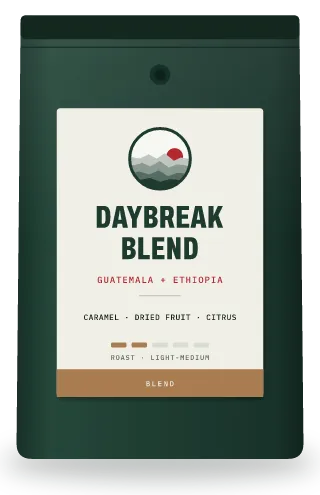
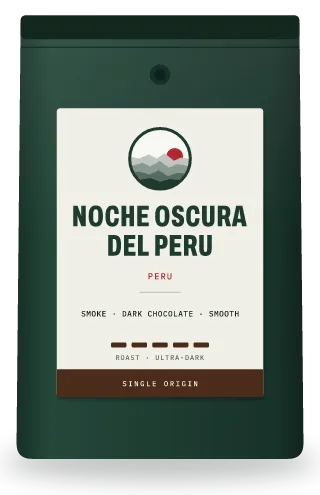
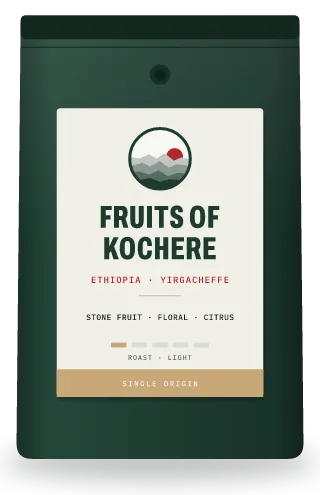
For an everyday AeroPress, try Daybreak Blend, our light-medium breakfast blend with caramel, dried fruit and citrus. In a French press, Noche Oscura del Peru, our darkest roast, makes a heavy, smooth cup with deep smoke and bittersweet dark chocolate. For a V60 or Chemex, try Fruits of Kochere, an Ethiopian coffee from Kochere in Yirgacheffe. None of the three is on sale yet, but each page has a Notify me button that tells you when it is.