


Quick answer
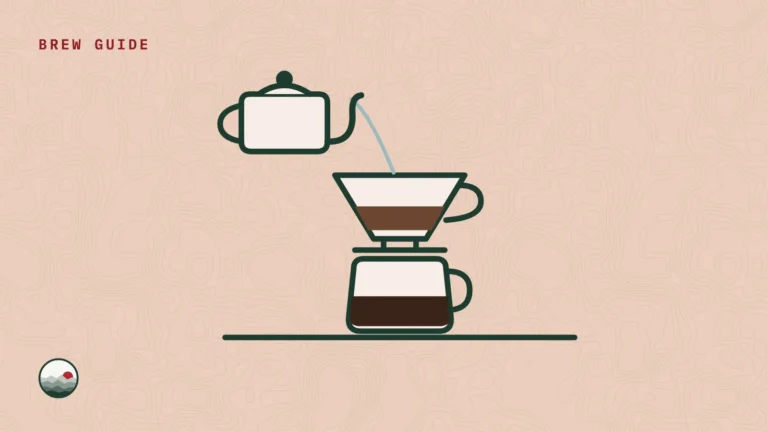
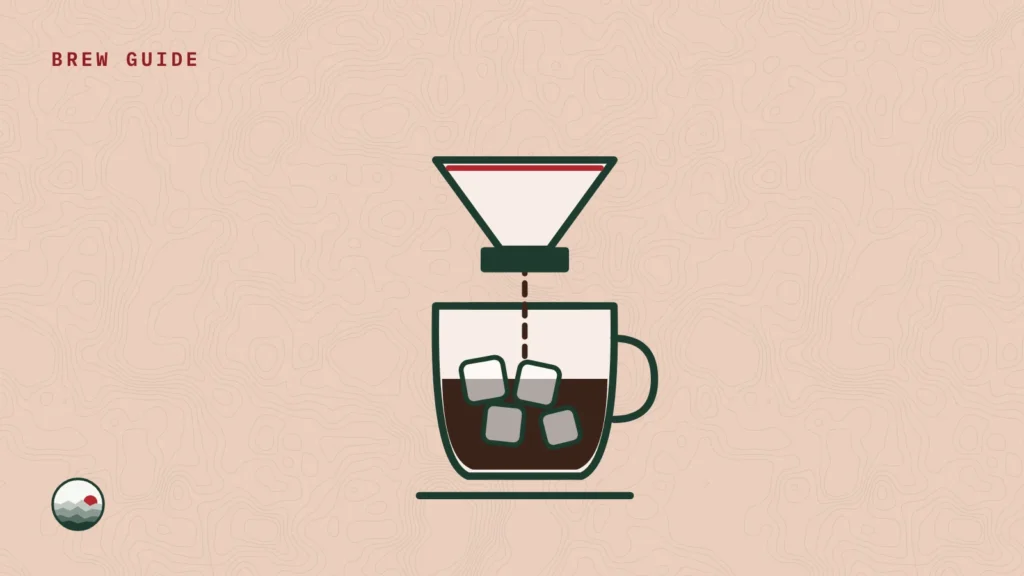
Japanese iced coffee is pour-over coffee brewed hot straight onto ice. You swap part of the brewing water for ice in the carafe, so the coffee chills the moment it drips through and ends up at the right strength as the ice melts. A good starting recipe is 30 g of medium-fine coffee, 300 g of water at 200 to 205°F and 180 g of ice, about 1:16 counting the ice. It takes about 3 minutes and tastes brighter and more aromatic than cold brew, which makes it a great way to drink fruity, light-roast coffees cold.
The Japanese iced coffee recipe
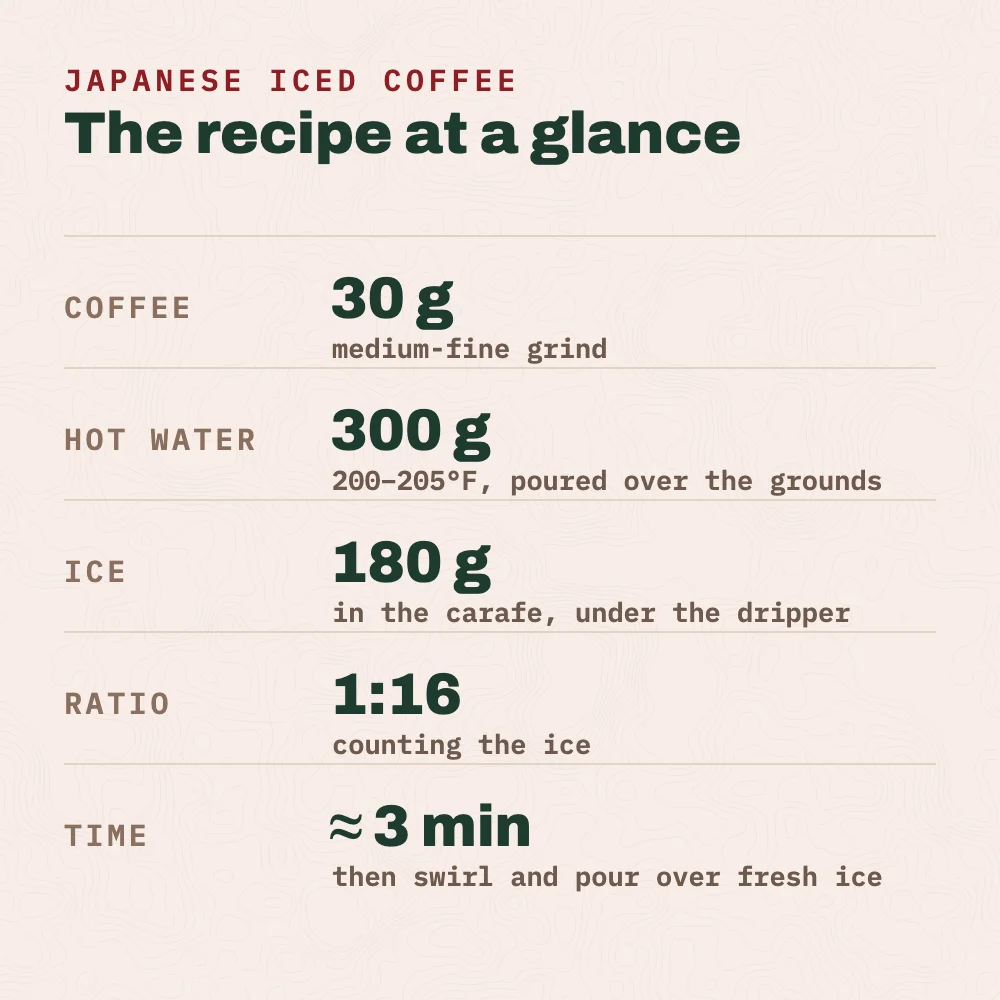
- Add the ice: put 180 g of ice in your carafe or a sturdy glass jug.
- Set up the dripper: put a paper filter in your dripper, rinse it with hot water, and pour that rinse water away before setting the dripper on the carafe.
- Add the coffee: grind 30 g of coffee medium-fine, a notch finer than you’d use for hot pour-over, and level the bed.
- Bloom: pour about 60 g of water at 200 to 205°F to wet all the grounds, and wait 30 to 45 seconds.
- Pour the rest: pour slowly in small circles until you reach 300 g of water in total. It should finish dripping at around 2:30 to 3:00.
- Swirl and serve: swirl the carafe until most of the ice has melted, then pour over fresh ice.
The Japanese iced coffee ratio
The trick is counting the ice as part of the water. Take your usual pour-over ratio, then replace roughly 35 to 40 percent of the water with ice. Because less hot water touches the grounds, grind a little finer so the coffee still extracts fully.
| Size | Coffee | Hot water | Ice |
|---|---|---|---|
| One large glass | 30 g | 300 g | 180 g |
| Two glasses | 40 g | 400 g | 240 g |
| Chemex batch | 50 g | 500 g | 300 g |
The 1:16 starting point matches our coffee ratio and grind size chart. Many recipes go a little stronger, closer to 1:14 or 1:15, because the coffee is poured over more ice to serve. Adjust to taste: grind finer or add coffee if it tastes weak or sour, and grind coarser if it tastes bitter.
Why brew hot onto ice?
Hot water pulls out coffee’s bright acids and aromatic compounds, the flavors that make a light roast taste like fruit and flowers. Chilling the coffee right away traps them. Coffee that’s brewed hot and left to cool slowly tends to taste flat, stale or bitter, which is why plain refrigerated coffee rarely tastes good. Japanese iced coffee keeps the clarity of a fresh pour-over in a cold glass.
Iced coffee has been a fixture of Japanese coffee shops for about a century, and brewing hot coffee straight onto ice is now widely known as the Japanese method. You’ll also see it called flash brew or flash-chilled coffee.
Japanese iced coffee vs cold brew
| Japanese iced coffee | Cold brew | |
|---|---|---|
| Brew time | About 3 minutes | 12 to 24 hours |
| Water | Hot, onto ice | Cold or room temperature |
| Flavor | Bright, aromatic, clean | Smooth, mellow, chocolatey |
| Best coffees | Light, fruity coffees | Medium to dark roasts |
| Keeps | Best fresh | Up to about two weeks as concentrate |
Neither is better. Japanese iced coffee is quick and shows off a coffee’s brightness, while cold brew is smoother, lower in perceived acidity and easy to make in a big batch. If you like a mellow, chocolatey glass, try our guide to cold brew in a French press.
Best coffee for Japanese iced coffee
Bright, fruity coffees shine with this method. Light-roast Ethiopian coffees taste like iced fruit tea, and Kenyan coffees turn juicy and berry-like. Our guides to Ethiopian coffee and Kenyan coffee cover both. Balanced medium roasts from Colombia or Central America work well too. Very dark roasts can taste harsh or smoky when chilled this way, and they usually make better cold brew.
What you need
Any pour-over dripper works, from a V60 or Kalita Wave for one glass to a Chemex for a batch. Our guides to the best pour-over drippers and V60 vs Chemex vs Kalita Wave can help you choose. A scale makes the ice and water easy to measure, and a gooseneck kettle helps you pour slowly. Use a heatproof carafe or jug, not a thin glass, since the hot coffee lands on cold ice.
Where this guide comes from
This is a researched recipe, not a lab test. The ratio matches our ratio chart and the iced pour-over in our Ethiopian coffee guide, and the method and ice amounts come from roaster and coffee-site guides to Japanese iced coffee, checked in October 2026. Recipes vary, so treat these numbers as a starting point.
Japanese iced coffee FAQ
What is Japanese iced coffee?
Pour-over coffee brewed hot directly onto ice, with some of the brewing water swapped for ice. It chills instantly and keeps a bright, fresh flavor.
What is the ratio for Japanese iced coffee?
About 1:16 counting the ice, with roughly 35 to 40 percent of the water as ice. For one glass, use 30 g of coffee, 300 g of hot water and 180 g of ice.
Is Japanese iced coffee better than cold brew?
It’s different. Japanese iced coffee is brighter and more aromatic and takes minutes. Cold brew is smoother and mellower and takes most of a day. It comes down to taste.
Why does my iced coffee taste watery?
Usually too much ice for the coffee, or a grind that’s too coarse. Weigh the ice, grind a little finer, or add a few grams of coffee.
Can I make Japanese iced coffee in a Chemex?
Yes. Put the ice in the bottom of the Chemex and brew on top. For a batch, try 50 g of coffee, 500 g of hot water and 300 g of ice.
Can I just pour hot coffee over ice?
You can, but regular-strength coffee gets watered down as the ice melts. Brewing stronger with less hot water, so the melted ice brings it to the right strength, is what makes the Japanese method work.
How long does Japanese iced coffee keep?
It’s best fresh, within an hour or so. Kept in the fridge, it slowly loses its brightness, so brew it when you want to drink it.
Iced pour-over with Regions coffee
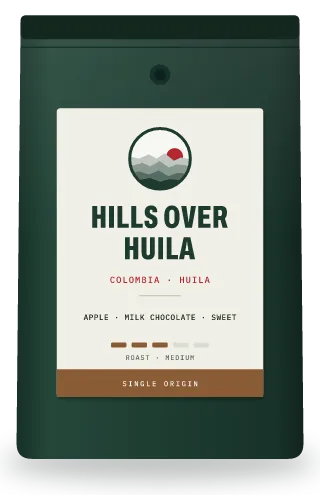
Fruits of Kochere, a light roast from Ethiopia with a floral aroma, juicy stone fruit and a bright citrus finish, lists iced pour-over among its best uses. For a rounder glass, Hills Over Huila, a medium roast from Colombia, brings crisp apple and milk chocolate. Our coffees are listed as coming soon, so tap Notify me on any coffee to hear when it’s ready.