
On this page
- Quick answer
- Kenya’s coffee regions at a glance
- What does Kenyan coffee taste like?
- Kenya AA, AB and peaberry: what the grades mean
- Kenya’s coffee regions
- Varieties: SL28, SL34, Ruiru 11 and Batian
- How Kenyan coffee is grown and sold
- How to brew Kenyan coffee
- Where this guide comes from
- Kenyan coffee FAQ
- Similar Regions coffee to try
Quick answer
Kenyan coffee is known for bright, juicy acidity and bold fruit flavors, especially blackcurrant, grapefruit and berries, sometimes with a savory note like ripe tomato. Most of it is grown by smallholder farmers on the slopes of Mount Kenya and the Aberdare Range, mostly around 1,400 to 2,000 meters up, and washed at cooperative wet mills that Kenyans call factories. Kenya AA is a size grade for the largest beans, not a flavor grade. Brew it as pour-over at about 1:16 to show off its fruit.
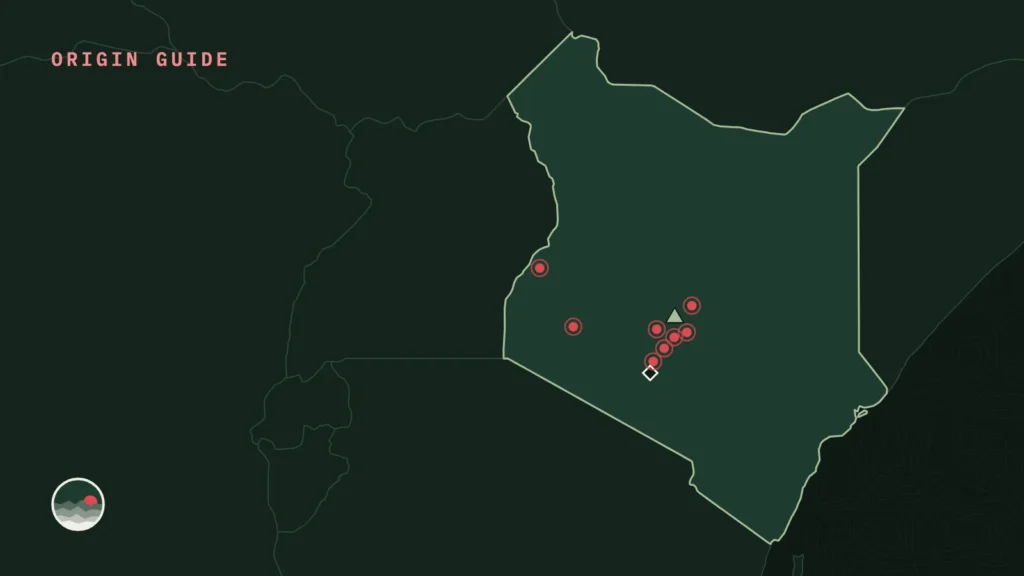
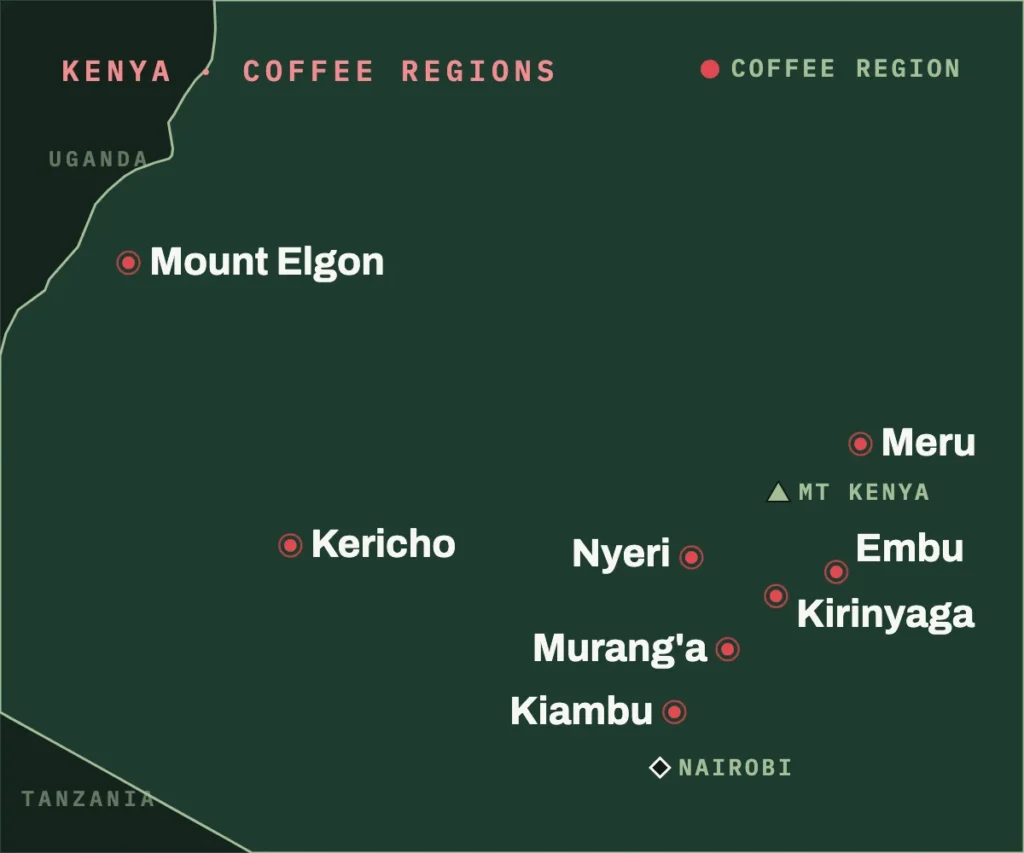
Kenya’s coffee regions at a glance
| Region | Where | Worth knowing |
|---|---|---|
| Nyeri | Southwest slopes of Mount Kenya, about 1,600 to 2,000 m | Often seen as Kenya’s top region, with intense, berry-like coffees |
| Kirinyaga | Southern and eastern slopes of Mount Kenya, about 1,300 to 1,900 m | Bright, juicy coffees, and the second-biggest producer in 2023/24 |
| Kiambu | Just north of Nairobi | The biggest producer in 2023/24, mostly from estates |
| Murang’a | Between Kiambu and Nyeri, below the Aberdares | The fourth-biggest producer in 2023/24 |
| Embu and Meru | Eastern and northern slopes of Mount Kenya | Smaller areas, and Meru’s harvest runs on a different calendar from the south |
| Kericho | Western highlands, better known for tea | The fifth-biggest producer in 2023/24 |
| Mount Elgon | Far west, on the border with Uganda | Coffee grown on the slopes of an old volcano |
What does Kenyan coffee taste like?
Kenyan coffee is one of the brightest coffees in the world. Expect a juicy, almost sparkling acidity, like biting into a grapefruit or a handful of blackcurrants, with deep sweetness behind it. Common tasting notes include blackcurrant, blackberry, grapefruit and red currant, and sometimes a savory note, like ripe tomato, that’s surprisingly pleasant. The body is usually medium and syrupy, and the finish is often winey.
Compared with Ethiopian coffee, its East African neighbor, Kenyan coffee is usually bolder and juicier, with darker fruit, while Ethiopian coffee leans more floral and tea-like. Our Ethiopian coffee guide covers that side.
Why so bright? High altitude, rich volcanic soils, the SL28 and SL34 varieties and careful washed processing all play a part, though nobody can point to a single cause. You’ll sometimes see Kenyan acidity called “phosphoric,” a popular description that isn’t well proven.
Kenya AA, AB and peaberry: what the grades mean
Kenyan coffee is sorted by bean size, and the grade usually appears on the bag. A bigger bean doesn’t guarantee a better cup, but grading keeps each lot consistent, and AA lots often fetch the highest prices at auction. Like Colombian Supremo, these are size grades, not flavor grades.
| Grade | What it means |
|---|---|
| AA | The largest beans, screen 17 to 18 (17 or 18 sixty-fourths of an inch) |
| AB | Medium-large beans, roughly screen 15 to 16 |
| PB | Peaberries: single, round beans from cherries with only one seed |
| C | Smaller whole beans |
| TT and T | Lighter beans and pieces, separated out by air |
Peaberries aren’t a separate kind of coffee. Our guide to types of coffee beans explains why they form.
Kenya’s coffee regions
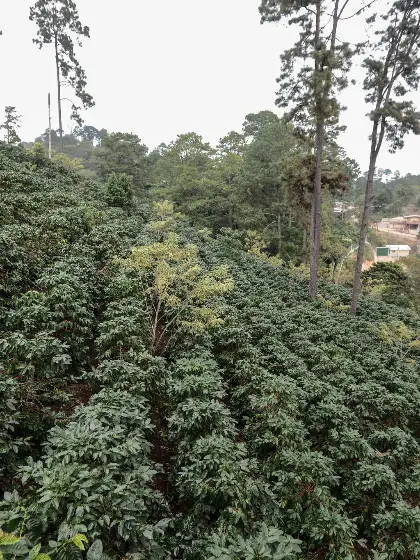
Mount Kenya and the Aberdares. Most of Kenya’s best-known coffee grows in the central highlands, on the slopes of Mount Kenya and the Aberdare Range north of Nairobi. Nyeri and Kirinyaga are the names specialty buyers look for. In the 2023/24 season, Kiambu, Kirinyaga, Nyeri and Murang’a together produced about 60 percent of Kenya’s coffee.
The west. Kericho, famous for tea, was Kenya’s fifth-biggest coffee county in 2023/24. Coffee also grows on the slopes of Mount Elgon, on the Ugandan border, and around Kisii.
Two harvests. Kenya has two rainy seasons, so many areas get two crops a year: the main crop, roughly October to December, and a smaller early crop, often called the fly crop, around April to June.
Varieties: SL28, SL34, Ruiru 11 and Batian
Kenya’s classic varieties are SL28 and SL34, selected by Scott Agricultural Laboratories in the 1930s. SL28 in particular is prized for its intense, juicy flavor and is now planted in other countries too. Both are vulnerable to coffee berry disease and leaf rust, so Kenya later released Ruiru 11, a disease-resistant hybrid, in the 1980s, and Batian, another resistant variety, in 2010. Many Kenyan lots are a mix of all four. Some coffee professionals feel Ruiru 11 tastes less vivid than the SL varieties.
How Kenyan coffee is grown and sold
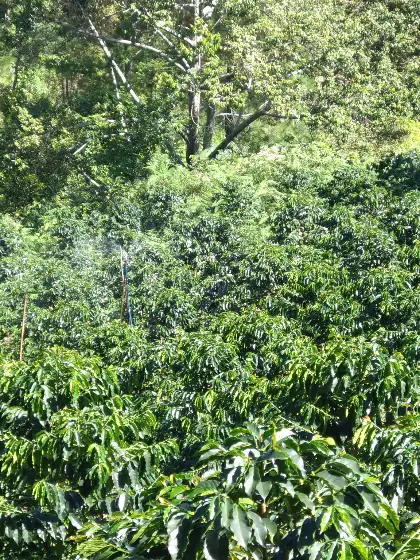
Most Kenyan coffee comes from smallholder farmers on small family plots, who belong to farmer cooperative societies. They deliver ripe cherries to the cooperative’s wet mill, which Kenyans call a factory. One cooperative can run many factories, and Othaya Farmers’ Cooperative Society in Nyeri runs 19. The rest comes from larger estates.
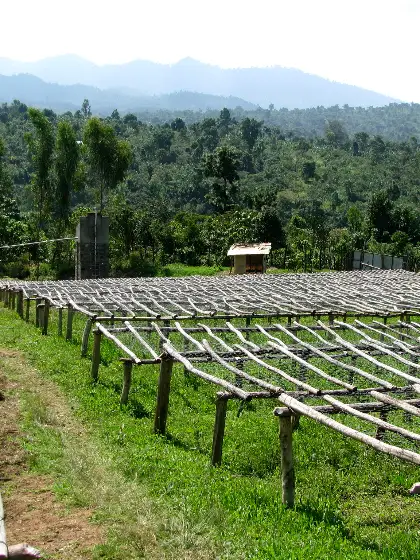
At the factory, cherries are sorted, pulped and fermented to loosen the sticky fruit, then washed and often fermented or soaked again in clean water before drying on raised beds. It’s a careful version of the washed process, and it helps keep the cup clean and vivid. Our guide to washed, natural and honey processing explains the basics.
Much of the crop is sold at the weekly auction of the Nairobi Coffee Exchange, where licensed marketers bid on each lot, and some is sold directly to buyers. Lots are usually named for the factory and grade, which is why Kenyan bags often read like “Gakui AA” or “Kagumo PB.” Kenya is a small producer next to its neighbor Ethiopia, with a crop of about 850,000 60 kg bags forecast for 2025/26.
How to brew Kenyan coffee
Kenyan coffee shines as pour-over, where its fruit and acidity come through clearly. Start at about 1:16, for example 22 g of coffee to 350 g of water, at 200 to 205°F with a medium-fine grind. If it tastes sharp or sour, grind a little finer or use hotter water, and our guide to sour or bitter coffee has more fixes. It also makes a great iced pour-over, and a French press brings out its syrupy body.
Where this guide comes from
This is a researched guide, not a report from a trip to Kenya. It draws on coffee importers’ and roasters’ origin notes, USDA reports on Kenya’s coffee sector, and 2023/24 county production figures from Kenya’s Agriculture and Food Authority, checked in October 2026. Sources often disagree on details like altitudes, grade sizes and harvest timing, so treat them as typical ranges.
Kenyan coffee FAQ
What does Kenyan coffee taste like?
Bright and juicy, with blackcurrant, grapefruit and berry notes, a syrupy body and often a winey finish.
What does Kenya AA mean?
It’s the largest bean size grade, screen 17 to 18. It describes size, not flavor, though AA lots often sell for the highest prices.
Is Kenyan coffee good?
Many coffee professionals rank Kenya’s best lots among the finest in the world, especially if you like bright, fruity coffee. If you prefer mellow, chocolatey coffee, it may taste too bright for you.
Is Kenyan coffee acidic?
It tastes very bright, which is what coffee people mean by acidity. For a mellower cup, try a low-acid origin like Sumatra, as our Indonesian coffee guide explains.
What is Kenya peaberry?
Coffee graded PB: single, round beans from cherries that grew only one seed, sorted out and sold on their own.
What is SL28 coffee?
A coffee variety selected in Kenya in the 1930s, known for intense, juicy flavor. It’s behind many of Kenya’s most celebrated coffees.
How is Kenyan coffee different from Ethiopian coffee?
Kenyan coffee is usually bolder and juicier, with dark fruit like blackcurrant. Ethiopian coffee is usually more floral and tea-like, with citrus and jasmine.
Similar Regions coffee to try
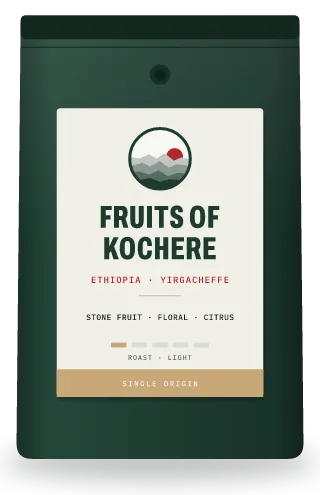
We don’t sell a Kenyan coffee yet. If you love Kenya’s bright fruit, the closest in our lineup is Fruits of Kochere, from neighboring Ethiopia: a light roast from the Kochere area of Yirgacheffe with a floral aroma, juicy stone fruit and a bright citrus finish. It’s coming soon, so tap Notify me on its page to hear when it’s ready.