
Quick answer
Decaf coffee isn’t caffeine-free, but close. In the US, decaf usually has at least 97% of its caffeine removed, so an 8 oz cup has about 2 to 7 mg, against about 95 mg in regular coffee. The caffeine is taken out of the green beans before roasting, using water, carbon dioxide or a solvent such as ethyl acetate or methylene chloride. Half caff is a mix of regular and decaf coffee, usually half and half, with about half the caffeine.
How much caffeine is in decaf coffee?
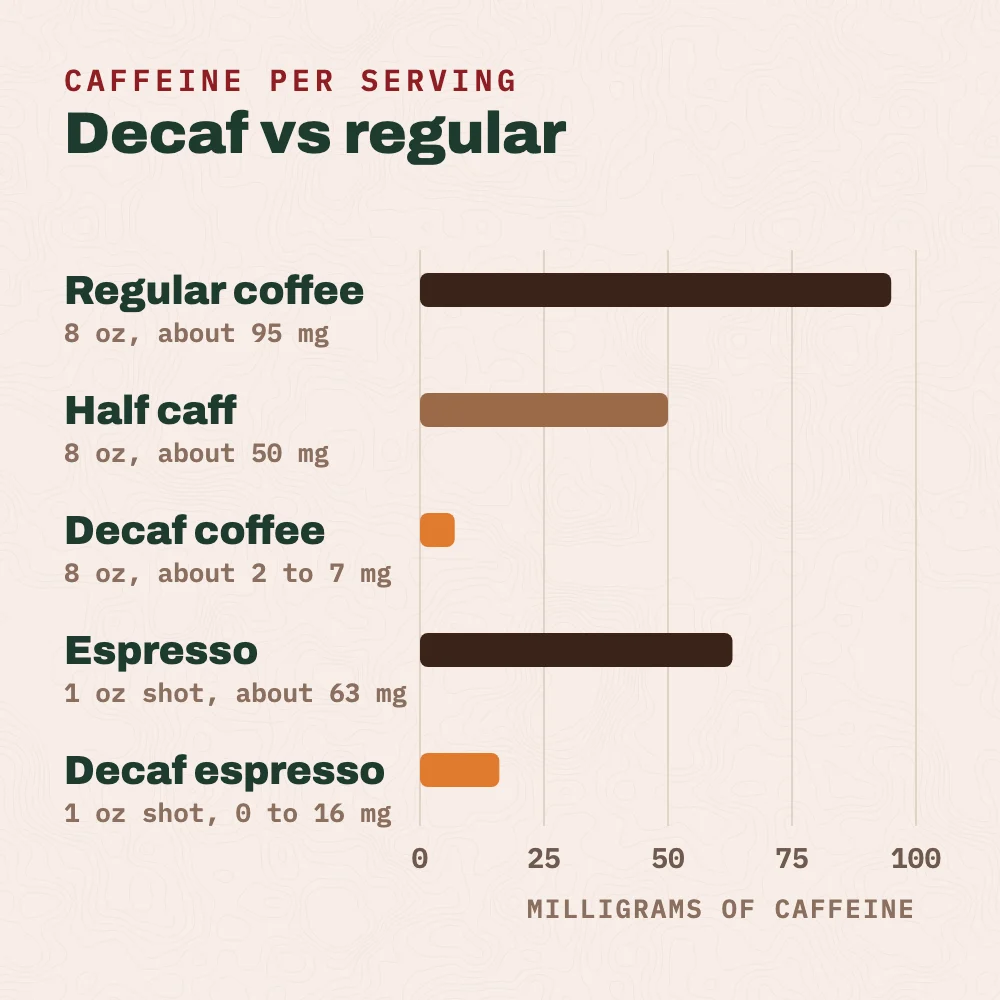
Mayo Clinic’s caffeine chart lists about 2 mg in an 8 oz cup of brewed decaf. Real cups vary more than that. When University of Florida researchers tested decaf from coffee shops in 2006, a 16 oz cup had up to about 14 mg, and a shot of decaf espresso had between 3 and about 16 mg. So several cups of decaf, or a big decaf latte, can add up to as much caffeine as a small cup of regular coffee.
The rules differ by country. The usual US standard is at least 97% of the caffeine removed. The EU is stricter: roasted decaf can contain no more than 0.1% caffeine by weight. Roast level barely changes caffeine, as our guide to light, medium and dark roasts explains, so a dark decaf isn’t any more decaffeinated than a light one.
How decaf coffee is made
All decaf starts the same way: green, unroasted coffee is soaked or steamed so the beans swell and the caffeine can move out. What differs is what pulls the caffeine out. The beans are then dried and roasted like any other coffee.
| Method | What removes the caffeine | On the bag |
|---|---|---|
| Swiss Water | Water and carbon filters | Swiss Water, water process |
| CO2 | Pressurized carbon dioxide | CO2 process |
| Ethyl acetate | A solvent, often made from sugarcane | Sugarcane, EA, natural decaf |
| Methylene chloride | A solvent | MC, solvent, often not named |
- Swiss Water process: the beans soak in water that’s already saturated with everything in green coffee except caffeine, so mostly caffeine moves out. Carbon filters then trap the caffeine, and the water is reused. Swiss Water, the Canadian company that runs it, says the result is 99.9% caffeine-free.
- CO2 process: steamed beans sit in a pressure vessel while carbon dioxide, under enough pressure to act like a liquid, draws out the caffeine. It was discovered in 1967 at Germany’s Max Planck Institute for Coal Research.
- Ethyl acetate: a solvent that also occurs naturally in fruit. Many specialty decafs use ethyl acetate made from fermented sugarcane, which is why you’ll see sugarcane decaf on bags, often from Colombia. The beans are steamed again afterward to clear the solvent.
- Methylene chloride: a solvent widely used for mass-market decaf, because it’s inexpensive and removes caffeine well. It boils at about 104°F, far below roasting temperatures, and the FDA limits any residue in decaf to 10 parts per million. Some consumer groups have petitioned the FDA to ban it. If you’d rather avoid solvents, look for Swiss Water or CO2 decaf, which is usually named on the bag.
Decaf goes back to the early 1900s, when the German merchant Ludwig Roselius patented the first commercial process. It used benzene, which is no longer used because it’s a known carcinogen. His coffee was sold as Kaffee HAG in Europe and later as Sanka in the US.
Does decaf taste different?
A little. Caffeine itself adds some bitterness, and every method removes a few other compounds along with it, so decaf can taste flatter or softer. The beans come out of processing brownish rather than green, and they roast faster and look darker, which makes them harder to roast well. Good decaf starts with good green coffee, though, and a fresh, well-roasted decaf can taste far better than its reputation. Brew it just like regular coffee, with the same ratio and grind.
What is half caff coffee?
Half caff is a mix of regular and decaf coffee, usually half and half, so an 8 oz cup has about 50 mg of caffeine. At a café, a half-caff espresso drink usually has one regular shot and one decaf shot. At home, you have a few options:
- Mix the beans: weigh out equal amounts of regular and decaf beans and grind them together. For a pot or a mug, use the same total amount of coffee you always do. Our guide to how much coffee per cup has the amounts.
- Pick your own ratio: a quarter caff uses one part regular to three parts decaf. Weighing the beans makes it easy to repeat.
- Choose coffees that taste alike: pair a decaf and a regular coffee with a similar roast, so the cup tastes balanced rather than like two coffees fighting.
How to choose a decaf
- Check the method. Specialty decafs usually name it. If the bag doesn’t say, it may be a solvent method.
- Check the roast date. Decaf goes stale like any coffee, so buy it fresh and in amounts you’ll use in a few weeks.
- Read the tasting notes. They work the same as for regular coffee. Our guide to how to choose coffee beans explains how to read a label.
Where this guide comes from
This guide draws on Mayo Clinic’s caffeine chart, a 2006 University of Florida study of decaf caffeine published in the Journal of Analytical Toxicology, EU and US decaf standards, the FDA’s limit on methylene chloride residue, and descriptions of each process from the companies and research institutes behind them. It covers how decaf is made and what’s in the cup, not health. If you need to limit caffeine, ask your doctor how much is right for you, and remember that decaf still has a little.
Decaf coffee FAQ
How much caffeine is in decaf coffee?
Usually about 2 to 7 mg in an 8 oz cup, against about 95 mg in regular coffee. Coffee-shop decaf varies, and one study found up to about 14 mg in a 16 oz cup.
Is decaf coffee caffeine-free?
No. Decaf usually has at least 97% of its caffeine removed, so a little is left.
How is decaf coffee made?
Green coffee beans are soaked or steamed, then the caffeine is drawn out with water and carbon filters (Swiss Water), pressurized carbon dioxide, or a solvent such as ethyl acetate or methylene chloride. The beans are then dried and roasted.
What is Swiss Water decaf?
Decaf made without solvents, using water and carbon filters to remove the caffeine. The company that runs the process says the coffee comes out 99.9% caffeine-free.
What is half caff coffee?
A mix of regular and decaf coffee, usually half and half, with about half the caffeine, roughly 50 mg in an 8 oz cup.
How much caffeine is in decaf espresso?
Very little, but not always zero. One study of coffee-shop decaf espresso found 3 to about 16 mg per shot, against about 63 mg in a regular shot.
Does decaf taste different?
Slightly. Decaffeinating removes a few flavor compounds along with the caffeine, so decaf can taste a little flatter, but a fresh, well-roasted decaf can be very good.
Half caff with Regions coffee
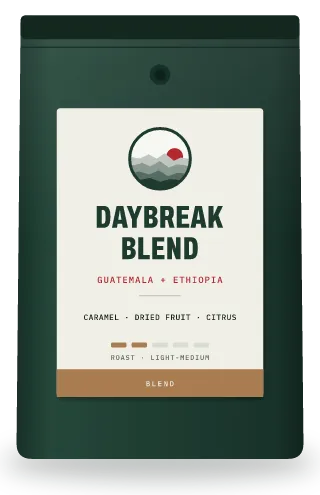
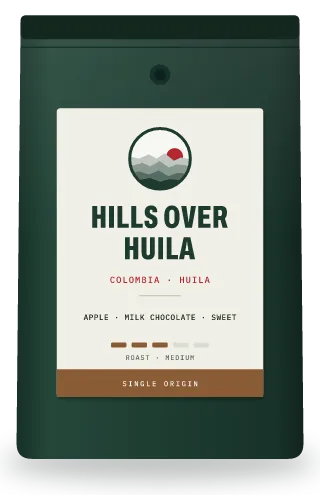
Regions doesn’t sell a decaf right now. For a half caff, mix one of our coffees half and half with a decaf you like. Daybreak Blend, our light-medium breakfast blend with caramel, dried fruit and citrus, and Hills Over Huila, a medium roast from Colombia with apple and milk chocolate, are easy to pair with a medium-roast decaf. Our coffees are listed as coming soon, so tap Notify me on any coffee to hear when it’s ready.