






On this page
Quick answer
To steam milk, start with cold milk in a cold pitcher, about a third full. Hold the steam tip just under the surface and let air in for a few seconds, about 2 to 3 for a latte or 7 to 8 for a cappuccino, until you hear a gentle hiss. Then sink the tip a little so the milk spins in a whirlpool, and stop when the pitcher is almost too hot to hold, about 140 to 150°F (60 to 65°C). No espresso machine? Warm the milk, then pump it in a French press, shake it in a jar or use a handheld frother.
How to steam milk with a steam wand
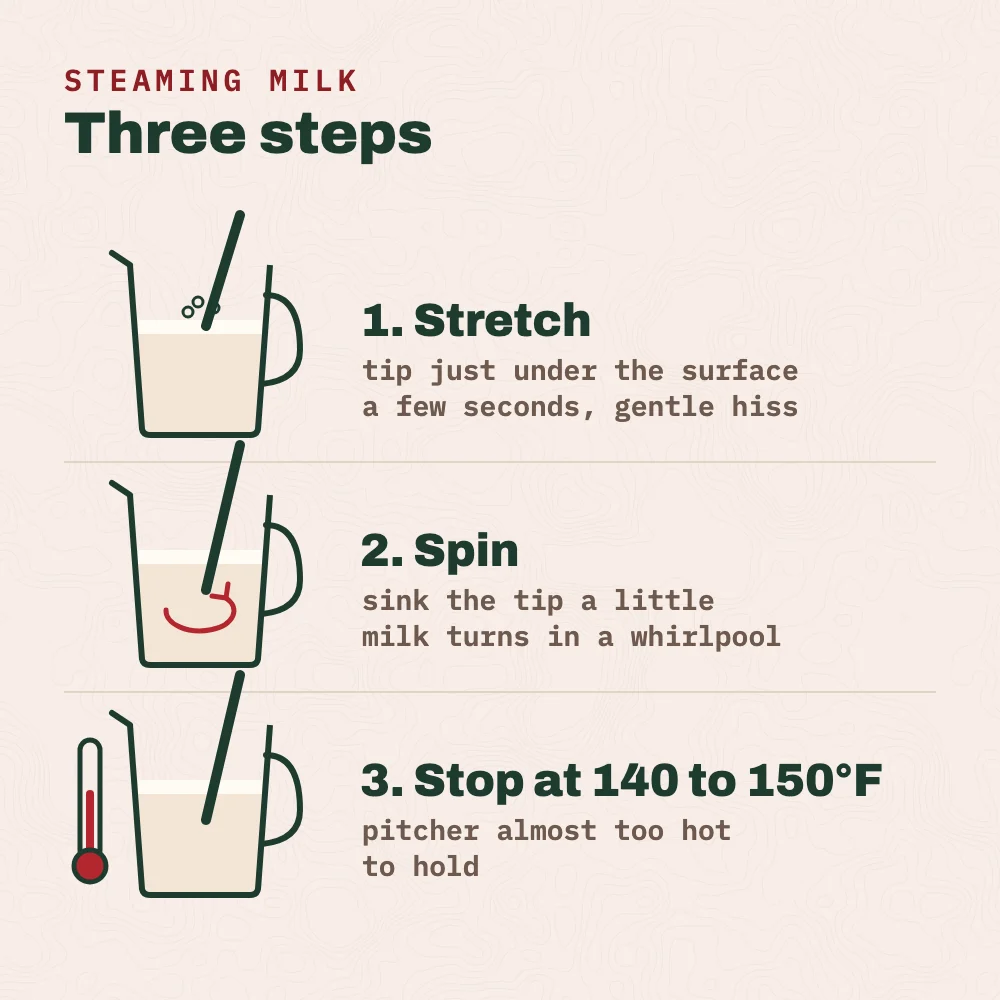
- Start cold. Pour cold milk into a cold stainless steel pitcher, up to about the bottom of the spout, roughly a third full. A 12 oz (350 ml) pitcher is right for one drink. Cold milk gives you more time to build foam before it gets hot.
- Purge the wand. Open the steam for a second or two into a cloth or the drip tray to clear out any water.
- Stretch. Put the tip just under the surface, a little off center, and open the steam fully. You should hear a gentle hiss, like paper tearing, as air goes in. Lower the pitcher slowly as the milk rises. For a latte or flat white, stretch for about 2 to 3 seconds. For a cappuccino, go for about 7 to 8. Don’t let the milk grow by more than about a third.
- Spin. Raise the pitcher so the tip sits a little deeper, and tilt it so the milk turns in a whirlpool. That folds the big bubbles into fine, glossy microfoam.
- Stop at 140 to 150°F. That’s about when the pitcher gets too hot to keep your hand on for more than a second. A clip-on thermometer helps while you’re learning. Turn off the steam before you lower the pitcher.
- Clean and finish. Wipe the wand with a damp cloth and purge it again right away. Tap the pitcher on the counter to pop any big bubbles, then swirl it until the milk looks like glossy wet paint, and pour.
Some machines, like the Breville Bambino Plus, steam milk automatically. Our guide to the best beginner espresso machines compares machines with manual and automatic steam wands.
What temperature should steamed milk be?
Aim for 140 to 150°F (60 to 65°C). That’s warm enough to drink right away, and it’s where milk tastes sweetest. Much hotter, and the milk loses its sweetness, tastes flat or cooked, and the foam turns big and bubbly. If you like your drink extra hot, warm the cup rather than steaming the milk longer.
How to froth milk without a frother
Without a steam wand, you heat the milk and add air separately. Warm the milk on the stove or in the microwave to about 140 to 150°F, steaming but not simmering, then froth it one of these ways:
- French press: fill it no more than a third full with warm milk, put the lid on and pump the plunger quickly, keeping it near the surface, 15 to 20 times, until the milk roughly doubles.
- Jar and microwave: fill a microwave-safe jar no more than halfway with cold milk, screw the lid on and shake hard for 30 to 60 seconds. Take the lid off and microwave for about 30 seconds, which warms the milk and sets the foam on top. Don’t shake a sealed jar of hot milk.
- Handheld frother: hold the whisk just under the surface of warm milk for 15 to 30 seconds, tilting the cup so the milk spins.
- Whisk: whisk warm milk hard in the saucepan for a minute or two. It takes the most effort and makes the least foam, but it works.
These methods make airier, bubblier foam than a steam wand. That’s perfect for a cappuccino, but harder to pour into latte art. Let the milk sit for 30 seconds and tap it on the counter to settle the biggest bubbles.
Which milk froths best?
| Milk | Foam | Good for |
|---|---|---|
| Whole milk | Creamy, stable, glossy | Lattes, flat whites, latte art |
| 2% | Lighter, a little less creamy | Everyday lattes |
| Skim | Lots of airy, dry foam | Tall, foamy cappuccinos |
| Barista oat or other plant milks | Smooth, made for steaming | Dairy-free drinks |
Protein builds the foam and fat makes it creamy, which is why whole milk is the easiest to steam well. Regular plant milks often don’t foam much, because they have less protein, so look for barista versions, which are made to steam. Soy milk can curdle in hot, acidic coffee, so pour it gently into slightly cooled coffee. Fresh, cold milk always foams better than milk that’s been open for days.
How to make a cappuccino at home
- Pull a double shot into a 5 to 6 oz cup: 18 g of coffee in and 36 g of espresso out in about 25 to 30 seconds. Our guide to espresso shots explains the recipe.
- Steam about 4 oz of cold milk with a longer stretch, about 7 to 8 seconds, so you get a thick layer of foam.
- Pour and top. Pour the milk into the espresso, holding back the foam with a spoon, then spoon the foam on top so it fills about the top third of the cup.
No espresso machine? Brew strong coffee with a moka pot or an AeroPress, and froth the milk in a French press. It isn’t true espresso, but it makes a good cappuccino-style drink. For lattes, flat whites and the rest, see our guide to latte vs cappuccino and other espresso drinks.
If your milk doesn’t come out right
- Big, soapy bubbles: the tip was too high or you stretched too long. Keep it just under the surface, and spin longer.
- No foam at all: the tip was too deep from the start, or the milk was already warm. Start colder and let the hiss happen for a few seconds.
- Loud screeching: the tip is too deep or the milk is getting too hot. Lift the pitcher slightly, or stop sooner.
- Foam and milk separate: the milk sat too long. Swirl it again just before pouring.
Where this guide comes from
This guide draws on steaming instructions from espresso machine makers, barista training guides and milk frothing comparisons, and gives ranges where they differ. The temperatures and stretch times match our espresso drinks guide, and the cappuccino recipe uses the same 18 g in, 36 g out shot as our other espresso guides.
Steaming milk FAQ
How do you steam milk at home?
With a steam wand, hold the tip just under the surface of cold milk for a few seconds to add air, then sink it a little so the milk spins, and stop at 140 to 150°F.
What temperature should steamed milk be?
About 140 to 150°F (60 to 65°C), when the pitcher is almost too hot to hold. Much hotter and the milk loses its sweetness.
How do you froth milk without a frother?
Warm the milk, then pump it in a French press 15 to 20 times, or shake cold milk in a jar and microwave it with the lid off for about 30 seconds. A whisk works too, with more effort.
What is the difference between steamed and frothed milk?
Steamed milk is heated and textured with steam, which makes fine, silky microfoam. Frothed milk has air whipped in, usually after warming, which makes lighter, bubblier foam.
Which milk is best for frothing?
Whole milk makes the creamiest, most stable foam. Skim makes the most foam but it’s dry and airy. For dairy-free drinks, choose a barista version of oat or another plant milk.
How long should you stretch milk?
About 2 to 3 seconds for a latte or flat white, and about 7 to 8 seconds for a cappuccino. Don’t let the milk grow by more than about a third.
Can you steam milk without an espresso machine?
Not true steaming, which needs a steam wand, but you can warm milk and froth it with a French press, a jar or a handheld frother. Some electric milk frothers heat and froth at the press of a button.
Make milk drinks with Regions coffee
For lattes and cappuccinos, Espresso Sunrise was built for the espresso machine. It’s our medium-dark espresso blend of Colombian and Ethiopian coffee, syrupy and sweet with brown sugar and cocoa, and it cuts through milk beautifully. Our coffees are listed as coming soon, so tap Notify me on any coffee to hear when it’s ready.