



Quick answer
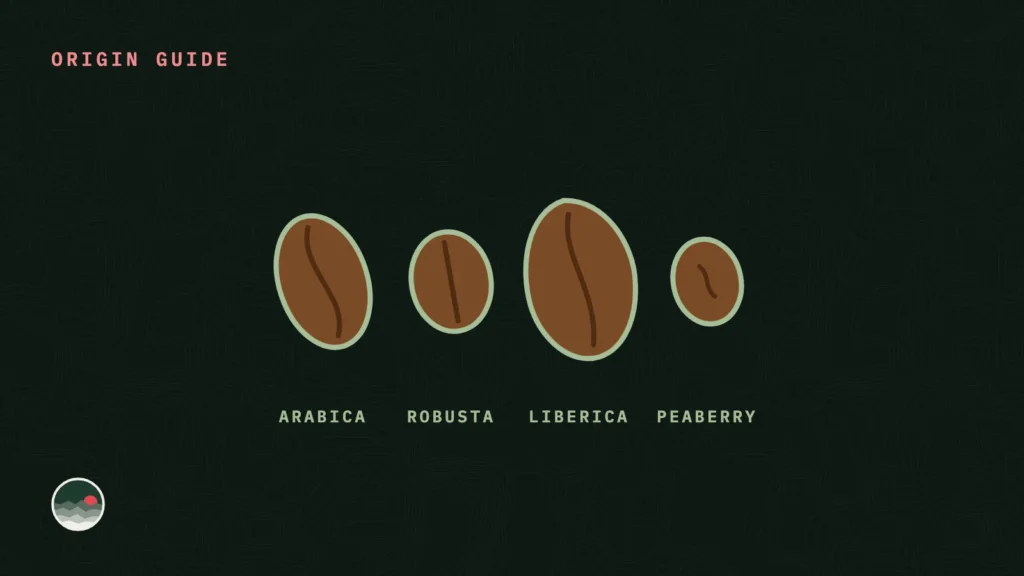
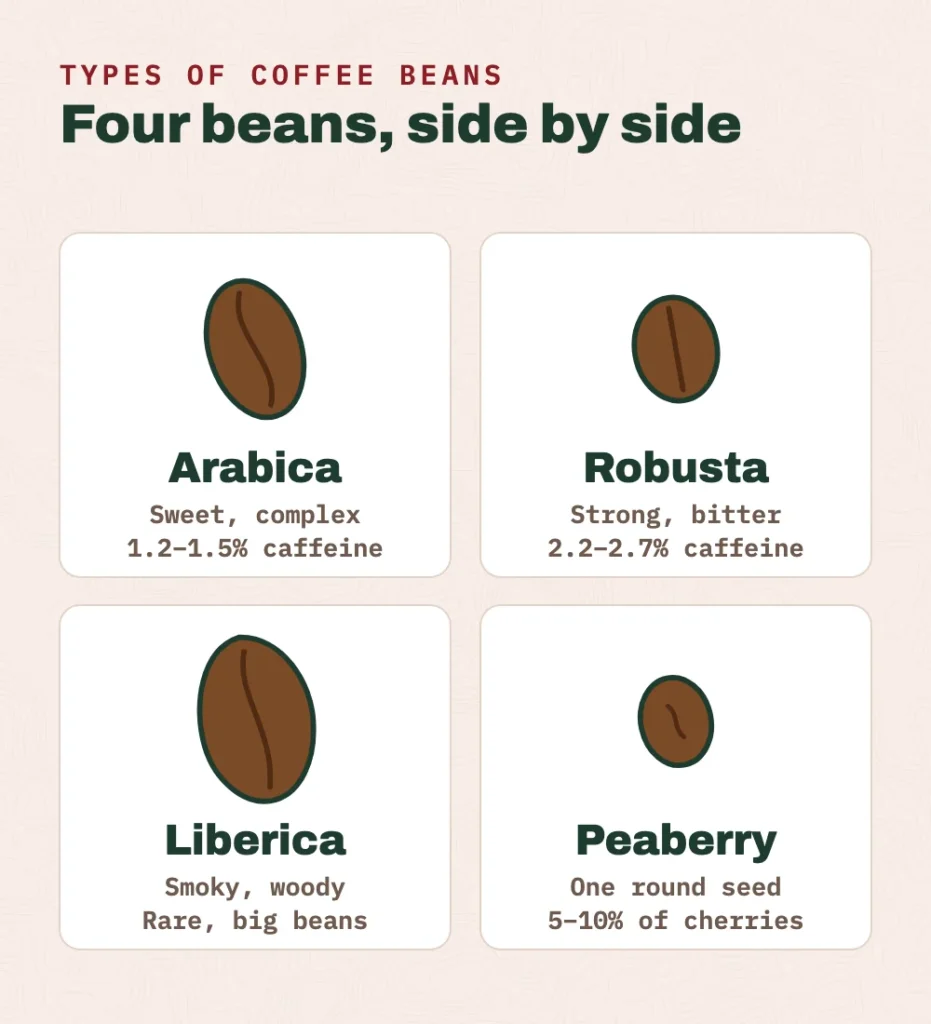
There are four main types of coffee beans. Arabica makes up a little over half the world’s coffee and tastes the sweetest and most complex. Robusta makes up most of the rest: it’s stronger, more bitter and has about twice the caffeine. Liberica and excelsa are rare, with smoky, fruity flavors. Within arabica, varieties like Typica, Bourbon, Geisha and SL28 shape the flavor further. Peaberry isn’t a type of plant at all: it’s a single, round bean that can grow in any coffee cherry.
The four types of coffee beans at a glance
| Type | What it tastes like | Good to know |
|---|---|---|
| Arabica | Sweet and complex, with fruit, chocolate, floral notes and brighter acidity | A little over half of world coffee. Grows high and cool. About 1.2 to 1.5% caffeine. |
| Robusta | Strong, bitter and earthy, with nutty, woody notes | Most of the rest. Grows low and hot. Roughly twice the caffeine of arabica. |
| Liberica | Smoky, woody and sometimes fruity. People tend to love it or hate it. | Rare. Big, uneven beans. Grown mostly in the Philippines and Malaysia. |
| Excelsa | Tart and fruity, with a dark, lingering finish | Rare. Grown mostly in Southeast Asia, often for blends. |
Arabica
Arabica (Coffea arabica) is the coffee most specialty roasters sell. It’s a natural cross between two other coffee species, robusta and Coffea eugenioides, that happened long ago in the forests of southwestern Ethiopia, where it still grows wild. Arabica grows best high up, often above about 1,000 meters, where cool temperatures let the cherries ripen slowly. That’s what gives it more sugar, more acidity and a wider range of flavors than robusta.
Arabica is also fussier. It yields less and is more vulnerable to pests, diseases like coffee leaf rust and heat, which is why it usually costs more. “100% arabica” on a bag just means there’s no robusta in it. It’s a good sign, but not a guarantee of quality: freshness, origin and roast matter more.
Robusta
Robusta (Coffea canephora) is hardier, higher-yielding and happier in heat and at low altitude. Its extra caffeine works as a natural defense against pests. It tastes stronger and more bitter, with earthy, nutty and sometimes rubbery notes, and it has less sugar and acidity than arabica. Vietnam grows more robusta than anywhere else, and Brazil, Indonesia and Uganda grow a lot too.
Most robusta goes into instant coffee and lower-cost blends. Some traditional Italian-style espresso blends add it for a thick crema and an extra kick. A growing number of farms now produce carefully grown “fine robusta” that tastes much better than its reputation.
Arabica vs robusta
- Taste: arabica is sweeter and more complex, with brighter acidity. Robusta is stronger, more bitter and earthy.
- Caffeine: robusta has roughly twice as much, about 2.2 to 2.7% of the bean’s weight against arabica’s 1.2 to 1.5%.
- Where it grows: arabica likes high, cool mountains. Robusta likes low, hot regions.
- Price: arabica usually costs more because it’s harder to grow.
- Share: USDA estimates put the 2025/26 world crop at about 53 to 54% arabica and 46 to 47% robusta.
Liberica and excelsa
Liberica comes from West and Central Africa and grows on tall trees with large, uneven beans. Today it’s grown mostly in Southeast Asia, especially in the Philippines, where it’s called kapeng barako, from the provinces of Batangas and Cavite. Its flavor is bold, smoky and woody, sometimes with a jackfruit-like fruitiness, and people tend to love it or hate it.
Excelsa was long treated as its own species, then grouped with liberica in 2006. Newer genetic research suggests it may be separate after all. Either way, it’s rare, grown mostly in Southeast Asia, and known for tart, fruity flavors, so it’s often used to add depth to blends. Both coffees are getting fresh attention because they cope better with heat and disease than arabica.
Arabica varieties worth knowing
Just as apples come in Granny Smith and Honeycrisp, arabica comes in many varieties, also called cultivars. Specialty bags often name them.
- Typica: one of the oldest cultivated varieties, spread from Yemen around the world. Clean and sweet, but low-yielding.
- Bourbon: named after the island now called Réunion, once Île Bourbon. Sweet and complex. It comes in red, yellow and pink types, and Pink Bourbon from Colombia is a specialty favorite.
- Caturra: a compact natural mutation of Bourbon, first found in Brazil. Bright and widely grown in Central and South America.
- Geisha, or Gesha: from the Gori Gesha forest in Ethiopia, famous in Panama for jasmine and tropical fruit flavors and record prices. Our guide to the most expensive coffee in the world tells its story.
- SL28 and SL34: developed in Kenya in the 1930s, and behind many juicy, blackcurrant-like Kenyan coffees.
- Ethiopian heirloom: the thousands of local types grown in Ethiopia, often sold under the single label “heirloom”. Our Ethiopian coffee guide explains more.
- Castillo: a rust-resistant variety developed in Colombia and now widely planted there. Our Colombian coffee guide covers it.
- Pacamara: a cross bred in El Salvador with very large beans and bold, often fruity flavors.
What is peaberry coffee?
A coffee cherry usually holds two seeds, each with one flat side facing the other. Sometimes only one seed grows, and it forms a small, round bean called a peaberry. It happens in roughly 5 to 10% of cherries, on any type of coffee plant. Peaberries are sorted out by hand or with screens and sold separately, and Tanzania and Kona are well known for them. Some roasters say their round shape roasts more evenly, but whether they taste better is debated. They’re mostly a fun rarity.
What the bag tells you
Most specialty coffee is arabica, so bags often skip the species and list the origin, variety, process and roast instead. If a bag says “100% arabica”, it has no robusta in it. If a cheap blend doesn’t say, it may include some robusta. For flavor, the region, the process and the roast tell you more than the species. Our guides to coffee processing and light, medium and dark roasts cover those.
Where this guide comes from
This is a researched guide. It draws on USDA coffee production estimates, botanical and genetic research on coffee species, coffee importers’ and roasters’ guides, and news reporting, checked in October 2026. Caffeine levels and flavor descriptions are typical ranges, and coffee taxonomy is still being revised as new research comes out.
Types of coffee beans FAQ
What are the main types of coffee beans?
Arabica, robusta, liberica and excelsa. Arabica and robusta make up almost all the coffee in the world. Liberica and excelsa are rare.
Which type of coffee bean has the most caffeine?
Robusta, with roughly twice the caffeine of arabica, about 2.2 to 2.7% of the bean’s weight against 1.2 to 1.5%.
Is arabica better than robusta?
For flavor, most people prefer arabica, which is sweeter and more complex. Robusta has more caffeine and a stronger, more bitter taste, and good robusta can be very enjoyable, especially in espresso blends.
What does 100% arabica mean?
That the coffee contains only arabica beans, with no robusta. It doesn’t tell you how fresh or how good the coffee is.
What is peaberry coffee?
A single, round bean that grows when only one seed develops inside a coffee cherry, in roughly 5 to 10% of cherries. It’s sorted out and sold separately.
Is Bourbon coffee made with whiskey?
No. Bourbon is an arabica variety named after an island. Bourbon barrel-aged coffee is something else: green beans rested in used whiskey barrels for their aroma, and roasting cooks off nearly all the alcohol.
What is barako coffee?
The Philippine name for liberica coffee, grown mainly in Batangas and Cavite. It’s strong, smoky and woody, and often brewed bold.
Try it with Regions coffee
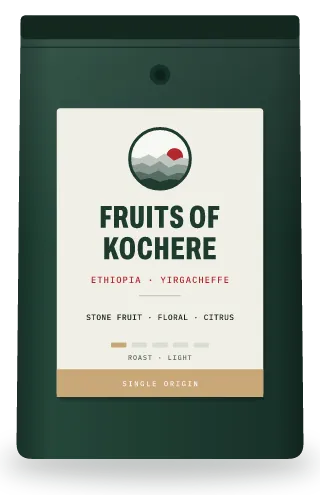
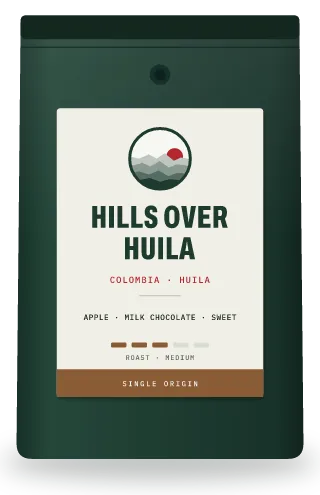
Taste what arabica variety does. Fruits of Kochere comes from Ethiopia’s heirloom varieties, the wild-rooted arabica types described above, with stone fruit, floral notes and citrus. Hills Over Huila comes from Colombia, a country that grows only arabica, with crisp apple and milk chocolate. Our coffees are listed as coming soon, so tap Notify me on either one to hear when they’re ready.