
On this page
- Quick answer
- Brazil’s coffee regions at a glance
- What does Brazilian coffee taste like?
- Why Brazilian coffee is in so many espresso blends
- How Brazilian coffee is grown and processed
- Brazil Santos and other names on the bag
- Cafezinho: how Brazilians drink coffee
- A short history of coffee in Brazil
- How to brew Brazilian coffee
- Where this guide comes from
- Brazilian coffee FAQ
- Similar Regions coffee to try
Quick answer
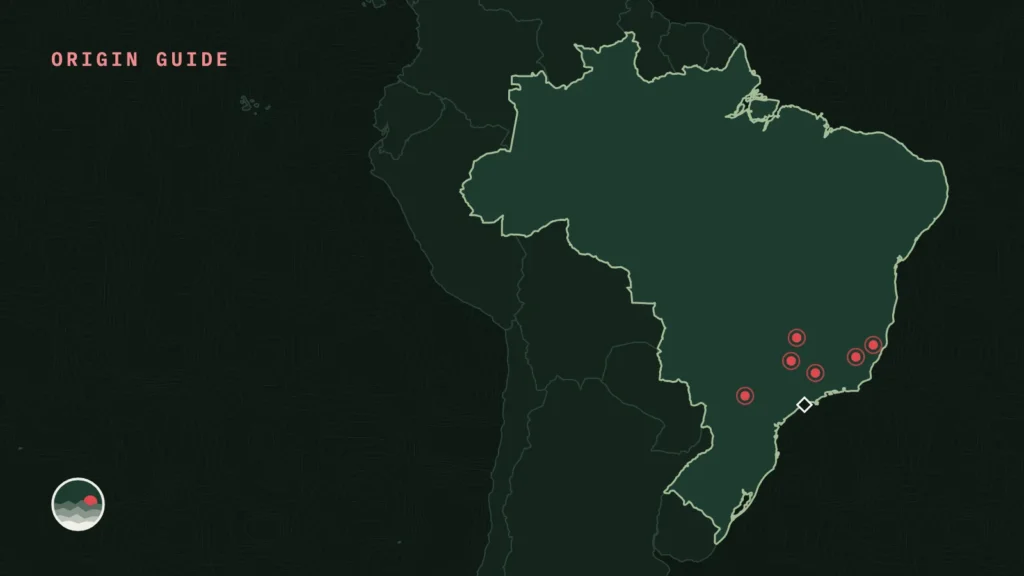
Brazilian coffee is known for being smooth, nutty and chocolatey, with low acidity, a full body and caramel sweetness. Brazil is the world’s biggest coffee producer by far, growing roughly a third of the world’s coffee, mostly in the southeastern states of Minas Gerais, São Paulo and Espírito Santo, plus Bahia to the north. Most of its arabica is natural or pulped-natural processed, which adds sweetness and body, and that’s a big reason Brazilian coffee forms the base of so many espresso blends. “Brazil Santos” on a bag is a trade name from the port of Santos, not a growing region.
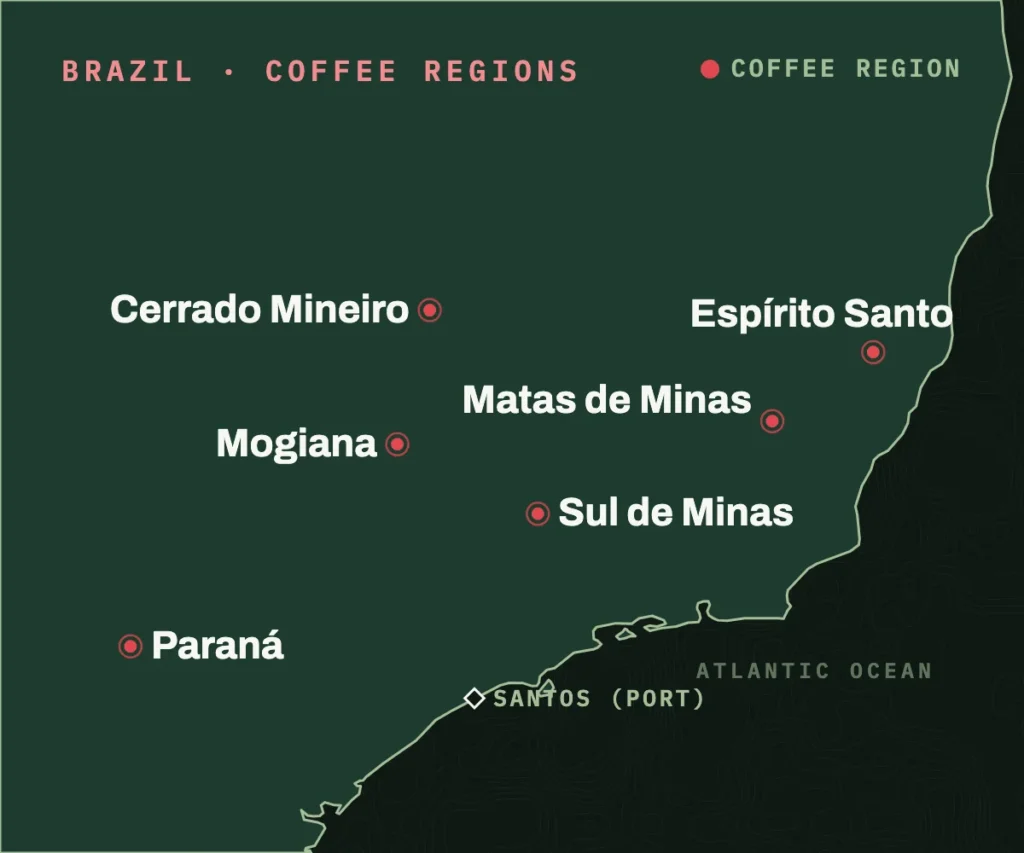
Brazil’s coffee regions at a glance
| Region | Where | Known for |
|---|---|---|
| Sul de Minas | Southern Minas Gerais | Brazil’s biggest arabica area, with hilly farms and sweet, nutty, chocolatey coffees |
| Cerrado Mineiro | Western Minas Gerais | A flat, high plateau harvested by machine, and Brazil’s first coffee region with a protected designation of origin |
| Mogiana | Northeastern São Paulo, on the Minas Gerais border | Sweet, chocolatey coffees from a long-established coffee area |
| Matas de Minas | Eastern Minas Gerais | Steep hills where coffee is mostly picked by hand |
| Espírito Santo | The coast north of Rio de Janeiro | Brazil’s biggest robusta (conilon) state, plus arabica in its mountains |
| Bahia | Farther north, off the map | A mix of high-plateau specialty farms and large modern farms |
| Paraná | Northern Paraná, in the south | A smaller coffee area today, after a devastating frost in 1975 |
| Rondônia | The Amazon, far to the west | A fast-growing robusta region |
What does Brazilian coffee taste like?
Classic Brazilian coffee is smooth and easy to drink. Expect nuts like peanut, almond or hazelnut, milk or dark chocolate, caramel and brown sugar, with low acidity and a heavy, round body. Natural processing adds sweetness and sometimes a note of dried fruit. Many Brazilian farms grow at lower altitudes than those in Central America or East Africa, which helps explain the soft acidity.
Specialty lots from higher farms, especially in Sul de Minas and Matas de Minas, can be brighter and fruitier. If you like Brazilian coffee, Peruvian coffee is a close cousin, as our Peruvian coffee guide explains.
Why Brazilian coffee is in so many espresso blends
Espresso concentrates everything in a coffee, including its acidity, so roasters want a base that’s sweet, smooth and full-bodied. Brazilian naturals fit perfectly. Many espresso blends start with Brazil and add a brighter coffee from Central America or East Africa for fruit and lift. Our guide to espresso beans vs coffee beans explains what makes a coffee work as espresso.
How Brazilian coffee is grown and processed
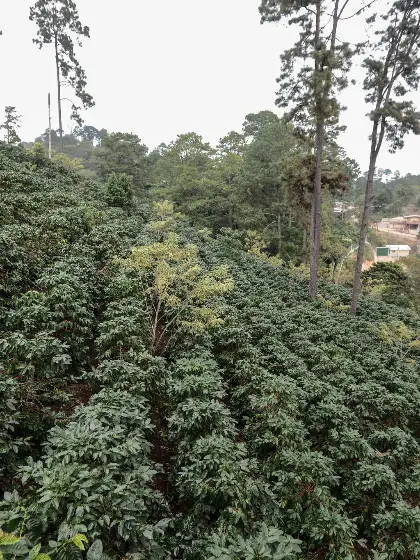
Big, flat and mechanized. Many Brazilian farms are larger than in most coffee countries, and on flat land like the Cerrado, machines shake the cherries off the trees. On steeper hills, like Matas de Minas and parts of Sul de Minas, coffee is still picked by hand. The harvest runs roughly from May to September, in the dry season.
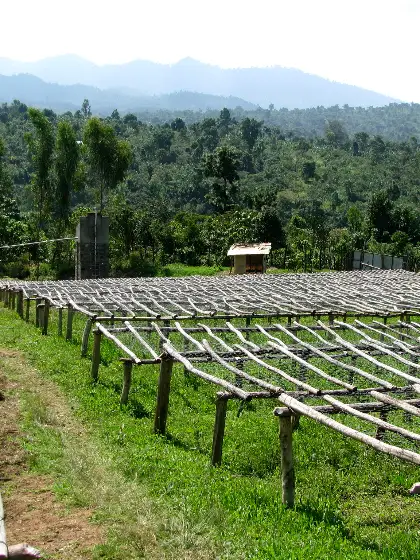
Natural and pulped natural. Most Brazilian arabica is natural processed, dried inside the cherry on patios or raised beds. Pulped natural coffee, called cereja descascado in Portuguese, has the skin removed but dries with its sticky mucilage on, much like the honey process. Our guide to washed, natural and honey processing explains how each one tastes.
Arabica and conilon. Roughly 60 to 70 percent of Brazil’s crop is arabica, often Mundo Novo, Catuaí or Bourbon. The rest is robusta, called conilon in Brazil, grown mostly in Espírito Santo, Rondônia and Bahia, and used largely for blends and instant coffee. Our guide to types of coffee beans explains the difference.
A huge crop. USDA estimates put Brazil’s 2025/26 crop at about 63 million 60 kg bags, and forecast a record of about 72 million for 2026/27. That’s roughly twice as much as Vietnam, the next-biggest producer.
Brazil Santos and other names on the bag
Santos is a trade name from the port of Santos, near São Paulo, which still ships much of Brazil’s coffee. It describes a style of clean, mild Brazilian coffee, not a region or a farm.
You may also see export grades. NY 2/3 counts defects in a sample, and lower numbers mean fewer. Screen 17/18 means large beans. Fine Cup and Strictly Soft are cup grades for clean, smooth coffees. Like Kenya AA, these grades describe size and quality checks, not exact flavors. A bag that names a region, like Cerrado Mineiro or Sul de Minas, tells you more.
Cafezinho: how Brazilians drink coffee
In Brazil, coffee usually means a cafezinho, a small, strong and sweet cup offered to guests, at work and after meals. It’s traditionally brewed through a cloth filter, and the sugar often goes into the water before the coffee.
To try it at home, heat water with sugar to taste until just before it boils, then take it off the heat and stir in fine-ground coffee, using more than you would for drip coffee. Pour it through a cloth or paper filter without squeezing, and serve it in small cups.
A short history of coffee in Brazil
Coffee reached Brazil in 1727. The popular story says an army officer, Francisco de Melo Palheta, smuggled seedlings in from French Guiana, hidden in a bouquet of flowers, though that tale is more legend than record. Coffee spread south to São Paulo and Minas Gerais, and Brazil has been the world’s biggest coffee producer for well over a century.
How to brew Brazilian coffee
Brazilian coffee is easy to brew well. It shines as espresso and makes a rich, chocolatey French press or drip. For a French press, try 30 g of coffee to 450 g of water with a coarse grind for 4 minutes. It takes milk well, and its low acidity makes it a great pick for cold brew.
Where this guide comes from
This is a researched guide, not a report from a trip to Brazil. It draws on coffee importers’ and roasters’ origin notes, USDA reports on Brazil’s coffee crop, Brazilian research on coffee harvesting, and guides to the cafezinho, checked in October 2026. Sources often disagree on details like regional flavors and production shares, so treat them as tendencies.
Brazilian coffee FAQ
What does Brazilian coffee taste like?
Smooth, nutty and chocolatey, with caramel sweetness, low acidity and a full body.
Is Brazil the largest coffee producer?
Yes, by far. It grows roughly a third of the world’s coffee, about 63 million 60 kg bags in 2025/26 by USDA estimates.
What is Brazil Santos coffee?
A trade name for clean, mild Brazilian coffee, from the port of Santos that ships much of it. It isn’t a growing region.
Is Brazilian coffee low in acid?
Usually, yes. It tastes softer and less bright than most Central American or African coffees, which is why it’s popular with people who find bright coffee too sharp.
Is Brazilian coffee good for espresso?
Very. Its sweetness, body and low acidity make it the base of many espresso blends.
What is a cafezinho?
Brazil’s everyday coffee: a small, strong, sweet cup, traditionally brewed through a cloth filter and offered to guests.
When is coffee harvested in Brazil?
Roughly from May to September, during the dry season.
Similar Regions coffee to try
We don’t sell a Brazilian coffee yet. For espresso, Espresso Sunrise is a medium-dark blend of Colombian and Ethiopian coffee with brown sugar, cocoa and dried fruit. For a smooth, chocolatey everyday cup, Hills Over Huila, a medium roast from Colombia, brings crisp apple, milk chocolate and a sweet finish. Our coffees are listed as coming soon, so tap Notify me on any coffee to hear when it’s ready.