
Quick answer
Costa Rican coffee is known for being clean, bright and sweet, with citrus, honey, stone fruit and chocolate notes and a medium body. Almost all of it is arabica, grown in eight official regions, and the most famous is Tarrazú, high in the mountains south of San José. Costa Rica is also known for its micro mills, where farmers process their own coffee, and for helping make honey-processed coffee popular. At home, brew it as pour-over or in a chorreador, the country’s traditional cloth-filter coffee stand.
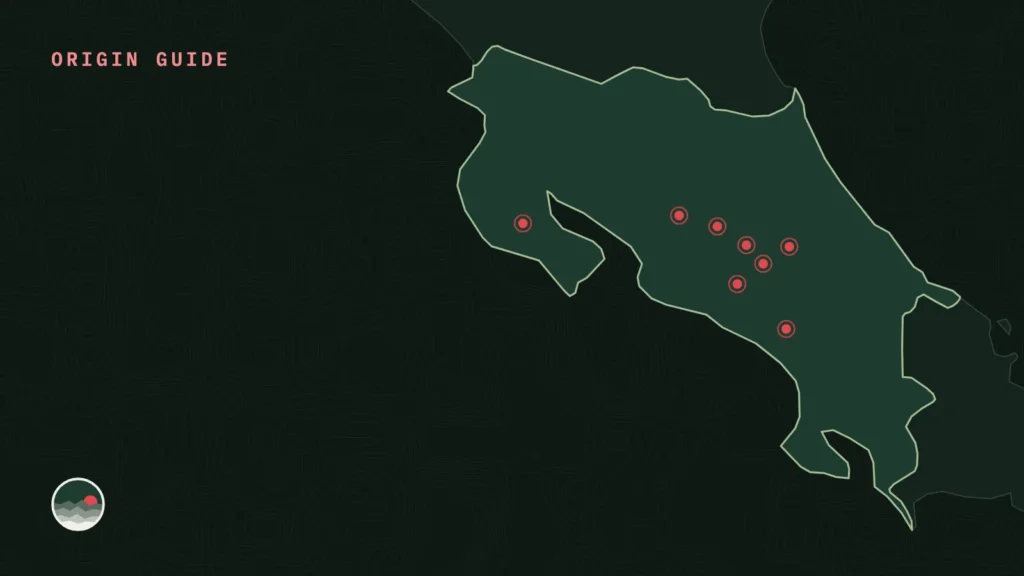
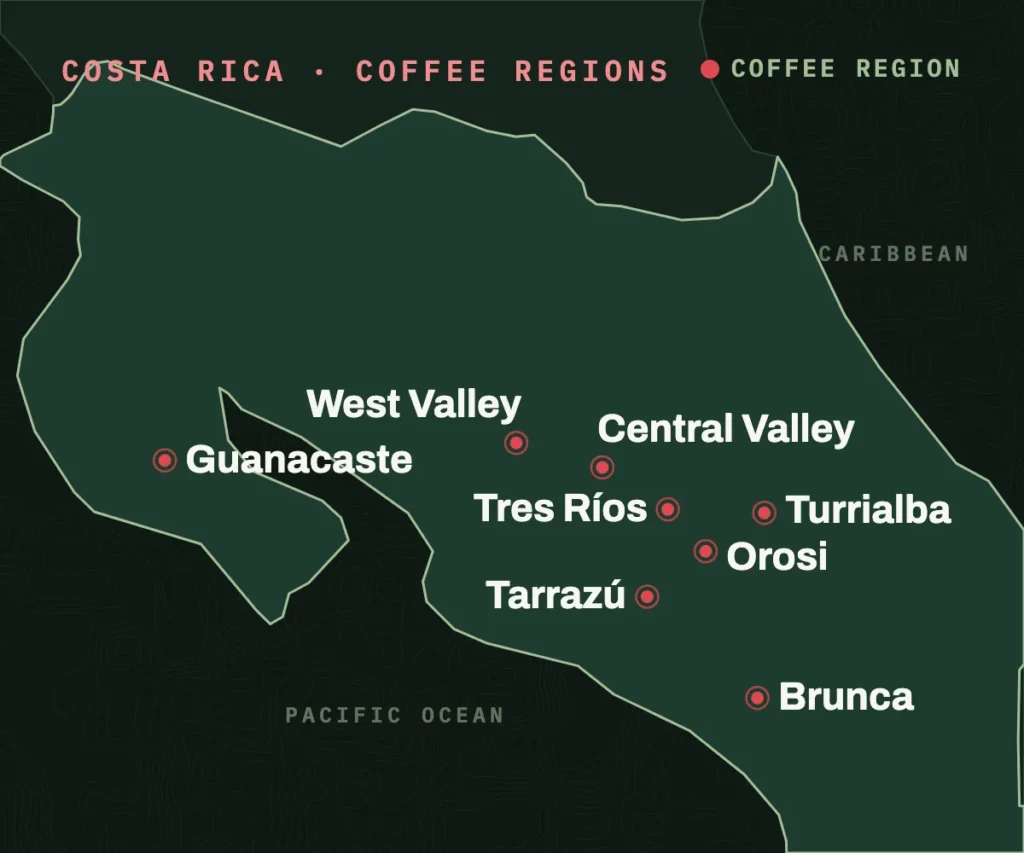
Costa Rica’s eight coffee regions at a glance
| Region | Where | Known for |
|---|---|---|
| Tarrazú | Mountains south of San José, in the Los Santos area | Bright, clean coffees with citrus and cocoa, and the country’s best-known name |
| West Valley | Northwest of San José, around Naranjo, Palmares and Sarchí | Sweet, fruity coffees, many micro mills and the Villa Sarchí variety |
| Central Valley | Volcanic slopes around San José, Heredia and Alajuela | Balanced coffees with chocolate and honey sweetness |
| Tres Ríos | A small area just east of San José | Balanced, refined coffees from a region squeezed by the city’s growth |
| Orosi | A valley southeast of Cartago | Mild, sweet coffees |
| Turrialba | Lower, wetter slopes east of Cartago | Softer, lighter coffees |
| Brunca | The south, toward Panama | A wide range, from mild to bright, high-grown lots |
| Guanacaste | The northwest, including the Nicoya Peninsula | Milder coffees from mostly lower farms |
What does Costa Rican coffee taste like?
Costa Rican coffee is usually clean, bright and sweet. Expect citrus or stone fruit, honey or brown sugar sweetness, and chocolate or nutty notes, with a medium body and a crisp finish. High-grown coffees from Tarrazú and the West Valley tend to be the brightest. Honey-processed lots add sweetness and body, and naturals bring riper, fruitier flavors.
Compared with Guatemalan coffee, Costa Rican coffee is often a little lighter and cleaner, while Guatemalan coffee tends to be fuller and more chocolatey. Our coffee growing regions flavor map shows how Central America compares with the rest of the world.
Tarrazú
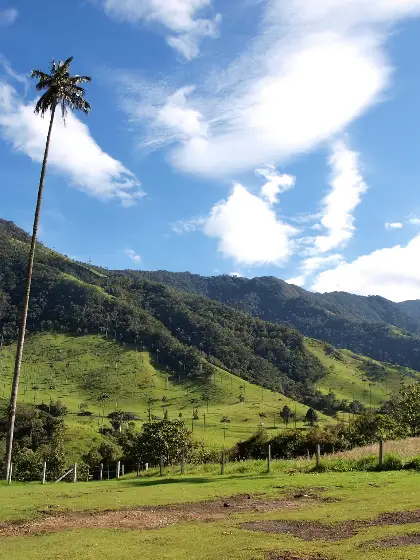
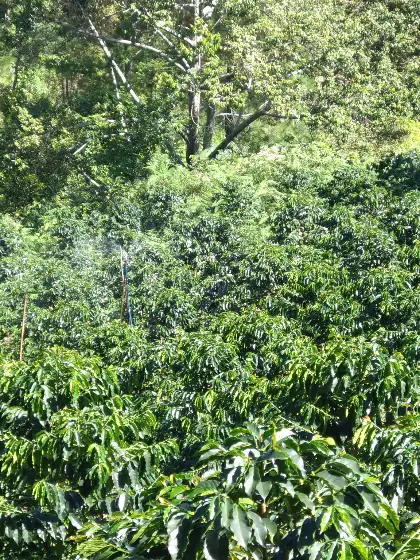
Tarrazú is Costa Rica’s most famous coffee region. It covers the steep mountains of the Los Santos area, south of San José, where farms reach roughly 1,200 to 1,900 meters. The altitude and cool nights slow ripening, which helps give Tarrazú coffees their bright acidity, clean citrus and cocoa notes and sweet finish. Much of the region is small family farms, and many process their own coffee at micro mills.
Like most of Costa Rica, Tarrazú harvests roughly from November to March, with the exact timing depending on altitude.
How Costa Rican coffee is grown
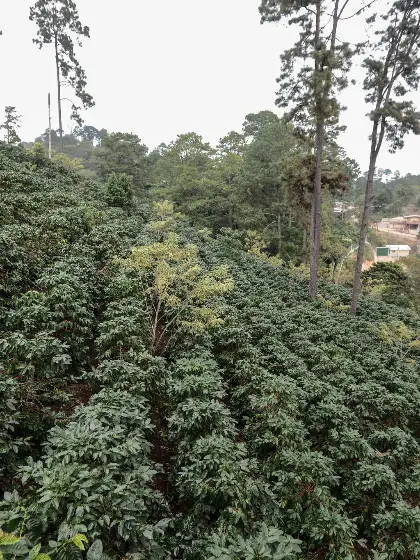
Almost all arabica. Costa Rica banned planting robusta in 1988 to protect the reputation of its arabica. The government moved in 2018 to allow robusta in a few designated areas, but nearly all Costa Rican coffee is still arabica. Common varieties include Caturra, Catuaí and Villa Sarchí, a compact natural mutation of Bourbon first found near the town of Sarchí. Geisha, now famous in Panama, reached Central America through Costa Rica in the 1950s, as our guide to the most expensive coffee in the world explains.
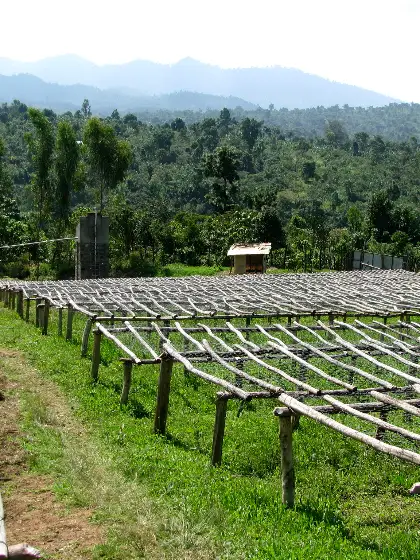
Micro mills. Since the early 2000s, many Costa Rican farmers have built their own small wet mills, called micro mills, instead of selling their cherries to large mills or cooperatives. Processing their own coffee gives them more control over quality, and lets them sell single-farm lots at better prices.
Honey process. Costa Rica’s micro mills helped popularize the honey process, where the skin is removed but some of the sticky mucilage stays on the bean as it dries. Bags often say white, yellow, red or black honey, depending on how much is left. Our guide to washed, natural and honey processing explains how each one tastes.
Grading. You may see SHB, short for strictly hard bean, on Costa Rican bags. It means the coffee grew high enough to be dense and hard, and our Guatemalan coffee guide explains the grade in more detail.
A small crop. Costa Rica grows about 1.2 million 60 kg bags a year, tiny next to Brazil or Colombia, and Costa Ricans drink roughly a quarter of it at home.
A short history of coffee in Costa Rica
Coffee arrived in Costa Rica in the late 1700s, and it became the first Central American country with a coffee industry. Through the 1800s coffee grew into the country’s main export, and the coffee boom of that era still shows in San José, where the grand National Theatre stands as a symbol of it. Today the national coffee institute, ICAFE, oversees the industry and recognizes the eight coffee regions on the map above.
How to brew Costa Rican coffee
Costa Rican coffee works in almost any brewer. For pour-over, start with 22 g of coffee to 350 g of water at 200 to 205°F with a medium-fine grind. A drip machine shows off its balance, and honey-processed lots make a sweet, rounder French press.
The chorreador
In Costa Rican homes, the traditional brewer is the chorreador: a wooden stand that holds a cloth filter bag, called a bolsita, over a cup or pot. It’s simple to use:
- Rinse the cloth bag with hot water and set the stand over your cup.
- Add medium-ground coffee, about 10 g (2 level tablespoons) for every 6 oz of water.
- Pour a little water just off the boil to wet the grounds, and wait about 30 seconds.
- Pour the rest slowly in small circles and let it drip through.
After brewing, rinse the bag with water and let it air dry. Skip the soap, which the cloth can soak up and pass into your next cup.
Where this guide comes from
Our picture of Costa Rica comes from importers’ and roasters’ origin notes, USDA reports on its coffee sector, coffee trade reporting and guides to the chorreador, all gathered in October 2026, rather than from a visit. Sources often disagree on details like altitudes, harvest timing and regional flavors, so treat them as tendencies.
Costa Rican coffee FAQ
What does Costa Rican coffee taste like?
Clean, bright and sweet, with citrus, honey, stone fruit and chocolate notes and a medium body.
What is Tarrazú coffee?
Coffee from Tarrazú, Costa Rica’s most famous coffee region, high in the mountains south of San José. It’s known for bright, clean cups with citrus and cocoa.
Is Costa Rican coffee good?
It has a strong reputation for quality, thanks to high altitudes, careful processing and an almost all-arabica crop. It’s a great choice if you like balanced, bright coffee.
Is Costa Rican coffee arabica?
Almost all of it. Costa Rica banned planting robusta in 1988, and although the government moved in 2018 to allow it in a few designated areas, nearly all of its coffee is still arabica.
What is a chorreador?
Costa Rica’s traditional coffee maker: a wooden stand with a cloth filter bag that you pour hot water through, much like a pour-over.
What is honey-processed coffee?
Coffee dried with some of the sticky mucilage still on the bean, which adds sweetness and body. Costa Rican micro mills helped make it popular.
When is coffee harvested in Costa Rica?
Mostly from about November to March, depending on the region and altitude.
Similar Regions coffee to try
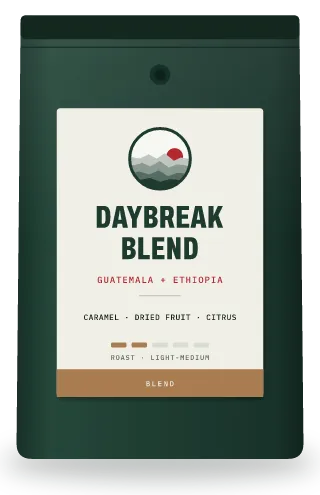
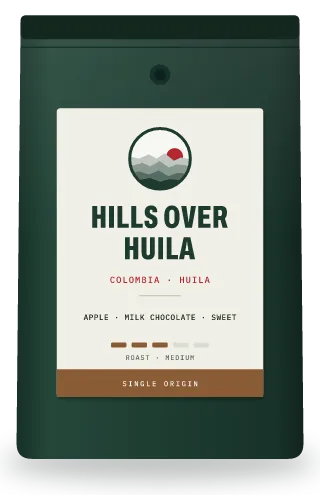
We don’t sell a Costa Rican coffee yet. For a similar balanced, sweet cup, try Daybreak Blend, a light-medium blend of Guatemalan and Ethiopian coffee with caramel, dried fruit and citrus. Hills Over Huila, a medium roast from Colombia, brings crisp apple, milk chocolate and a sweet finish. They’re listed as coming soon, so use Notify me on either page to get word when they’re ready.